Emergency Action Plan For Sports: Components, Checklist And How To Write One
An emergency action plan (EAP) is a written plan that sets out exactly what happens when an athlete, spectator or staff member suffers a medical emergency. A good emergency action plan makes sure the right people respond, the right equipment is at hand and emergency services can reach the patient quickly. Every sports team, facility, school and clinic should have one.
This guide explains what an emergency action plan is, its essential components, how to write one step by step and the equipment every plan should include.
What Is An Emergency Action Plan?

In sport, an emergency action plan describes the steps to take when someone is seriously injured or becomes ill during a game, practice or event. It covers who does what, how emergency services are called and directed to the venue, what equipment is available and where, and how the patient is transported to hospital.
Emergency action plans gained wide public attention after Buffalo Bills player Damar Hamlin suffered a cardiac arrest on the field in January 2023, when a rehearsed medical response was credited with helping to save his life. The National Athletic Trainers’ Association position statement on emergency planning recommends that every organization sponsoring athletics has a written plan.
Why Every Team Needs An Emergency Action Plan
- Faster care: in a cardiac arrest, every minute without CPR and defibrillation reduces the chance of survival.
- Clear roles: everyone knows their job, so there is less confusion under pressure.
- Safety: the plan identifies risks such as heat, lightning and difficult access before an emergency happens.
- Compliance: many leagues, schools and governing bodies require a written plan.
- Confidence: rehearsed staff respond calmly and effectively.
Essential Components Of An Emergency Action Plan
- Emergency personnel and roles: who provides care, who calls 911, who meets the ambulance and who controls the scene.
- Communication: how to call emergency services, with phone numbers, the venue address and backup options if there is no cell signal.
- Venue information: a map of each venue showing access routes, gates, the AED location and where the ambulance should go.
- Emergency equipment: what is available, where it is kept and who checks it.
- Transport: how the patient will be moved to hospital and which hospital is nearest.
- Condition-specific protocols: cardiac arrest, head and neck injuries, heat illness, severe allergic reactions, asthma, bleeding and lightning.
- Documentation: how incidents are recorded and the plan is reviewed afterwards.
How To Write An Emergency Action Plan

- Form a team. Involve athletic therapists, coaches, administrators, facility staff and local emergency services.
- Assess each venue. Visit every field, rink and gym, note the address, access points and hazards, and decide where equipment will be stored.
- Assign roles. Name primary and backup people for each role, including when the athletic therapist is not present.
- List equipment. Decide what equipment is needed for your sport and setting, and set a schedule for checking it.
- Write venue-specific plans. Keep each plan to one or two pages so it can be posted and read quickly.
- Share and post it. Distribute the plan to all staff and post it at each venue.
- Rehearse. Practise the plan at least once a year and whenever staff change. Resources from the Korey Stringer Institute can help.
- Review. Update the plan after every incident and each season.
Emergency Equipment Checklist

- Automated external defibrillator (AED): such as the HeartStart OnSite Defibrillator or Lifeline View Defibrillator, with the Powerheart G5 AED Trainer and Resusci Anne QCPR Adult Torso for training.
- CPR and airway equipment: CPR Face Mask, Ambu Resuscitator, Oxygen Cylinder with Regulator and Non Rebreather Oxygen Mask for trained staff.
- Spinal management: Spinal Backboard, Head Immobilizer, Body Strapping System, Scoop Stretcher and Kendrick Extrication Device.
- Splints: SAM Splint, Rapid Form Vacuum Splint Kit and S301 Single Traction Splint.
- Bleeding control: SAM XT Tourniquet and dressings.
- Allergy and medical emergencies: Epinephrine Injection for those trained and authorized to use it.
- Heat illness: a Heat Stress Monitor to monitor conditions, plus ice and a cold water immersion tub for cooling.
- General first aid: a Briefcase First Aid Kit, Emergency Blanket and Mueller Kold Instant Cold Pack.
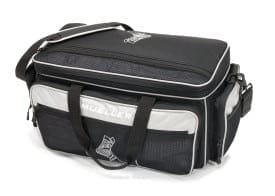
Browse our full first aid and defibrillator ranges, and see our guide to choosing a sports medical bag to carry it all.
Emergency Action Plans Beyond Sport
Workplaces, schools and clinics also need emergency action plans, covering fires, evacuations and medical emergencies. In Canada, provincial occupational health and safety rules set requirements for workplace emergency procedures and first aid, so employers should check the rules that apply to them.
Frequently Asked Questions
What is an emergency action plan in sports?
A written plan that sets out how staff respond to a medical emergency during a game, practice or event, including roles, communication, equipment and transport.
Who should have an emergency action plan?
Every sports team, school, league, facility and clinic that hosts physical activity.
How often should an emergency action plan be practised?
At least once a year, and whenever staff or venues change.
What equipment should an emergency action plan include?
At minimum, an AED, a first aid kit, CPR masks and splints, plus spinal management, airway and heat illness equipment where appropriate.
Emergency Equipment For Teams And Facilities
Dunbar Medical supplies sports teams, schools, facilities and clinics across Canada with AEDs, spinal management equipment, splints and first aid supplies. Please contact our team for help equipping your emergency action plan.
Conclusion
An emergency action plan turns a chaotic moment into a coordinated response. Assign clear roles, map every venue, keep the right equipment close at hand and rehearse the plan regularly, so that when an emergency happens, everyone knows exactly what to do.