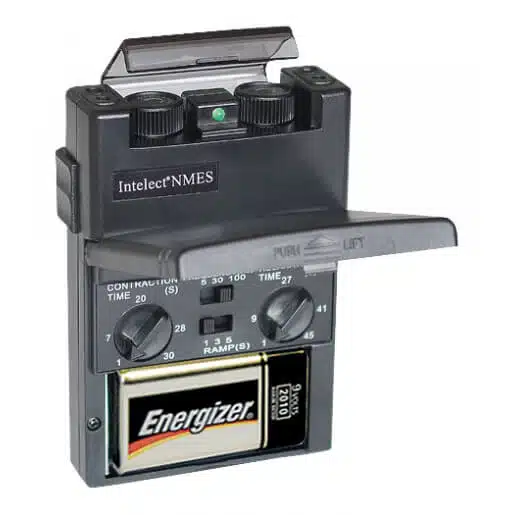
Understanding NMES Units
NMES units are specifically designed to deliver controlled electrical impulses to targeted muscles through electrode pads placed on the skin's surface.
These units are programmable and allow healthcare professionals to customize treatment parameters based on the individual's needs and goals.
The electrical stimulation provided by NMES units mimics the body's natural neuromuscular signals, activating motor nerves and eliciting muscle contractions.
What's The Difference Between NMES and Electrical Muscle Stimulation?
NMES (Neuromuscular Electrical Stimulation) and Electrical Muscle Stimulation (EMS) are both forms of electrical stimulation used in various therapeutic applications. While they share similarities in their basic principles, there are differences between NMES and EMS in terms of their specific applications and intended purposes.
Neuromuscular Electrical Stimulation (NMES)
NMES targets the neuromuscular system, focusing on stimulating nerves and muscles to elicit muscle contractions. It involves the application of electrical impulses through electrode pads placed on the skin's surface. The electrical stimulation mimics the body's natural nerve signals, activating motor nerves and causing muscle contractions.
NMES is commonly used in rehabilitation settings to improve muscle activation, strength, and coordination. It plays a crucial role in re-educating muscles, enhancing motor control, and restoring functional movement in individuals with muscle weakness or neurological conditions. NMES is often used to supplement traditional therapy and aid in muscle re-education following injuries, surgeries, or neurological disorders.
Electrical Muscle Stimulation (EMS):
EMS, on the other hand, encompasses a broader range of applications and targets both muscles and nerves. While it also involves the application of electrical impulses through electrode pads, EMS may focus on various goals beyond neuromuscular activation and rehabilitation.
EMS is often used in fitness and sports performance settings to enhance muscle strength, endurance, and hypertrophy. It is commonly employed as a training aid to supplement traditional exercise routines or as a muscle recovery tool. EMS devices designed for fitness purposes often offer a range of programs and settings to suit different training goals and muscle groups.
While there is overlap in the physiological effects of NMES and EMS, the primary difference lies in their intended applications and focus. NMES specifically targets neuromuscular rehabilitation and re-education, while EMS is more commonly associated with fitness and athletic performance enhancement.
It's worth noting that terminology and definitions may vary across different sources and contexts, and some individuals may use the terms NMES and EMS interchangeably. It is important to understand the specific features, settings, and intended uses of an electrical stimulation device to ensure its suitability for the desired application. Consulting with a healthcare professional or an expert in the field can provide further clarity on the distinctions and appropriate use of these modalities.
Role of NMES Units in Rehabilitation
Muscle Activation and Strength
NMES units play a crucial role in activating muscles that may be weakened or inhibited due to injury, surgery, or neurological conditions. By delivering electrical impulses to the targeted muscles, NMES units help trigger muscle contractions, enhancing muscle activation and strength. This is particularly beneficial in cases of muscle disuse or post-surgical recovery, where voluntary muscle activation may be limited.
Motor Control and Functional Improvement
NMES units aid in the re-education of motor control and the restoration of functional movement. The controlled muscle contractions facilitated by NMES promote muscle memory and enhance the communication between the nervous system and muscles.
This improves motor control and coordination, enabling individuals to regain or enhance their ability to perform specific functional activities.
Muscle Re-Education
NMES units are widely used in muscle re-education programs. These units assist individuals in relearning proper movement patterns and activating specific muscles.
This is particularly valuable in cases of stroke, spinal cord injuries, or neuromuscular disorders, where muscle activation and coordination may be impaired.
NMES units provide targeted stimulation to facilitate the re-establishment of neural pathways and muscle function.
Pain Management
NMES units have been found to be effective in managing pain. Electrical stimulation provided by NMES units can help reduce pain signals by stimulating the release of endorphins, the body's natural pain-relieving chemicals.
This can provide temporary relief from chronic pain or acute post-injury discomfort, allowing individuals to participate in rehabilitation activities with greater comfort and reduced reliance on pain medication.
Muscle Atrophy Prevention
NMES units are valuable in preventing muscle atrophy, especially in situations where muscle disuse or immobilization occurs.
By providing regular electrical stimulation to the targeted muscles, NMES units can help maintain muscle strength, mass, and functionality.
This is particularly beneficial for individuals who are unable to engage in active exercise due to injury or illness.
Enhanced Blood Circulation
The electrical stimulation provided by NMES units can promote increased blood flow to the targeted muscles.
This improved circulation helps deliver oxygen and nutrients to the muscles, aiding in tissue repair and recovery. It can also assist in reducing swelling and inflammation, facilitating the healing process in injured or post-operative tissues.
Conclusion
NMES units have become indispensable tools in electrotherapy, revolutionizing rehabilitation and muscle function enhancement.
These units provide targeted electrical stimulation, promoting muscle activation, strength gains, and functional improvement.
NMES units play a vital role in muscle re-education, motor control, pain management, and muscle atrophy prevention.
By incorporating NMES units into rehabilitation programs, healthcare professionals can optimize treatment outcomes and facilitate individuals' return to functional independence and improved quality of life.