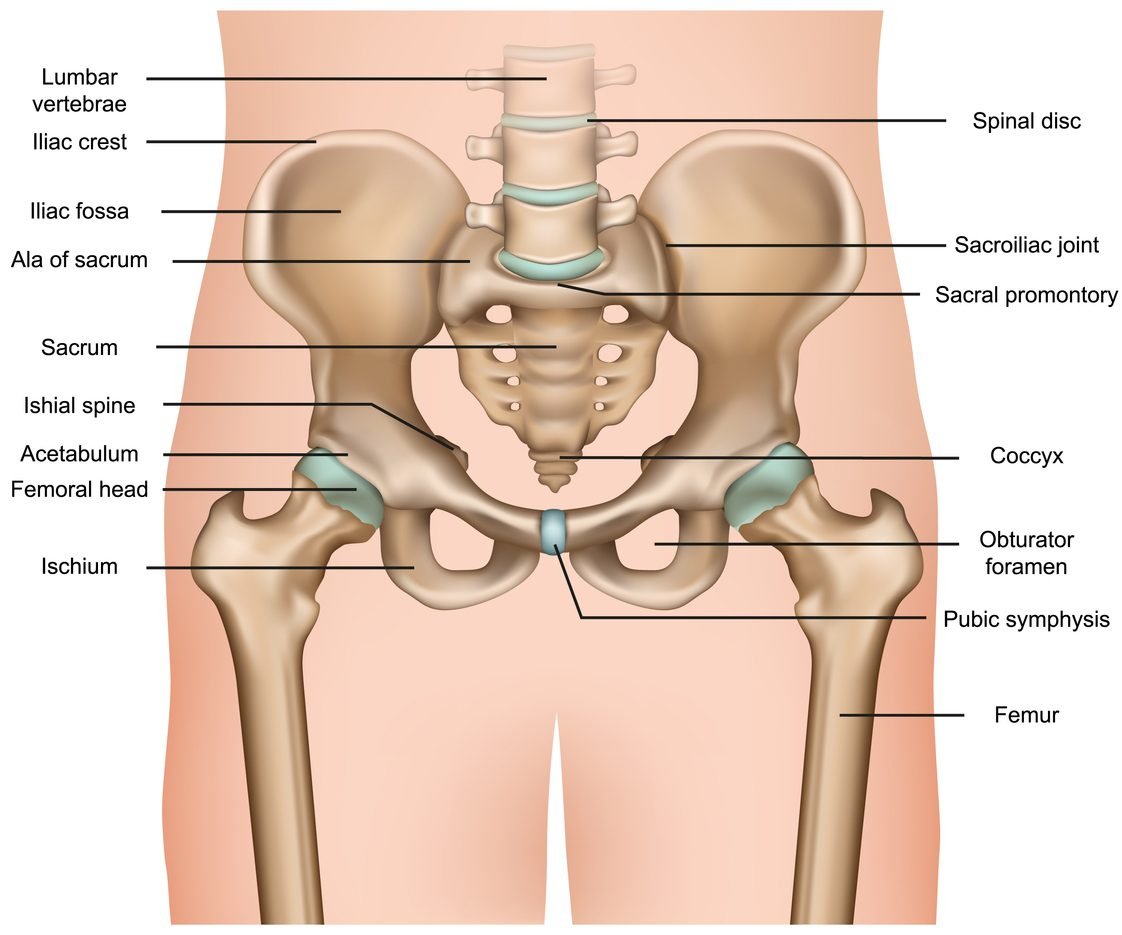
This is a sports medicine injury that is relatively common among athletes in contact sports such as soccer, baseball, football and hockey.
A hip pointer occurs as a result of a direct blow to the pelvic brim. This can happen after collisions between players, after an athlete falls to the ground or after a blow to the hip from a stick or ball.
Hip Pointer Symptoms
An athlete suffering from this type of sports injury may experience some or all of the following symptoms:
- Pain or intense localised tenderness over the iliac crest or the area of impact;
- Inability to walk without limping;
- Decreased range of motion of the hip joint, usually due to pain and sometimes resulting in a limp ;
- Difficulty performing activities such as standing on one leg or lying on your side and lifting your leg in the air (abduction);
- Bruising, discoloration and sometimes swelling in the same area;
- As mentioned above, a hematoma, or collection of blood under the skin in the affected area.
If a hematoma is present, the pain may be severe, as the blood pooling will exert pressure on the nerves and tissues in the region of the injury.. The severity may be enough to make it impossible for the athlete to continue sports activity until the injury has healed.
The pain may also be experienced during non sport related activities such as coughing and sneezing.
Avulsion Fractures
An exceptionally severe hip pointer injury can cause the muscles that normally attach to the iliac crest to become detached from the bone.
The muscles that can be detached in this way include the transverse abdominis, the upper gluteal muscles and the obliques.
Collectively, these abdominal muscles play pivotal roles in everyday (and non sports related) activities such as walking, jumping and running.
As a result, an avulsion fracture associated with a hip pointer injury can result in an inability to perform these activities, at least without experiencing severe pain. Even laughing can become painful for someone in this situation.
How To Diagnose A Hip Pointer Injury
The first clue to diagnosing this type of injury is the circumstances in which it occurred. Did it occur as a result of a fall or a blow to the hip bone?
A doctor may also try to ascertain the exact location of the injury. As mentioned above, hip pointers always cause pain in the iliac crest area of the hip.
Thus, hip pointers are diagnosed based on the mechanism and location of the injury.
In addition, a physician may also check for bruising, discoloration and swelling in the hip bone area.
He or she may check for restricted hip bone range of motion by asking the patient to lie on his/her side and try to lift the upper leg.
If the physician is still not certain, he or she may request imaging studies such as MRIs, X Rays or CT scans. These can be useful in helping to rule out more serious injuries such as bone fractures as well as a condition causing bony formation within the muscles (myositis ossificans).
Treating A Hip Pointer Injury
As with many soft tissue injuries, the first approach to treatment of a hip pointer is usually conservative.
The physician will probably suggest rest and ice as the key to reducing swelling. Compression (using compression shorts for example) can also help to reduce the swelling.
To manage the pain when the injury is a severe one, the doctor may suggest taking an over the counter anti-inflammatory medication like advil (ibuprofen) or acetaminophen (paracetamol).
In the first few weeks of a severe hip pointer, the athlete may be advised to use crutches to move around.
During the recovery phase, the athlete may be advised to perform rehabilitative exercise to help recover hip range of motion and strength. These may include isometric exercises and abduction leg lifts, as an example.
If a hematoma is present, the doctor may lance and drain it. However, the more common approach nowadays to a hematoma due to a hip pointer injury is administration of a cortisone injection.
Recovery Period
The recovery period from a hip pointer depends of course on the severity of the injury but will typically be about 1-3 weeks for acute recovery. For an exceptionally severe injury, however, the athlete should be prepared to wait for as long as 8-12 weeks before returning to intensive activity. A full recovery, with complete healing of the soft tissues, can take anywhere from 8-12 weeks in total.