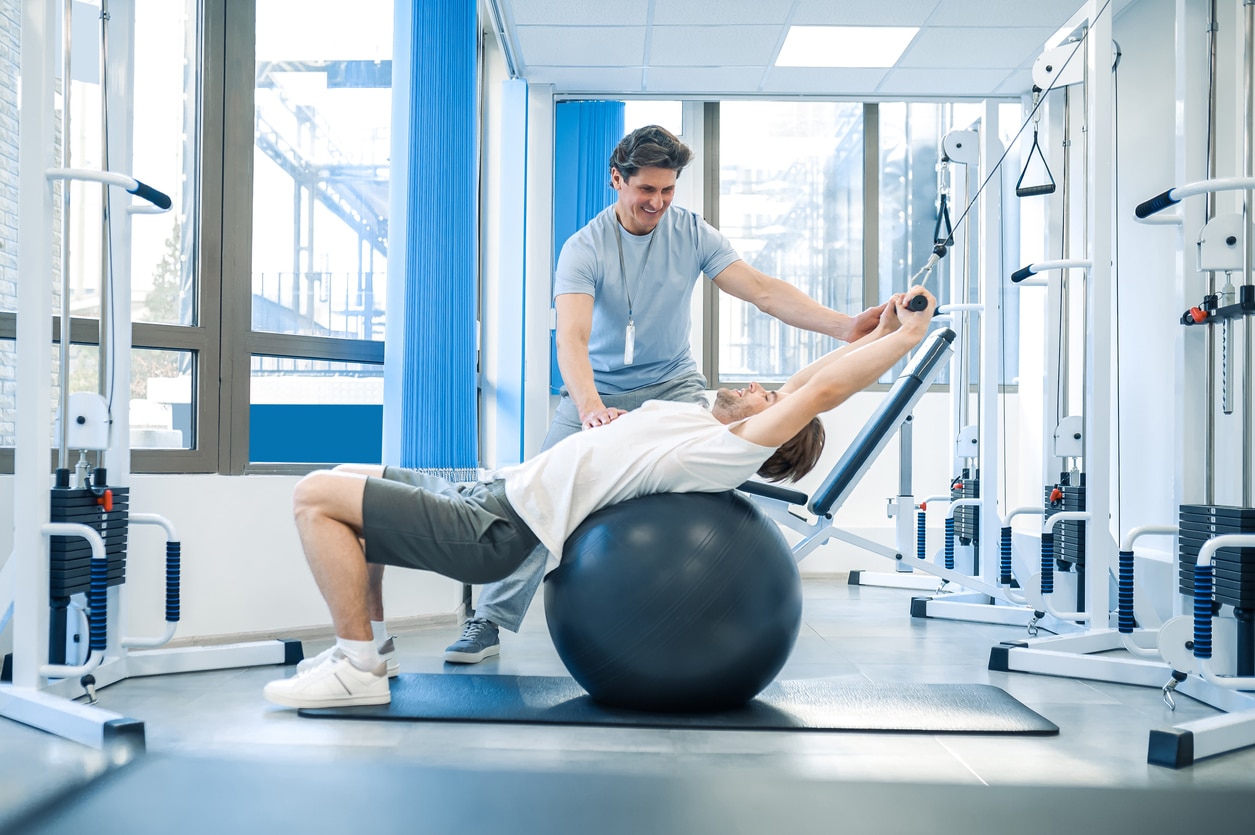
Core Strength and Stability Training
Fitness balls are widely recognized for their ability to engage and strengthen the core muscles. Athletes rely on a strong and stable core for optimal performance and injury prevention. By sitting, lying, or performing exercises on a fitness ball, athletes are required to activate their core muscles to maintain balance and stability. This engagement strengthens the abdominal and back muscles and improves core stability, which supports posture and power transfer during sports.
Balance and Proprioception Enhancement
Balance and proprioception are critical components of athletic performance, particularly in sports that involve rapid changes in direction, jumping, or uneven surfaces. Fitness balls provide an unstable surface that challenges athletes' balance and proprioceptive abilities. By performing exercises such as seated balance work, bridges or wall squats with a fitness ball, athletes develop better body awareness, coordination, and control over their movements. Enhanced balance and proprioception contribute to improved agility, reaction times, and injury prevention on the field or court.
Rehabilitation and Injury Prevention
Fitness balls are valuable tools in sports medicine for injury rehabilitation and prevention. They are commonly used in rehabilitation programs for athletes recovering from lower extremity injuries, such as ankle sprains, knee surgeries, or hip conditions. The instability of the fitness ball adds an extra challenge to the rehabilitation exercises, engaging the muscles surrounding the injured area and promoting neuromuscular control. The use of fitness balls in rehabilitation helps athletes regain strength, range of motion, and balance while reducing the risk of reinjury.
Flexibility and Stretching
Flexibility is essential for athletes to optimize their performance, prevent injuries, and maintain joint health. Fitness balls can be utilized to enhance flexibility through stretching exercises. Athletes can use the ball to support and stabilize various stretches, such as hamstring stretches, back extensions, or hip openers. The rounded surface of the fitness ball allows for a greater range of motion and deeper stretches, promoting increased flexibility and joint mobility.
Sports-Specific Training
Fitness balls offer versatility in sports-specific training, as they can simulate the movements and demands of specific sports. Athletes can incorporate exercises on the fitness ball that mimic the challenges they encounter in their sports activities. For example, tennis players can practice rotational movements or overhead swings on the fitness ball to improve their core stability and rotational power. Fitness balls allow athletes to target sport-specific muscle groups, enhance dynamic stability, and replicate the movements required in their respective sports.
Dynamic Strength and Power Training
Fitness balls can be used to add dynamic elements to strength and power training. Athletes can add a fitness ball to exercises such as seated medicine ball throws or ball-supported core work. This combination challenges athletes' balance, coordination, and force production, leading to improvements in overall athletic performance. Dynamic strength and power training on fitness balls contribute to enhanced muscular power, speed, and functional fitness for sports activities.
Conclusion
Fitness balls have become indispensable tools in sports medicine, offering athletes and sports medicine professionals numerous benefits. From core strength and stability training to balance enhancement, injury rehabilitation, flexibility improvement, and sports-specific training, fitness balls provide numerous benefits to athletes determined to remain as injury free as possible while performing at their best.