3M N95 Respirator – 20/box
Pack of 20 3M N95 respirators. Fully compliant with NIOSH requirements for N95 Filtering Facepiece Respirators. The 1860 model is also fluid resistant.

A respirator mask is a device that protects the wearer from hazardous fumes, gases and vapors. It will also provide protection from particulate matter such as dust and airborne mico-organisms.
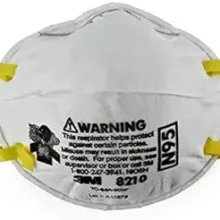
Pack of 20 3M N95 respirators. Fully compliant with NIOSH requirements for N95 Filtering Facepiece Respirators. The 1860 model is also fluid resistant.

The McCordick N95 mask is approved by the US NIOSH and protects the nose/mouth from non oily particulate matter. Since it is certified by the US NIOSH as meeting all requirements applicable to standard N95 respirators, it also provides protection from viral and bacterial pathogens.
Generally speaking, there are two types of respirator - air purifying and air supplied. The former produces breathable air by filtering the contaminants from the atmosphere around the user. The latter provides a supply of air that is separate from the contaminated atmosphere.
In this section, we present air purifying respirator masks of the single use, disposable type.
To protect the wearer from hazardous atmospheres, respirators need a harnessing mechanism to hold the masks to the wearer's head and create an airtight fit against his or her skin. Some use loops that go around the ears while other use loops that go around the back of the head.
Another important classification of respirator masks is between those that only cover the bottom of the face and those that provide full face coverage. The former are suitable only when the surrounding atmosphere does not pose a threat to the eyes or to the exposed part of the face. The respirators in this section are all of the half-face type.
The respirator masks included in this section can be used mainly for protection from non oil particulate matter including both dusts and biological pathogens. They do not provide protection from gases or fumes. Users requiring protection from gases and vapors will need a respirator with a more efficient filtering mechanism. The particulate matter against which these respirators will provide protection can generally be as small as 0.3 microns in size. This is approximately the size of a grain of sodium chloride (salt).