Cold & Hot Therapy Wrap
The slip-in pouch and removable extension strap make the Mueller Cold & Hot Therapy Wrap the easiest and most versatile cold-hot therapy solution.

Dunbar Medical supplies compression and elastic wraps to athletic therapists, sports teams and clinics across Canada. We carry the Mueller Wonder Wrap and cold/hot therapy wrap, the LP MaxWrap, the Fabrifoam Nu-StimWrap for holding electrodes in place, and Cramer felt horseshoe pads for compressing swelling around the ankle.
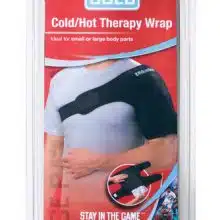
The slip-in pouch and removable extension strap make the Mueller Cold & Hot Therapy Wrap the easiest and most versatile cold-hot therapy solution.
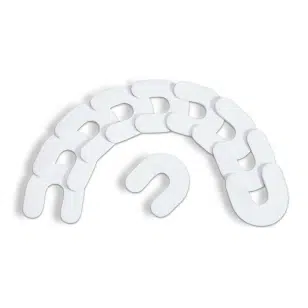
Cramer Felt Horseshoe pads are useful for wrapping acute lateral ankle sprains when time is short.

The LP MaxWrap is a versatile wrap that provides precisely targeted support and compression and avoiding unnecessary compression or restriction of uninjured areas. There are four varieties for the ankle, hand/elbow/patella, wrist or calf/hamstring/knee/thigh. It is an ideal choice if you are looking for a wrap that provides both performance improvement and injury prevention.

Find out why Nu-StimWrap is a versatile, multi-purpose medical tape designed for secure, comfortable, and reusable applications across personal and professional settings.
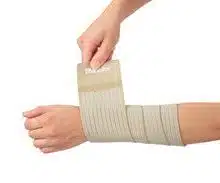
The Mueller Wonder Wrap provides firm and reliable support with long term elasticity. Durable and reusable, this wrap is the ideal solution when you are looking for a quick way to treat a muscle strain.
Wraps are essential tools in the field of sports medicine, providing athletes with additional support, stability, and protection during training and competition.

These versatile bandages, made from various materials such as elastic, fabric, or adhesive, are used to wrap specific body parts, such as ankles, wrists, knees, or elbows.
In this article, we explore the crucial role of wraps in sports medicine and their contributions to injury prevention, recovery, and overall performance enhancement.
One of the primary functions of wraps in sports medicine is to provide stability and support to joints. Wrapping the affected area, such as an ankle or wrist, with a wrap can give some support and limit excessive movement.
Wraps offer compression and restrict movement to varying degrees, depending on the athlete's needs and the specific injury or condition being addressed. By enhancing joint stability, wraps allow athletes to perform with confidence and minimize the risk of further injury.
Wraps can support joints and help reduce the risk of injury in sports. They act as a physical barrier, providing an added layer of protection to vulnerable areas. Padding held in place with a wrap can help cushion vulnerable areas.
Wraps can also limit overextension or hyperflexion of joints, minimizing the strain on ligaments.
Wraps offer compression to the wrapped area, promoting improved blood flow and reducing swelling. Injuries, such as sprains or contusions, often result in localized swelling. They help to minimize this swelling by applying gentle pressure, which can make the injury more comfortable.
Wraps play an essential role in the recovery and rehabilitation process for athletes. They can provide support to healing tissues, allowing athletes to engage in controlled movement and exercises without compromising the injured area.
They also help maintain proper alignment, protect against excessive movement, and offer a sense of security during the rehabilitation phase. By providing stability and support, wraps aid in the gradual strengthening and recovery of injured muscles, ligaments, or tendons.
Wraps can contribute to performance enhancement by improving proprioception and offering a psychological boost. Proprioception refers to the body's ability to sense its position in space.
Wraps provide compression and sensory feedback to the wrapped area, enhancing proprioceptive awareness and joint stability. Some athletes find this helps them feel more in control of the joint.
Moreover, the psychological effect of wearing wraps can provide athletes with a sense of confidence and mental focus, allowing them to push their limits and perform at their best.
Wraps come in various forms, sizes, and materials, offering athletes options for customization and adaptability. Different types of wraps cater to specific needs, such as elastic wraps for joint support, adhesive wraps for securing dressings or splints, or compression wraps for reducing swelling.
Athletes can choose the most suitable wrap based on their specific requirements, sports activity, and the targeted area. The ability to customize the level of compression or support provides athletes with a tailored solution for their individual needs.
Wraps are indispensable tools in sports medicine, offering athletes additional support, stability, and protection. By supporting joints and offering many other benefits, wraps play a useful role in injury prevention and support.
Elastic wraps are used to hold ice or cold packs in place and to apply compression to a new sprain or bruise, often with a felt horseshoe pad around the ankle bone to focus compression on the swelling. Wrap from below the injury upward, overlapping by about half, firm but not tight; loosen it if toes or fingers become numb, tingly, pale or cold. See also tensor bandages, compression bandages, cold compression, cohesive tape and underwrap.
Buying for personal use? Shop wraps at Remain in the Game, our store for individual customers.