Choosing A Patellar Tracking Brace
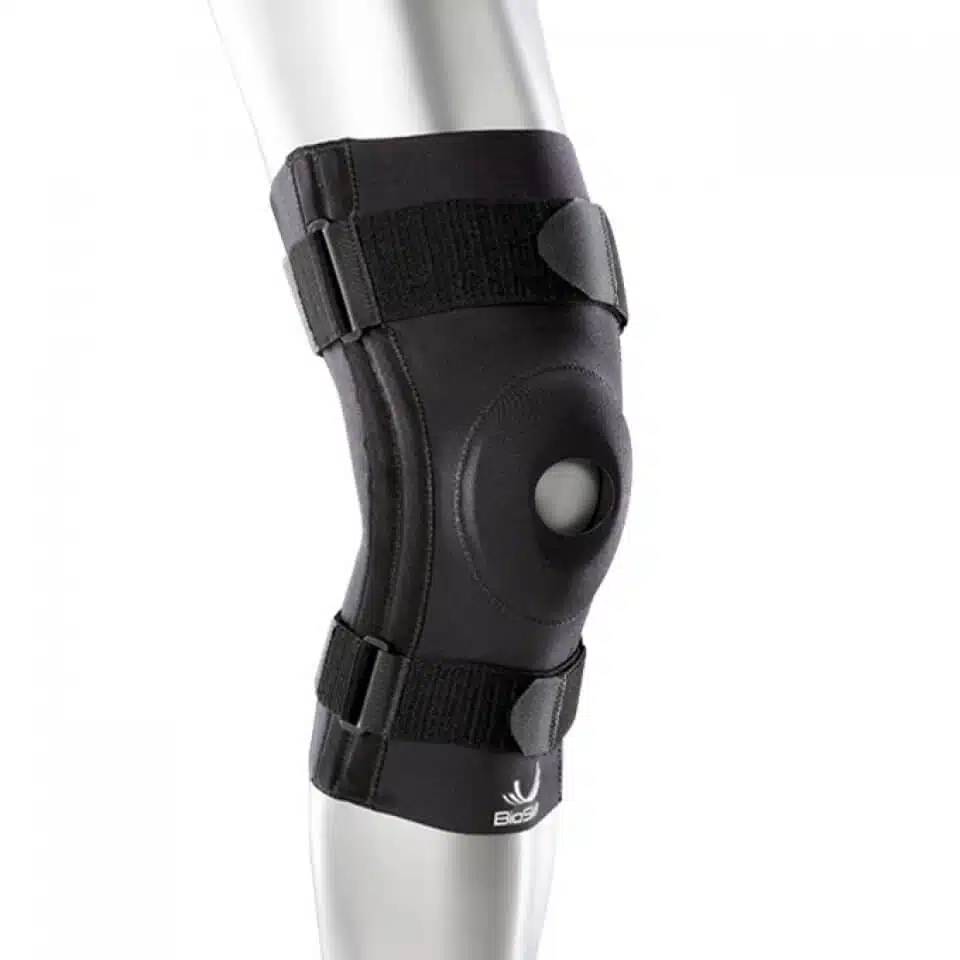
Match the support to the cause:
- Buttress braces: guide the kneecap in its groove.
- Patellar straps: change the angle of pull on the kneecap.
- Adjustable stabilizers: fine-tune the direction of support.
Medial Patella Tracking
Medial tracking problems refer to a condition involving an imbalance in the gliding of the kneecap that aggravates the cartilage behind the knee. Instead of gliding vertically as the knee bends, the patella tracks upward and inward (towards the medial side of the knee) as it attempts to move upward along the groove. The result is knee pain, clicking sounds (in some cases) and possible swelling. The pain may be especially bothersome after long periods of sitting. The condition is also known as patellofemoral pain syndrome.
Lateral Patella Tracking
Lateral tracking problems are very similar to the medial problems we discussed above. In this situation, however, the kneecap shifts to the outside of the knee. This is actually the more common tracking problem occurrence. However, the symptoms are very similar to those we describe above.
Treatment Of Patella Tracking Problems
Doctors can treat patella tracking problems in several ways, including:
- Having the patient reduce his or her activity level for a period;
- Using pain killing medication to reduce the discomfort level;
- Wearing a knee brace that is designed to treat these problems;
- Knee taping is also an option to be considered;
- In some cases, a podiatrist can recommend a change of footwear to address the problem.
If the patient is overweight, pursuing a weight management program may help in the treatment of patella tracking problems. A physiotherapist can also recommend an exercise stretching and strengthening program to improve the strength and flexibility of the muscles surrounding the kneecap.