
Nasal Plugs
Explore how Mueller Nasal Plugs help control common nosebleeds occurring in the first inch of the nose.


A nosebleed is defined as a medical condition that causes blood loss from the tissue lining of the nose. The medical term for a nosebleed is epistaxis. Although they can be alarming when they occur, they are usually not indicative of a serious medical condition. Usually, they occur in either the left or right nostril, and not in both.
In this article, we will briefly discuss some of the common questions about nosebleeds. These will include their causes and how to stop a nosebleed.
We will then conclude with some suggestions on how to prevent nosebleeds or at least reduce the likelihood of their occurrence.
The seriousness of nasal bleeding tends to depend on the part of your nose where the bleeding originates.
The majority of nosebleeds originate from the front of the nose. These anterior nosebleeds are due to the many small blood vessels at the front of the nose. These vessels are also situated close to the surface.
These two factors make it easy for even a minor injury to cause this type of injury. However, nosebleeds that originate at the front of the nose are usually minor conditions.
In a minority of cases, individuals can experience bleeding from the back of the nostril, where larger blood vessels are located. These posterior nosebleeds can be indicative of a more serious medical condition. Those experiencing one should seek medical attention urgently. Older individuals tend to be more at risk of experiencing this type of injury.
Whether your nasal bleeding is indicative of a serious condition is also indicated by how often they occur. Frequent nosebleeds can indicate serious underlying causes such as leukemia. This is particularly the case when bruising of the nasal tissues is also present. A patient with leukaemia, however, is likely to have other symptoms like extreme tiredness and recurrent infections among other things.
Many people are not aware that nasal bleeding is often the result of dry air and its effect on the mucous membranes of the nostrils. This makes the delicate mucous membranes more likely to crack. A stuffy nose can encourage excessive “picking” and nasal bleeding is a common result.
Another frequent cause of nasal bleeding is excessive “picking” of the nose. This itself tends to happen when the mucus in the nose is dry and crusty. Hence, this cause and the one above are interrelated.
Another of the common causes of nosebleeds is a head cold or an allergy. The risk of bleeding is increased due to inflammation of the lining of the nostrils.
Nasal bleeding can also occur when playing contact sports such as basketball. In these situations, they can be the result of being hit in the face by another player’s hand or elbow. Boxers or participants in other combat sports can experience nasal bleeding from one or more blows to the nose. In some cases, this type of nosebleed can be accompanied by a broken nose.
Finally, as mentioned in the previous section, a nosebleed can be a sign of a serious underlying condition such as leukemia, a hereditary bleeding disorder (e.g. haemophilia) or kidney failure.
Other underlying conditions that can make nasal bleeding more likely or risk factors for it are:
The good news is that most of these injuries can be treated at home.
The first priority should be to make sure the blood will drain out of your nose instead of down your throat. To do this, sit down and lean forward slightly.
Maintaining a seated position (instead of lying down) will also keep your head above heart level, which will help to staunch the bleed.
Another thing you can do is apply pressure to the end of your nose. Do this continually and gently for 15-20 minutes until the bleeding has stopped.
If the bleeding is substantial and/or sustained, nasal plugs (either basic or sterile) may be useful in absorbing excess blood.
If you know or suspect what may have caused the nosebleed, hold off on that activity for a few hours.
As we have stated, nosebleeds may indicate the presence of a serious problem. You should seek medical assistance if the bleeding continues for more than 20 minutes or so. The quickest way to access the medical help required is usually to attend the emergency department of a hospital. Interventions likely to be tried in the emergency department include cauterisation and/or anterior nasal packing. The majority of cases of epistaxis will respond to these measures. However, a small number of cases do not and these will need admission to hospital and involvement of an otolaryngologist (ENT specialist).
You should also see a doctor for a checkup:
If you experience frequent nosebleeds, here are some of the steps you can take to reduce this problem:
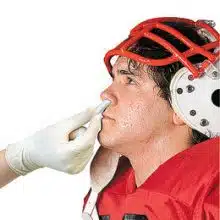
Explore how Mueller Nasal Plugs help control common nosebleeds occurring in the first inch of the nose.

These sterile nasal sponges are designed to expand and hydrate as they absorb blood in the nasal cavity. Individually wrapped and sold as 25/pack.