

Knee Supports: 6 Questions And Answers
Knee supports, while appearing simple at first glance, can be complex and baffling objects to many patients upon further inspection. That’s why we’ve put together six of the most common questions patients may ask about knee support products and some straightforward advice you can give to them.
1. What Will Wearing a Knee Support Do?
All patients want to know why any treatment, support, medicine or exercise will help them feel better and stay better, so this is a great place to start familiarizing them with knee supports.
There are different knee supports for different purposes, but for the sake of helping a patient understand the basics, start with a general breakdown of how they work. Knee braces support the knee’s ligaments by regulating the movement of the joint and guarding against unusual movements during recovery from injury. They can facilitate recovery in a variety of ways such as by using warmth and compression to reduce pain and inflammation, correcting improper and damaging movements or protecting and supporting the knee against excessive force or twisting out of position.
2. Does It Matter What Kind of Knee Support I Have?
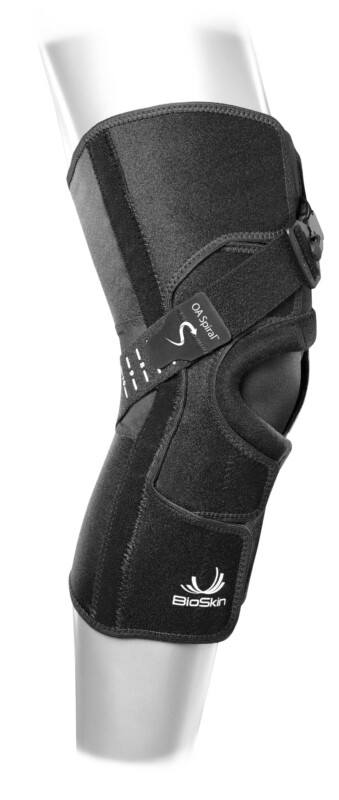
To answer the question, yes, it does matter, but it’s important to go deeper with patients and explain to them what the differences are and why they are important.
While many patients will follow your instructions to the letter, there are some who will not. If they are uninformed about the wide array of knee support products and their specific purposes, they are much more likely to believe they can decide for themselves which brace is suitable for them and choose the wrong one, pushing their recovery back and potentially making the injury worse.
While there are hundreds of different knee supports out there, all with slight variations geared to helping patients with specific problems, there are general classifications that you can explain to patients before making a particular recommendation.
The four main types of knee supports to briefly outline with patients are:
- Prophylactic braces, designed with the aim of preventing knee injuries. They are mostly used in sports like rugby or basketball in which there is frequent bodily contact with other players.
- Functional braces, which support knees that are already injured.
- Rehabilitative (Range of Motion) braces, which restrict potentially harmful movements of the knee during the recovery period after either surgery or an injury.
- Unloader or offloader braces, which provide relief from conditions like knee arthritis.
3. When Should I Use My Knee Support & How Should I Put It On?
Timing is everything, as they say, and it’s especially crucial when it comes to wearing a knee support. That’s why it’s very important to help patients understand all the ins and outs of how to properly use their knee support product, including the logistics of putting it on.
Give very detailed instructions on when the support should be used and when it is best to shed the brace and leave it behind. Depending on the type of knee support product, these instructions will be different, but help the patient get a definite sense of whether they should wear the brace all the time or only when doing certain activities, including sports, rehab exercises, daily transport from place to place, sitting and sleeping.
The next step is to help patients get comfortable with putting on and taking off the brace. One of the worst things that can happen is that a patient is unsure of how to properly put on a brace and does so incorrectly, causing further injury or a lack of recovery. Have very thorough instruction, write it down or invite the patient to bring the brace in and go through the motions with them.
4. How Should I Clean and Take Care of My Knee Support?
This is probably one of the most commonly asked questions about knee supports.
After so much explaining, it should be clear to the patient by now that the knee support product is a crucial part of the recovery process, almost like another limb, and that they should treat it with diligent care. Now it’s up to you to give them a guide to doing just that.
Knee braces don’t often come with a set of care instructions, and so it is usually up to the physiotherapist to explain how to best maintain the knee support product so it works well and it works for as long as the patient needs it — especially as knee braces get a lot of mileage and stress put on them. A few basic tips for patients include inspecting the brace frequently for wear, regularly cleaning it with household soap to help maintain the fabric and keep it clear of bacteria, and covering exposed metal to reduce the risk of injury (including to others).
It’s also good to explain the different price points and materials that knee support products are made of to help the patient understand the different care and maintenance that is required with each, along with the effectiveness and durability of each type.
5. How Long Should I Wear My Knee Support?
The first four questions and answers will undoubtedly help patients to get a running start when using a knee support product, as they provide a great starter’s kit for first-time brace wearers. However, it’s not enough to just give patients only half the pieces in the puzzle; you also need to explain how to gauge the effectiveness of the knee support product and how to listen to the body when measuring its impact.
The first thing to do is to help patients establish expectations; a week of wearing the brace won’t mean a full recovery, and the truth is, most knee support products are needed for some time. This will help patients to avoid getting frustrated or feeling negative emotions if they don’t have quick results.
Guidelines for the use of knee support products depend on a number of factors. The most important is the amount of activity on the knee ligaments in combination with the muscles that are designed to actively absorb that activity. If the injury and use of the brace is mainly for sports, it depends on the sport being played. Sports which involve a lot of turning and jumping pose an added risk.
At the end of the day, there’s no clear-cut answer as to how long a knee support product needs to be worn, but it is important to let the patient know to take note of any concerns or improvements and bring them to you frequently. Frequent visits will mean that the brace is used properly and isn’t worn a minute too long or too short.
6. Do I Still Need to Do Exercises or Rehab If I Wear My Knee Support?
The short answer is yes, of course. Wearing a knee support product isn’t a shortcut or a silver bullet to getting 100 per cent healthy and patients should be very well-informed of this. While knee support products can be an essential part of the recovery and rehabilitation process, they are only part of a much larger set of tools to help the body get back to full health. It’s important that the patient knows exactly what these other tools are, how they work in conjunction with knee support products and what their impact is on a quick, effective recovery.
It’s also crucial to ensure the patient knows that wearing a knee support product doesn’t make him or her invincible. Injury remains a risk even while wearing the brace. To fully recover from the injury and avoid a future recurrence, the patient needs to also focus on stretching and strengthening the joint as well as improving technique.
Putting It All Together
Providing the patient with carefully considered answers to the questions in this post will put them on the road to a quicker and more complete recovery. Clear communication about what a knee support does, which type is appropriate, how to use and care for it, how long to wear it, and why exercises still matter is the foundation of successful rehabilitation.
For more information on how to help patients stick to their home exercise plans, especially when wearing a knee brace, check out our post on compliance at home.
If you run competitively or for occasional exercise, please consult a healthcare professional before beginning any new training or bracing routine.
About Dunbar Medical
Dunbar Medical is a premier supplier of sports medicine and home health care products to pharmacies, physiotherapists and other clinics, and sports teams throughout Canada. The company distributes the leading brands in sports medicine through its national sales team and is known for its expertise in the field as well as its exceptionally high level of customer service and support.
For clinicians recommending knee supports to their patients, Dunbar Medical offers access to leading brands such as Bio Skin, Mueller Sports Medicine, McDavid, Kinesio, LP Support and many others.
To learn more about the range of knee support products and other products carried by Dunbar Medical, please call 1-800-265-7126, visit https://dunbarmedical.com or email sales@dunbarmedical.com.







Informative post! Your answers to common knee brace questions are very helpful. Thanks for providing such clear and useful information for anyone considering a knee brace!
You have written very informative blog. Knee braces offer essential support and stability for individuals with knee injuries or conditions, aiding in pain relief and facilitating mobility. They are particularly beneficial for athletes and those recovering from surgeries, providing a safeguard against further injury. Check market research report on -https://www.marketresearchfuture.com/reports/knee-replacement-market-1578
It’s really a great and helpful piece of info.
I am satisfied that you just shared this helpful information with us.
Please stay us up to date like this. Thanks for sharing.
Hi there, I play Roller Derby which includes roller skating and lateral movements.
I have osteoarthritis, tendonitis issues, and knee instability. I recently purchased a donjoy defiance hinged brace but it impedes my skating ability. My knee hurts more while wearing it. What other options for knee stability and patellar tracking that can fit under knee pads?
(Sorry, if I put my question in wrong spot)
Hello – your primary source of advice on this question should be your doctor. However, if you need a brace that can fit comfortably under knee pads, a low profile option like the BioSkin hinged knee skin may help. But we emphasize that you should check with your doctor before trying any possible solution.
tore**
Hello – generally speaking, knee braces are not designed to deal with leg alignment issues. We would suggest you check with your doctor for advice on this matter.
Thanks.
I havent been wearing my brace and i otrn 3 ligaments and they said id need a metal plate put in my leg, ifi start wearing my leg brace will my leg realign again?
the hinge on my right leg knee brace is rubbing against my left leg, making it difficult to use, and very uncomfortable. Any ideas on how to rectify this? thank you.
Hi – I’m not sure what make or model of brace you have or where you got it. However, if yours is an off the shelf brace and you got it from a home health care store, you could take it to the brace fitting specialist there and ask him/her to adjust it for you. Even if you didn’t get it from one of those stores, it’s probably still worth a try to approach the nearest one. They will know if you need have the brace adjusted to improve the fit, or if a new one would be better.
If you have a custom brace, then the maker of the brace is definitely the person to help you here.
Without knowing any more details, that would be our best suggestion. Thanks.
Thank you for providing such information. This is very generous of you providing such vital information which is very informative.
A very nice blog that you have shared.
Thank you for keep sharing.
One of the best blogs about knee brace related. you have explained every point briefly. Although cycling is considered a knee-sparing exercise because it does not require impact with the ground, the repetitive motion of pedalling can lead to a variety of overuse knee injuries.
My father(82) has had spinal surgery a month ago and has been made to wear knee braces during his rehabilitation- learning to walk again. This is despite the fact that physio is only 10 minute sessions twice a day (when staff have time) He is now complaining that he has pain in his legs. Could this be because he is spending too much time in the braces which are too tight?
Sorry, to hear your Dad is having such a rough time. Braces should never feel “tight”(as in cutting off circulation), they should be comfortable. I would go back to the person that recommended the braces and get them to recheck the sizing. Or perhaps have the physio treating him offer their opinion.
Great Post. I just wanna say you thanks for this nice and helpful blog
Hi, I’m a 22 year old female and I’ve just recently found that I may need a knee brace for my leg condition called genu Valgum or knock knees. Typically, would I wear this non stop for a period of a few months or something similar to, for example, around 8 hours a day? I understand every persons condition is different but even an estimate would help me so much as I’m freaking out. I’m currently on the search for a good doctor who can help me with my questions but haven’t been able to find any.
Braces may be a consideration for knock knees only in the case of young children whose bones are still growing. For a young adult such as yourself, a doctor would likely choose other options. However, before you make your decision on a course of treatment, please consult a physician.
I hope you will soon find a doctor who can help.
When I bend my knee hurts is this need a brace
Hello – Your knee pain can be caused by several reasons, only some of which may be treated by the appropriate brace. Others may require other types of treatments. We recommend you visit your doctor and follow his/her advice. Should he or she recommend a brace, we will be happy to help.
Knee pain when bending may be a sign of a knee strain or other injury that a brace can help to treat. However, it is very important to seek medical advice before deciding whether to get a brace. Your doctor can not only help you decide whether a brace is right for you, but can also assist you to choose the correct brace if this is indeed the right way to treat your problem. If you decide to wear a brace without seeking professional help, you may make the problem worse over time. Visit your doctor before taking the next step.
Great guide. I am a weightlifter so whats the best brace for me?
Hello – thanks for contributing. We will be publishing a post on this subject in the next few weeks but, in general terms, a good knee brace for a weightlifter should stabilize the joint in all directions and keep it warm throughout the workout period. A well designed knee sleeve is often the best choice in this situation. Stay tuned for our post, which will have much more detailed information.
I suggest a non-medical I don’t know what the brand is that if you can get it at CVS
What would happen to me, if a wore knee sleeves for the rest of my life, basically like wearing a pair of socks? Is there any repercussions?
There are no serious repercussions if you are not injured and decide to wear a knee sleeve purely as a precaution. A knee sleeve will provide compression and warmth, both of which will reduce the risk of injury if you participate in sports or other physically demanding activities. However, if you are experiencing pain or have suffered an injury, you should see your doctor before deciding whether you need to wear a sleeve or any other type of support.
As a weightlifter, you will be putting a lot of pressure on your knees, and knee strain will be an injury you will want to guard against. There are many choices of knee brace that will reduce the risk of a knee strain, some of which you will find on this site. Ideally, you should look for one that will also provide compression and warmth in addition to support, as these factors will further reduce the risk of injury. Knee sleeves will provide compression and warmth and may be more economically priced than a hinged knee brace but may lack the support of a brace. You will find a number of suitable knee braces or sleeves here, whether you search in our Bio Skin, Mueller, McDavid or LP Support range.