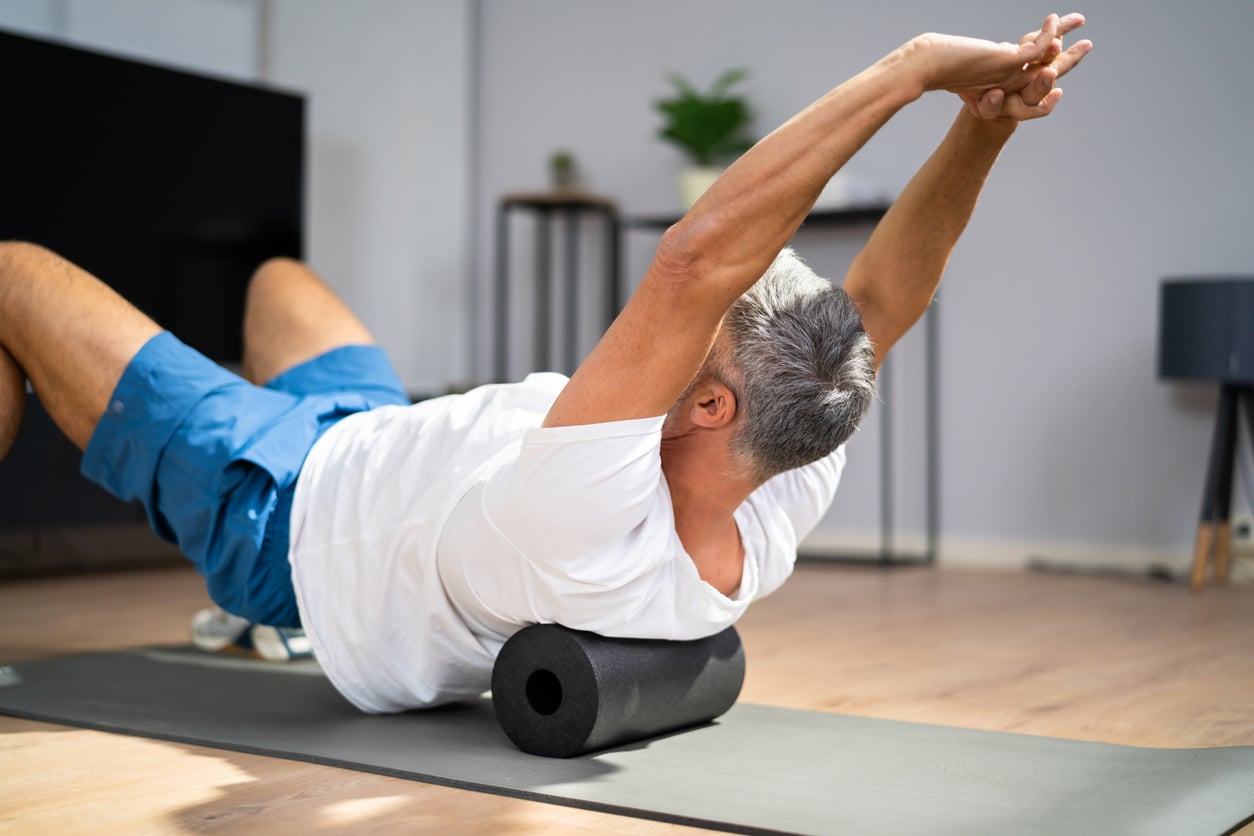
Foam rolling can be done to treat skeletal muscle immobility and pain through the relaxation of contracted muscles. It also conveys the benefits of improved blood, oxygen and lymphatic fluid circulation.
A foam roller can come in varying lengths and degrees of firmness. In general, a softer texture is best for less experienced users. Foam rollers with different levels of firmness often have colour codes, with different colours representing different firmness levels (similar to resistance bands).
Foam Rollers in Sports Medicine
Foam rollers have become a staple tool in sports medicine and athletic training programs. These cylindrical devices made of foam offer a range of benefits for athletes, including improved recovery, enhanced flexibility, and increased muscle performance. Foam rollers are widely utilized by sports medicine professionals to address muscular imbalances, prevent injuries, and optimize athletic performance.
Myofascial Release and Recovery
Foam rollers are primarily used for myofascial release, a technique that targets the fascia, connective tissue surrounding muscles, to release tension and improve muscle flexibility. By applying pressure on specific areas of the body, athletes can release tight muscles, alleviate muscle knots, and enhance blood circulation. Foam rolling can help reduce muscle soreness after intense training sessions or competitions.
Muscle Relaxation and Reduction of Muscle Tension
Regular use of foam rollers can help athletes relax and reduce muscle tension. By rolling different muscle groups over the foam roller, athletes apply gentle pressure, which promotes muscle relaxation and relieves tightness. This can be particularly beneficial for athletes who experience muscular tightness or imbalances due to repetitive movements or intense training. Foam rolling allows athletes to target specific areas of the body, such as the quadriceps, hamstrings, calves, or back, to alleviate tension and enhance overall muscle flexibility.
Improved Range of Motion and Flexibility
Foam rollers play a significant role in improving range of motion and flexibility. By targeting tight muscles and trigger points, foam rolling can produce short-term gains in range of motion. Enhanced flexibility is essential for athletes to achieve optimal performance, as it improves joint mobility, reduces the risk of injuries, and allows for proper biomechanical movements during sports activities. Regular foam rolling sessions can help athletes maintain and improve their range of motion, benefiting their overall athletic performance.
Injury Prevention and Rehabilitation
Foam rollers are effective tools in injury prevention and rehabilitation programs. By addressing muscular imbalances, foam rolling helps correct asymmetries and improves muscle function, reducing the risk of overuse injuries. Foam rolling can also be used during the rehabilitation process to aid in recovery from muscle strains, joint sprains, or other soft tissue injuries. Avoid rolling directly over a fresh injury; once it has settled, gentle foam rolling around the area can help restore comfortable movement.
Activation of Deep Stabilizing Muscles
Foam rollers can be utilized to activate deep stabilizing muscles, enhancing muscle recruitment and overall performance. By incorporating foam rollers into exercises, athletes can challenge their balance and stability, requiring the activation of core muscles and small stabilizing muscles. This activation helps athletes develop better control, stability, and proprioception, which are crucial for injury prevention and optimal performance in sports.
Self-Massage and Relaxation
Beyond the physical benefits, foam rollers provide athletes with an opportunity for self-massage and relaxation. Rolling on a foam roller can be a soothing and therapeutic experience, allowing athletes to release tension and stress. Foam rolling can serve as a form of self-care, aiding in mental relaxation and providing a mindful recovery practice for athletes.
Is It Better To Use A Smooth Or Bumpy Foam Roller?
In general, smooth rollers offer less intense pressure levels. They are therefore better suited for less experienced users.
For experienced rollers, a more textured (bumpy) foam roller aims to simulate the hands of a masseur. The ridges and knots on the surface can provide targeted treatment to help resolve muscle knots or other problems.
Should Foam Rolling Be A Daily Activity?
Once you have gained some proficiency with this activity, you should use a foam roller every day (or at least several times a week) as part of your exercise routine. Foam rolling should be like stretching and, indeed, it conveys many of the same benefits. These include muscle relaxation and short-term improvements in flexibility.
Can Foam Rolling Help With Weight Loss?
While foam rolling may not provide direct help with weight loss, it can ease post-workout soreness, which may make it easier to keep exercising consistently.
Conclusion
Foam rollers have become indispensable tools in sports medicine, offering athletes a range of benefits from myofascial release to improved flexibility, injury prevention, and enhanced performance. Incorporating foam rolling exercises into training routines and rehabilitation programs allows athletes to optimize recovery, address muscular imbalances, and reduce the risk of injuries.