

White PE Foam Roller – Jumbo
By: Cando®
Jumbo Sized White PE foam rollers offering versatile applications, aiding in positioning, balance, muscle re-education, and more.
White PE foam rollers offer versatile applications, aiding in positioning, balance, muscle re-education, and more.
- Round rollers enable progressive exercises, allowing users to transition from smaller to larger diameters for increased challenge.
- Additionally, half-round rollers are beneficial for ankle stretching and knee rehabilitation, with diameter indicating the width of the half-round profile.
- These rollers are sturdy enough to accommodate both large adults and active children.
- With such a wide range of options, individuals can select the roller that best suits their therapeutic or exercise needs.
Q & A
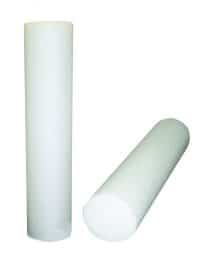
Table of Contents
Frequently Asked Questions
What is the difference between a round PE foam roller and a half-round roller, and when should I use each?
The primary difference lies in their shape and specific therapeutic application. A round PE foam roller is designed for dynamic, full-body exercises that challenge balance and coordination. Its cylindrical shape allows it to roll freely, making it ideal for proprioceptive training, muscle re-education, and progressive balance work. Users can start with a larger diameter for stability and move to smaller diameters as their control improves.
In contrast, a half-round roller features a flat base and a curved top. This design prevents unintended rolling, making it better suited for targeted rehabilitation exercises. It excels in clinical or home settings where controlled, static positioning is required.
Specifically, the half-round roller is highly effective for ankle stretching and knee rehabilitation. The flat side provides a stable platform, while the curved side introduces gentle, controlled instability. For example, a patient recovering from an ankle sprain can use the half-round roller to perform calf stretches without fear of the roller slipping. Ultimately, choose a round roller for active balance training and a half-round roller for focused, low-risk joint rehabilitation.
Are White PE Foam Rollers sturdy enough to support heavy adults or active children?
White PE (Polyethylene) foam is known for its closed-cell, non-absorbent structure, which provides exceptional density and load-bearing capacity. Unlike softer EVA foam rollers that may compress over time, PE foam retains its shape even under significant, repeated pressure.
These rollers are engineered to accommodate both large adults and active children, as noted in their product description. A typical high-density PE roller can support well over 250 pounds (approximately 113 kilograms) without permanent deformation. This makes them suitable for use in physiotherapy clinics, gyms, and homes where individuals of varying body weights will use the same equipment.
Moreover, active children—who often jump, kneel, or shift their weight suddenly during exercises—benefit from the roller’s resilience. The material resists cracking and flaking, ensuring long-term durability. However, it is always advisable to check the manufacturer’s specific weight limit. For most standard white PE rollers, you can confidently expect robust performance under routine therapeutic and exercise loads.
How does changing the diameter of a round PE foam roller increase exercise difficulty?
The diameter of a round PE foam roller directly influences the level of instability and range of motion required during an exercise. A larger diameter (for example, 6 inches or 15 cm) offers a wider base of support. This makes it easier to maintain balance because the roller moves more slowly and predictably when weight is shifted. Larger rollers are ideal for beginners or early-stage rehabilitation.
As you transition to a smaller diameter (such as 3 inches or 7.5 cm), the roller becomes more reactive. A smaller curve means less surface area contacts the floor, increasing the challenge to your stabilizer muscles. Your ankles, knees, and hips must constantly micro-adjust to prevent tipping. This progression is a core principle of proprioceptive training.
For instance, performing a standing balance exercise on a 6-inch roller may feel stable, while switching to a 3-inch roller will demand greater core engagement and ankle control. This gradual increase in difficulty—from larger to smaller diameters—allows users to safely advance their balance, coordination, and muscle re-education without changing the exercise itself.


Reviews
There are no reviews yet