

N95 vs KN95: Differences, Fit Checks And Choosing Respirators For Clinics
Respirators remain an important part of personal protective equipment in clinics, hospitals and long-term care, and one of the most common questions buyers ask is about N95 vs KN95 respirators. Both are designed to filter at least 95 per cent of small airborne particles, but they are certified to different standards, and the difference matters for health care settings.
This guide explains the differences between N95 and KN95 respirators and medical masks, how to check the fit of a respirator, and what to consider when choosing respirators for your clinic.
What Is An N95 Respirator?
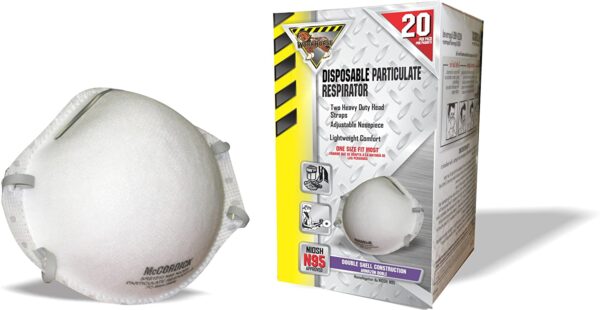
An N95 respirator is a tight-fitting, disposable respirator certified by the US National Institute for Occupational Safety and Health (NIOSH) to filter at least 95 per cent of particles of about 0.3 microns. N95 respirators usually use two head straps, which helps them seal against the face. Surgical N95 respirators are also tested for fluid resistance for use in procedures.
What Is A KN95 Respirator?
A KN95 respirator is certified to a Chinese standard (GB2626) that also requires 95 per cent filtration of small particles. Most KN95s use ear loops rather than head straps, which can make a good seal harder to achieve. During the pandemic, Health Canada warned that some KN95 respirators sold in Canada did not meet the expected filtration standard, so buyers should check that products come from reputable sources.
N95 vs KN95: Key Differences
- Certification: N95s are certified by NIOSH; KN95s are certified to a Chinese standard.
- Fit: N95s usually have head straps and are fit-tested in many health care settings; KN95s usually have ear loops.
- Health care use: N95 respirators are the standard in most Canadian health care settings where respirators are required. Check your provincial and workplace guidance before using KN95s for clinical work.
- Filtration: both standards require 95 per cent filtration, but real-world protection depends heavily on fit.
Respirators vs Medical Masks

Medical masks, also called surgical or procedure masks, are loose-fitting and protect mainly against droplets and splashes, and they help prevent the wearer from spreading respiratory droplets. They do not seal against the face, so they do not provide the same protection against small airborne particles as a well-fitted respirator. Masks are rated by ASTM level for fluid resistance; options include ASTM Level 2 Disposable Face Masks and the Isolation Face Mask with Earloop.
N95 vs KN95: How To Check The Fit Of A Respirator
A respirator only protects as well as it seals. In addition to formal fit testing where your workplace requires it, users should do a seal check every time they put a respirator on:
- Wash or sanitize your hands before handling the respirator.
- Place the respirator over the nose and chin with the nosepiece at the top.
- For head-strap respirators, place the top strap high on the back of the head and the bottom strap below the ears; avoid crossing the straps unless the manufacturer instructs it.
- Mould the metal nosepiece to the shape of your nose using two fingers of each hand, working from the centre outwards; pinching with one hand can leave gaps.
- Cup your hands over the respirator and exhale sharply. If you feel air leaking around the nose or edges, adjust the nosepiece and straps and repeat.
- Do not use a respirator over facial hair that crosses the sealing surface, as it prevents a proper seal.
Choosing Respirators For Your Clinic
When weighing N95 vs KN95 respirators for clinical use, consider:

- Choose NIOSH-approved N95 respirators where your workplace or provincial guidance calls for respirators.
- Stock more than one model and size so staff can find a respirator that fits.
- Buy from reputable suppliers and check packaging and approval markings.
- Keep medical masks for situations where a respirator is not required.
Options include the 3M N95 Respirator, the McCordick N95 Respirator and the Almedic N95 Mask. Browse our respirator range, and see our guide to introducing PPE to your clinic.
Frequently Asked Questions
N95 vs KN95: is a KN95 as good as an N95?
Both are designed to filter 95 per cent of small particles, but N95s are certified by NIOSH and usually have head straps that seal better. Most Canadian health care settings specify N95s where respirators are required.
Can N95 and KN95 respirators be reused?
They are designed as single-use devices. Follow your workplace’s infection control policies on extended use and disposal.
Do respirators work with a beard?
No. Facial hair under the sealing surface prevents a proper seal, so users need to be clean shaven where the respirator touches the face.
What is the difference between a respirator and a surgical mask?
A respirator seals against the face and filters small airborne particles, while a surgical mask is loose-fitting and protects mainly against droplets and splashes.
Respirators And PPE For Clinics Across Canada
Dunbar Medical supplies clinics, long-term care homes and health care providers across Canada with respirators, medical masks, gloves and infection control supplies. contact our team for help with larger orders.
Conclusion
In the N95 vs KN95 comparison, both respirators aim for 95 per cent filtration, but N95s are certified by NIOSH, usually seal better with head straps and are the standard choice in Canadian health care. Whatever respirator you choose, a good fit and a seal check every time it is put on are what make it effective.



How can I get price for kn95 dynapro masks with over the head strap?
Price for Almedic N95.?
I am an individual, not medical professional, looking for mask with over the head straps, that is protective.