

4 Stages of Ankle Sprain Recovery: How an Ankle Brace for Sprains Supports Each Step
If you’ve had the misfortune of experiencing an ankle sprain, you know that it can wreak havoc on your body and quality of life. It is extremely important to pay special attention to properly recovering from a sprain, consult a medical expert and be diligent in your recovery program. We have divided the recovery process into four stages to help you recover quicker and more effectively while providing tips on recovery methods such as using an ankle brace for sprains and physiotherapy techniques.
Regular Ankle Sprain Or High Ankle Sprain?
Before choosing an ankle brace for sprains, it helps to know which kind of sprain you are dealing with, because the two heal differently and need different support.
Lateral (Regular) Ankle Sprains
The most common sprain happens when the foot rolls inwards and the ligaments on the outside of the ankle are stretched or torn. Pain and swelling sit just in front of and below the outer ankle bone. Lace-up braces, braces with figure-8 straps and compression sleeves are the usual choices. Browse our sprained ankle support range for options at every stage of recovery.
High Ankle Sprains
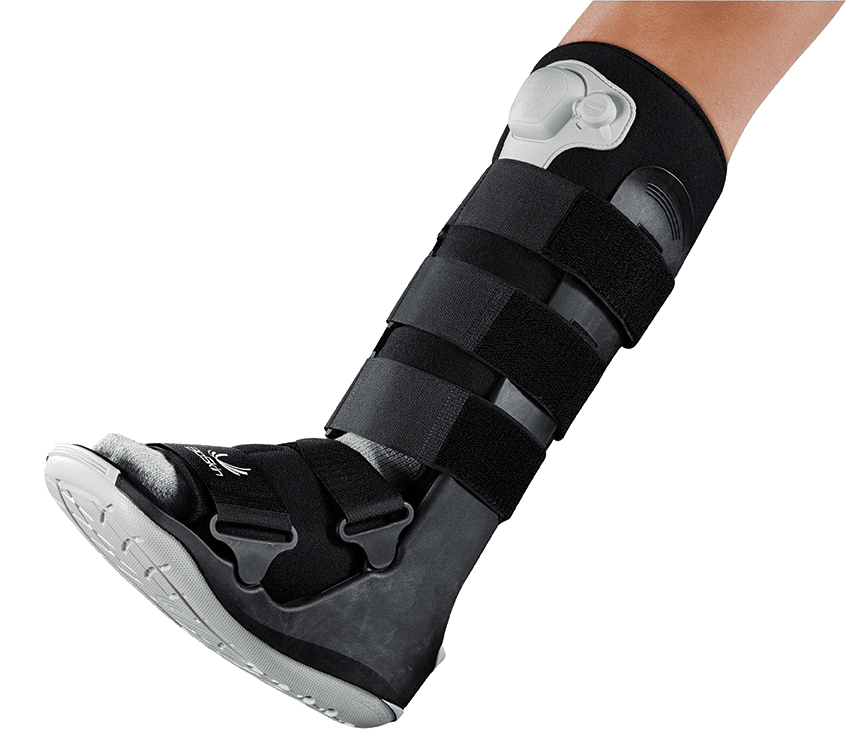
A high ankle sprain injures the ligaments that join the tibia and fibula above the ankle, usually when the foot is forced to twist outwards. It is less common but takes longer to heal, often starting with a walking boot before moving to a stirrup or strapped brace that limits rotation. See our high ankle sprain brace options.
Whichever type of sprain you have, the four stages below show how an ankle brace for sprains supports each step of recovery.
Stage 1: An Ankle Brace Can Help Reduce Swelling
What This Does
Reducing swelling eliminates pressure on the foot and ankle to avoid further damage and helps relieve pain in the short term. It will also help determine the severity of the sprain.
How to Do It
Using rest, ice, compression and elevating the ankle will help relieve swelling within the first 24 to 48 hours. Crutches, a supportive ankle brace for sprains and compression wraps will also help reduce the load on the injured ankle.
How Long It Takes
This depends on the severity of the injury. Swelling will recede within 2–4 days for a grade 1 sprain and within 1–2 weeks for a grade 2 sprain. Swelling in a grade 3 sprain will last 2–3 weeks. These timelines may be shortened by using a walking boot, cast or advanced orthopaedic ankle brace for sprains, which all immobilize the ligament and joint.
Stage 2: An Ankle Brace Can Help to Regain Range of Motion
What This Does
Increasing range of motion in a sprained ankle helps avoid the buildup of scar tissue. Preventing scar tissue reduces pain and decreases the likelihood of developing lingering problems and recurring injuries.
How to Do It
Ankle exercises prescribed by a medical professional, such as movements with resistance bands and balls, will increase flexibility and strength in the ankle. A flexible ankle brace for sprains provides increased range of movement, reduces the risk of overuse and provides support for the weak ligaments and joint.
How Long It Takes
The length of step two depends on the severity of the injury and can take between two weeks and several months. This ensures a gradual increase in the range of motion of the injured ankle and makes certain that scar tissue is held at bay.
Stage 3: An Ankle Support Can Assist in the Return to Activity

What This Does
Gradually increasing the weight, distance and speed placed on the recovering ankle allows a sustainable return to health. Practicing sport-like movements in a controlled environment helps build balance and stability with minimal risk. This reduces the risk of chronic ankle pain, instability and arthritis.
How to Do It
Complete exercises or workouts similar to your pre-injury routine, modifying each to reduce stress on the sprained ankle. Go slowly, do fewer reps, use lighter weights and change challenging exercises. Slowly increase reps, weight and difficulty and only after mastering each step. Use an ankle brace for sprains to protect the ankle throughout this step.
How Long It Takes
The time period for this step depends on the severity of the injury, the length of time before returning to activity and your general health. It is crucial to develop strength and to be sure of each modified exercise/workout before progressing. This will help ensure the injury does not recur.
Stage 4: An Ankle Brace for Sprains Can Maintain Health and Prevent Reinjury
What This Does
Taking measures to protect the previously sprained ankle is essential to the recovery process. The effects of an ankle sprain can linger, ligaments can remain weak and a second injury may take longer to heal while increasing the chances of chronic pain.
How to Do It
Strengthen the ankle and surrounding structures with frequent stretching and strength training while protecting the ankle with an orthopaedic ankle brace for sprains. Ankle supports are especially helpful for athletes in sports requiring a lot of running, jumping and lateral movement, such as tennis, running, basketball and volleyball.
How Long It Takes
This step may extend a lifetime. Those who have suffered an ankle sprain must be diligent whenever they set foot in the gym or on the court, ice, field, etc. It is always easier to prevent an ankle injury than to recover from one.
Matching the Brace to the Stage
One of the most useful takeaways from this four-stage framework is that the right ankle brace for sprains changes as recovery progresses. In the early stages, a more supportive or immobilizing brace helps control swelling and protect healing tissue. During the range-of-motion stage, a flexible brace supports movement without over-restricting the joint. In the return-to-activity stage, a brace provides protection during modified training. And in the long-term maintenance stage, an orthopaedic ankle brace for sprains helps guard against re-injury during sport and daily activity.
Clinicians who explain this progression to patients — and who help them select an appropriate brace for each stage — set their patients up for a smoother, more complete recovery.
In this post, we have discussed the benefits of using an ankle brace to recover from a sprain once it has occurred. For guidance on the types of ankle brace that can be worn by different types of athlete to proactively prevent injury, we suggest our post on the benefits of ankle braces for athletes.
About Dunbar Medical
Dunbar Medical is a premier supplier of sports medicine and home health care products to pharmacies, physiotherapists and other clinics, and sports teams throughout Canada. The company distributes the leading brands in sports medicine through its national sales team and is known for its expertise in the field as well as its exceptionally high level of customer service and support.
For clinicians recommending an ankle brace for sprains to their patients, Dunbar Medical offers access to leading brands such as Bio Skin, Mueller Sports Medicine, McDavid, LP Support and many others — including a range of foot and ankle braces suited to different stages of recovery.
To learn more about the range of ankle braces and other products carried by Dunbar Medical, please call 1-800-265-7126, visit https://dunbarmedical.com or email sales@dunbarmedical.com.






Thank you so much! This helped on my research paper.
I’m glad you talked about how ankle braces reduce swelling for a couple of weeks. My son sprained his ankle yesterday while playing soccer for his high school and we’re worried about how long he’ll be out. We’ll take him to an orthopedic center to help his recovery process.
Thanks for the feedback. I hope your son is now recovering quickly.