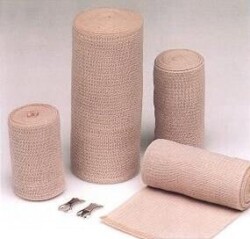
Tensor bandages apply gentle compression to the injured area to help reduce swelling.They are similar to compression sleeves that are made to provide a custom fit for specific parts of the body, such as elbow or thigh compression sleeves.
However, elastic bandages can be used virtually on any part of the body and are therefore more versatile. In general, they are also more economically priced than most compression sleeves. Tensor bandages can be easily purchased at most pharmacies.
Deluxe vs. Econo Bandages
When shopping for a tensor bandage, you may notice that there are two types available - deluxe and economical.
Deluxe bandages use premium woven spandex and cotton in their construction. They are designed to provide uniform compression throughout the area of application. However, they are usually significantly more expensive than econo bandages.
Bandage Widths & Lengths
Tensor bandages come in widths of 2 to 6 inches and can be either single or double length.
A wider bandage spreads the pressure over a larger area, so it is less likely to dig in or restrict blood flow.
Use the narrower bandages for application to smaller body areas such as the wrist, for example. They will also help you provide precisely targeted compression to larger areas.
The wider bandages should be used for larger body parts such as the shoulder or thigh. They will apply compression to a larger area without the need to use a long bandage.
A typical tensor bandage application to an adult arm or leg may use a 3 or 4 inch wide bandage. However, for an adult’s fingers or for a child’s arms or legs, a 2 inch wide bandage would probably be a more appropriate choice.
Some Advice About Using Tensor Bandages
Although tensors are easy to use, it is wise to be aware of and observe some safety precautions about their use:
- Tensor bandages are most useful in the first few days after an injury, when they help to control swelling. As the swelling settles, gentle movement becomes more important than compression;
- Try to apply the bandage so that it fits snugly but does not cut off or restrict your circulation.If you experience any pain, numbness, tingling or unusual sensations, you should immediately adjust the bandage for a less tight fit.If the unusual sensations continue, immediately remove the bandage and consult your doctor;
- Loosen the wrap before you go to bed. It should not fit so tightly as to interfere with your sleep;
- Wash the bandage regularly, but avoid using a washing machine or dryer. Instead, hand wash the tensor bandage in warm soapy water and then rinse it. Then allow it to air dry.
- Remember that, although the bandage provides compression to help reduce swelling, it does not provide the support your joint may need for a complete healing solution. As a result, you may still need to wear an orthopedic brace or K tape or athletic tape as a supplement to the tensor bandage.