

SAM Splint
By: SAM Medical®
An essential component of first aid or emergency medical technician kits, the SAM Splint is a compact, versatile and lightweight device that can be used to stabilize soft tissue injuries. It is also widely used in ambulances and other emergency aid settings.
The SAM Splint is designed for immobilization of bones or soft tissues in emergency situations. Compact, versatile and lightweight, it consists of a 0.016 inch thick layer of soft aluminium with a polyethylene closed cell foam coating. It comes in the form of a roll or flat strip but can be unrolled or unfolded and formed to the shape of an injured person’s body. Once it has been folded into a curved shape, it becomes rigid and capable of performing its key function of soft tissue or bone immobilization.
The SAM Splint is particularly useful for addressing injuries of the forearm, leg or humerus but, if folded properly, can also be used to stabilize the cervical spine. You can also easily cut it with scissors or shears to make splints for smaller areas of the body (e.g. finger splints).
A patient can wear the splint while X-Rays are taken, as its radiolucent properties mean that it will not interfere with these rays. After each use, you can clean, re-roll and reuse the splint.
It is available in lengths of 36″, 18″ and 4″ (finger sized).
1 review for SAM Splint
Q & A
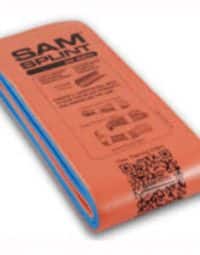
Table of Contents
Frequently Asked Questions
Can the SAM Splint be used for spinal immobilisation, and if so, how?
Yes, the SAM Splint can be employed for cervical spine stabilisation, though this requires careful folding technique. When shaped correctly—typically by creating a C‑curve or folded “collar” configuration—the splint becomes sufficiently rigid to limit neck motion in an emergency setting. This makes it a valuable tool when traditional cervical collars are unavailable.
However, it is essential to recognise that the SAM Splint is not a substitute for dedicated spinal immobilisation devices in advanced pre‑hospital or hospital care. It should be used only as a temporary measure while transporting a patient or awaiting more definitive equipment. Proper training in folding and application is critical, as incorrect placement could worsen an injury.
For maximum safety, always combine the splint with manual inline stabilisation of the head and neck. When used appropriately, the SAM Splint offers a lightweight, compact solution for spinal support in resource‑limited or wilderness environments.
Will the SAM Splint interfere with X‑rays or other imaging?
No, the SAM Splint is specifically designed to be radiolucent, meaning it will not obstruct X‑rays or appear as a dense shadow on radiographic images. This property is a significant clinical advantage, as patients can remain splinted during diagnostic imaging without requiring removal of the device.
The splint’s core materials—a thin layer of soft aluminium and a polyethylene foam coating—allow X‑rays to pass through with minimal attenuation. As a result, fracture lines, joint alignments, and foreign bodies remain clearly visible. This eliminates the need to remove the splint prematurely, which could cause unnecessary pain, movement, or re‑injury.
Nonetheless, always inform the radiologist or technician that a SAM Splint is in place. While the splint does not produce significant artefact, its foam coating may cause very slight contrast differences. In practice, however, these are rarely problematic. The ability to leave the splint undisturbed from the field through X‑ray supports both patient comfort and clinical efficiency.
Is the SAM Splint reusable, and how should it be cleaned?
Yes, the SAM Splint is fully reusable, which makes it a cost‑effective and environmentally responsible choice for emergency kits, ambulances, and outdoor expeditions. After each use, provided the splint has not been permanently creased or cut beyond repurposing, it can be cleaned, re‑rolled or refolded, and returned to service.
To clean the splint, wipe the polyethylene foam surface with a mild soap solution or a disinfectant wipe approved for medical equipment. Avoid harsh solvents, bleach, or abrasive pads, as these may degrade the foam or the adhesive bond between layers. Rinse with a damp cloth if necessary, then allow the splint to air dry completely before re‑rolling.
Do not autoclave or submerge the splint in liquid, as moisture trapped inside the foam or between the aluminium and foam could lead to corrosion or material breakdown. With proper care, a single SAM Splint can withstand dozens of uses, making it a reliable mainstay in both professional and personal first‑aid kits.



Jamil S. (Verified Owner) –
can’t go anywhere without Splinty