

Shoulder Immobilizer, Sling Or Shoulder Brace? A Clinician’s Guide
Shoulder injuries are among the most common problems seen in sports medicine, physiotherapy and orthopaedic clinics, and choosing the right support is an important early decision. Depending on the injury, a patient may need a shoulder immobilizer to keep the arm still, a simple sling for comfort, a post op shoulder brace after surgery, or a stabilizing brace to protect an unstable joint during sport.
This guide is written for clinicians, athletic therapists and hospital and clinic buyers. It explains how each type of shoulder support works, which injuries they are used for, and how to fit them.
How Shoulder Supports Work

Shoulder supports fall into four broad groups:
- Shoulder immobilizers hold the arm against the body, usually with a sling and a strap around the torso (a swathe), so the shoulder cannot move into rotation or away from the body.
- Arm slings support the weight of the arm and forearm for comfort, but allow more movement than an immobilizer.
- Post op shoulder braces hold the arm in a set position after surgery, sometimes with an abduction pillow, as directed by the surgeon.
- Stabilizing braces and compression supports limit end-range movement or add compression and warmth, and are used during rehabilitation and return to sport.
Compression supports may also improve a patient’s awareness of shoulder position, although they cannot replace the strength and control that come from a rehabilitation program.
When Is A Shoulder Immobilizer Used?
A shoulder immobilizer is generally used when the shoulder needs to be protected from movement for a period of time, for example:
- After a dislocation that has been reduced, for a short period of protection before rehabilitation begins, according to the treating physician’s advice.
- After shoulder surgery, such as rotator cuff repair, labral repair or stabilization procedures, where the surgeon specifies the position and how long the arm should be immobilized.
- After some fractures of the upper arm or collarbone, where a sling or immobilizer is part of conservative management.
- For severe pain after an acute injury, until the patient can be assessed.
Because prolonged immobilization can lead to stiffness, the length of time in a shoulder immobilizer should always be guided by the treating physician or surgeon, and gentle movement of the elbow, wrist and hand is usually encouraged.
Arm Slings

For many minor injuries, or for the later stages of recovery, an arm sling is enough. Slings are also commonly used for elbow, wrist and hand injuries. Options include the Mueller Adjustable Arm Sling and the LP Arm Sling. Browse our full arm sling range.
Choosing A Post Op Shoulder Brace
After surgery, the surgeon will usually specify the type of post op shoulder brace and the arm position. Repairs that must be protected from tension, such as some rotator cuff repairs, may require an abduction-style brace that holds the arm slightly away from the body, while other procedures may only need a sling and swathe. When supplying a post op shoulder brace, confirm the surgeon’s instructions, check sizing carefully and make sure the patient knows how to put it on and take it off for washing and dressing.
Shoulder Braces For Instability And Return To Sport
Once a patient has regained movement and strength, a stabilizing brace can help athletes return to contact sport after a dislocation or subluxation. The Sully Shoulder Brace limits the positions of abduction and external rotation that can lead to a recurrence. For milder instability, strains or general support, compression options include the McDavid Shoulder Wrap and the LP Shoulder Support. Contact athletes with acromioclavicular (AC) joint injuries may also benefit from protective padding such as the Shoulder AC Pad. See also our supports for a dislocated shoulder, rotator cuff injury and shoulder arthritis.
Common Shoulder Injuries And Typical Support
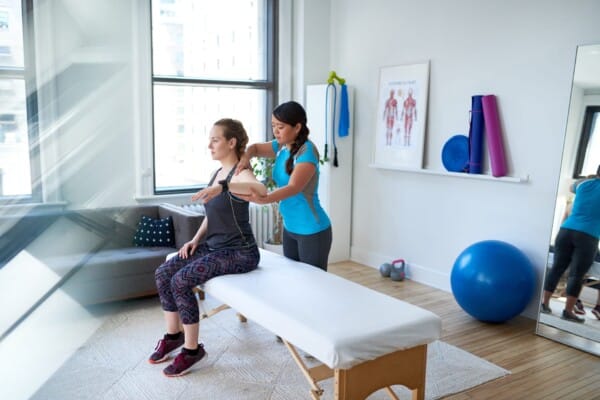
- Shoulder dislocation: a sling or shoulder immobilizer for a short period after reduction, followed by rehabilitation and, for contact athletes, a stabilizing brace on return to sport.
- AC joint sprain: a sling for comfort in the early days, then padding and taping on return to sport.
- Rotator cuff tear: a sling for comfort with conservative management, or a post op shoulder brace after repair.
- Labral tear: a sling or immobilizer after repair as directed by the surgeon; Hospital for Special Surgery explains the types of labral tear and their treatment.
- Impingement and tendinopathy: usually managed with exercise and activity changes rather than immobilization; see our shoulder impingement supports.
Fitting A Shoulder Immobilizer Or Sling
- Support the injured arm with the elbow bent at about 90 degrees, or at the angle the physician specifies.
- Slide the arm into the sling so the elbow sits snugly in the back of the pouch and the wrist and hand are supported, not hanging over the edge.
- Adjust the neck strap so the hand sits slightly higher than the elbow, and pad the strap where it crosses the neck if needed.
- Fasten the body strap, if present, snugly but without restricting breathing.
- Check circulation and sensation in the hand, and teach the patient or family how to reapply it.
Once immobilization is no longer needed, patients usually progress to range of motion exercises with equipment such as the DynaPro Shoulder Pulley, then strengthening. For cold therapy after shoulder injuries and surgery, see our guide to cold therapy.
Frequently Asked Questions
What is the difference between a shoulder immobilizer and a sling?
A sling supports the weight of the arm, while a shoulder immobilizer also holds the arm against the body with a strap so the shoulder cannot rotate or move away from the body.
How long is a shoulder immobilizer worn?
It depends on the injury and procedure. After surgery it is often several weeks; after a dislocation the period is usually shorter. Always follow the treating physician’s instructions.
Can patients sleep in a post op shoulder brace?
Many surgeons ask patients to wear the brace while sleeping in the early weeks after surgery. Sleeping semi-reclined is often more comfortable.
When should an athlete wear a shoulder stabilizing brace?
Usually on return to contact sport after a dislocation or subluxation, once range of motion and strength have been restored through rehabilitation.
Shoulder Supports For Clinics And Teams Across Canada
Dunbar Medical supplies hospitals, clinics, pharmacies and sports teams across Canada with slings, shoulder braces and rehabilitation equipment from brands including Mueller, McDavid, LP Support and Sully. Browse our shoulder brace range, or contact our team for product advice.
Conclusion
Choosing between a shoulder immobilizer, a sling, a post op shoulder brace and a stabilizing brace depends on the injury, the stage of recovery and the surgeon’s instructions. Immobilize when the shoulder needs protection, move to a sling as pain settles, and use stabilizing or compression braces to support the return to activity, always alongside a structured rehabilitation program.





Whrther Unloading knee brace can be worn at a stretch for 2 to 3 hours when sitting intermittently during walk for a considerable distance ? I feel it to get tightened around knee whenever sitting on a stool to make right angle position of knee joint. Also skin starting irritation over the area it is worn and requires scrathing.