

Tuff Nitrile Exam Gloves
By: Wayne Safety
| Size | Large, Medium, Small, X-Large |
|---|---|
| Colour | Black, Blue, Cobalt |
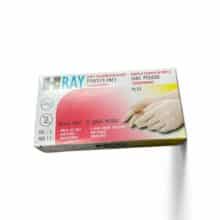
Wayne Safety Tuff Nitrile Exam Gloves are 100% nitrile and latex free and offer superior protection together with excellent sensitivity.
Wayne Safety Tuff Nitrile Exam Gloves are 100% nitrile with no fillers and no natural rubber latex protein. They offer high puncture resistance together with excellent sensitivity. For extra durability, these powder free gloves also offer high tear and superior abrasion resistance. They are CFIA approved and also carry a Health Canada Class 2 Medical Device License. 100 gloves/pack.Non Sterile. Single use only.
| Size | Large, Medium, Small, X-Large |
|---|---|
| Colour | Black, Blue, Cobalt |
Q & A

Table of Contents
Frequently Asked Questions
Are Nitrile Exam Gloves Safe for People with Latex Allergies?
One of the primary advantages of nitrile gloves, and a key feature of the Wayne Safety Tuff model, is that they are completely free of natural rubber latex . As the product description confirms, they contain “no natural rubber latex protein.” This makes them an excellent choice for individuals with latex allergies or those who have developed sensitivities from repeated exposure.
Latex allergies can range from mild skin irritation (Type IV hypersensitivity) to more severe, immediate reactions like respiratory distress or anaphylactic shock (Type I hypersensitivity) . By using 100% synthetic nitrile, these gloves eliminate the risk of such allergic reactions, providing a safe barrier for both the wearer and the patient . Furthermore, because they are powder-free, they also reduce the risk of contact dermatitis and eliminate the particulate contamination that can be associated with powdered gloves .
How Durable and Protective Are Nitrile Exam Gloves?
The Tuff Nitrile Exam Gloves are engineered for high durability and superior protection. They are described as having “high puncture resistance together with excellent sensitivity,” as well as “high tear and superior abrasion resistance.” This aligns with the general understanding that nitrile is a stronger, more puncture-resistant material than latex.
Studies have confirmed that nitrile gloves often exhibit significantly higher puncture resistance compared to latex gloves when tested with standard probes . This makes them ideal for high-risk environments where exposure to bloodborne pathogens or sharp instruments is a concern.
The Tuff Nitrile Exam gloves meet the requirements for a Health Canada Class 2 Medical Device License, which means they have undergone regulatory scrutiny and are approved for use in invasive clinical settings, providing a verified barrier against infection . Their chemical resistance is also superior to latex, offering protection against many oils, greases, and solvents found in healthcare and laboratory environments .
What Do "Non-Sterile" and "Single Use Only" Mean in Practice?
These terms define the gloves’ intended application and handling. “Non-sterile” indicates that the nitrile exam gloves are manufactured in a clean environment but have not been subjected to a sterilization process (like gamma radiation or ethylene oxide treatment) to guarantee the absence of all microorganisms . They are perfectly suitable for a vast range of tasks, including most patient exams, food handling, and general laboratory work. However, for surgical procedures that require a sterile field, a sterile glove would be necessary.
The designation “Single use only” is a critical safety requirement, not merely a suggestion. These gloves are disposable and designed to be worn for one task and then discarded . Reusing them, or attempting to wash and disinfect them for later use, is dangerous because it can compromise the glove’s integrity, creating micro-tears that compromise the barrier . Medical guidelines emphasize that gloves must be changed between patients, when moving from a contaminated to a clean site on the same patient, or immediately if a tear is suspected, to prevent cross-contamination .





Reviews
There are no reviews yet