

Splinter Forceps
By: Almedic
Common uses for splinter forceps include removing small fragments from a wound, removal and placement of wound closure strips, suture removal and holding suture ends prior to cutting.
Splinter forceps have many potential uses, including:
- Removal and insertion of wound closure adhesive strips (such as the Curity Adhesive Wound Closure Strips, for example);
- Removal of sutures;
- Isolation of small blood vessels for electrosurgical destruction;
- Holding suture ends before cutting.
In addition to the above uses, splinter forceps can also be useful for overall assistance when suturing (stitching) wounds. They are also useful for removing small foreign particles from wounds prior to the application of dressings.
These forceps can be either straight or curved. In curved form, they allow the user to access wounds in small areas such as the mouth when the use of straight forceps might make access difficult or impossible.
Q & A
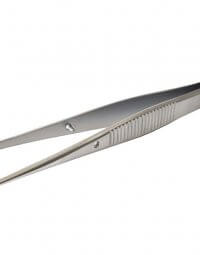
Table of Contents
Frequently Asked Questions
What are the primary medical uses for splinter forceps?
While the name suggests a single purpose, splinter forceps are a multi-functional instrument valued in clinical settings. Their primary and most well-known function is the atraumatic removal of foreign particles such as splinters, thorns, or glass shards from wounds, where their fine, pointed tips allow for a firm grip without causing further tissue damage .
Beyond this, they are extensively used in wound management and suturing. For instance, they are ideal for the removal and precise placement of adhesive wound closure strips (like Curity strips) and for the removal of sutures . During suturing procedures, they are useful for holding suture ends securely before cutting and can assist generally by manipulating tissue . In more specialized applications, such as dermatological surgery, they can even be used to isolate small blood vessels for electrosurgical destruction .
How do splinter forceps differ from standard tweezers?
The distinction between splinter forceps and standard tweezers lies in their design, precision, and intended use, which is why forceps are the preferred choice for medical professionals. Standard tweezers typically have broader, blunter tips that are adequate for grasping a superficial splinter but can be ineffective or even push debris deeper into the skin.
In contrast, splinter forceps feature fine, sharply pointed tips—which may be straight or curved—that provide superior precision and access to small or deep wounds . Furthermore, the jaws of splinter forceps often have transverse serrations or vertical grooves to ensure a secure grip on small, slippery, or irregularly shaped objects . Crucially, they are almost exclusively made from high-grade stainless steel, making them durable, corrosion-resistant, and capable of being sterilized for repeated medical use, unlike common household tweezers .
How should splinter forceps be properly cleaned and sterilized?
Maintaining the hygiene and integrity of splinter forceps is critical to prevent infection and ensure the instrument’s longevity. The process involves both cleaning and sterilization. First, after each use, the forceps should be washed with warm soapy water and a soft brush to meticulously remove all debris, blood, and tissue from the tips and serrations . They must then be rinsed and dried thoroughly to prevent water spots or corrosion.
Following cleaning, sterilization is required to eliminate microorganisms. Accepted methods for sterilizing stainless steel forceps at home or in a clinic include boiling them in water for 10-15 minutes or soaking them in 70% isopropyl alcohol for at least 5 minutes . In professional settings, an autoclave is the standard method . After sterilization, store the forceps in a clean, dry environment to maintain their sterility until their next use.


Reviews
There are no reviews yet