

Neurological Hammer with Brush & Needle
By: Almedic
Neurological hammer for assessing muscle stretch and other reflexes. Includes brush and needle.
This neurological hammer is (like the Taylor Percussion Hammer) an accepted tool for testing muscle stretch reflexes, superficial or cutaneous reflexes and plantar or abdominal reflexes. Includes needle and brush.
The included brush can be used for testing the patient’s sensitivity to light touch at various locations on the body.
The needle can also be used to assess sensitivity to light touch (thigmesthesia) or to test the ability to sense pain.
Please note that these are not sterile devices and should not be used to pierce the skin.
Q & A
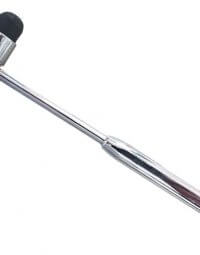
Table of Contents
Frequently Asked Questions
What are the primary uses of this neurological hammer and its attachments?
This neurological hammer is a comprehensive diagnostic instrument modeled after the classic Taylor Percussion Hammer. Its core function is to assess reflexes. The hammer head is used to test deep tendon or muscle stretch reflexes (such as the patellar reflex), while the opposite end is designed for evaluating superficial reflexes, like the plantar (Babinski) or abdominal reflexes.
The included attachments significantly expand its diagnostic utility. The soft brush is specifically employed to test a patient’s sensitivity to light touch (a sense known as thigmesthesia) across various dermatomes. Conversely, the needle attachment is used for two distinct purposes: it can also assess light touch discrimination or, more critically, be applied with safe, gentle pressure to evaluate a patient’s ability to perceive pain (nociception).
Together, these components allow a clinician to perform a foundational sensory and motor neurological examination, helping to identify potential issues within the peripheral nervous system or central neural pathways.
Is this device sterile, and can the needle be used to pierce the skin?
It is crucial to understand that this neurological hammer and its attachments are not sterile and are explicitly not intended to pierce, puncture, or break the skin. The needle is designed as a blunt-tipped stimulator for sensory testing only. Its purpose is to apply controlled, non-invasive pressure to test pain sensation or light touch, not for any form of injection, blood drawing, or acupuncture.
Using this non-sterile needle to compromise the skin’s barrier would pose a serious risk of infection for the patient and could expose the clinician to bloodborne pathogens. For any procedure requiring skin penetration, a single-use, clinically sterilized needle must be employed. This device is classified as a reusable diagnostic tool and should be appropriately cleaned and disinfected between patients according to your facility’s protocol for non-critical medical devices.
How do I properly clean and maintain the neurological hammer between patients?
Proper cleaning is essential for patient safety and instrument longevity. As a multi-component device, it requires careful attention. First, detach the brush and needle from the hammer handle. All parts should be thoroughly cleaned with a neutral pH detergent and warm water to remove organic debris, then rinsed and dried. Subsequently, these non-sterile, non-critical items must be disinfected using an intermediate-level disinfectant (e.g., an EPA-registered hospital-grade disinfectant suitable for non-porous surfaces) by following the manufacturer’s contact time instructions.
Avoid abrasive cleaners or immersion in harsh chemicals that could degrade the rubber hammer head, loosen attachments, or corrode metal parts. After disinfection, store the complete set in a clean, dry environment. Regularly inspect the instrument for damage, such as a loose hammer head, a bent needle, or frayed brush bristles, as these could compromise its function and safety.


Reviews
There are no reviews yet