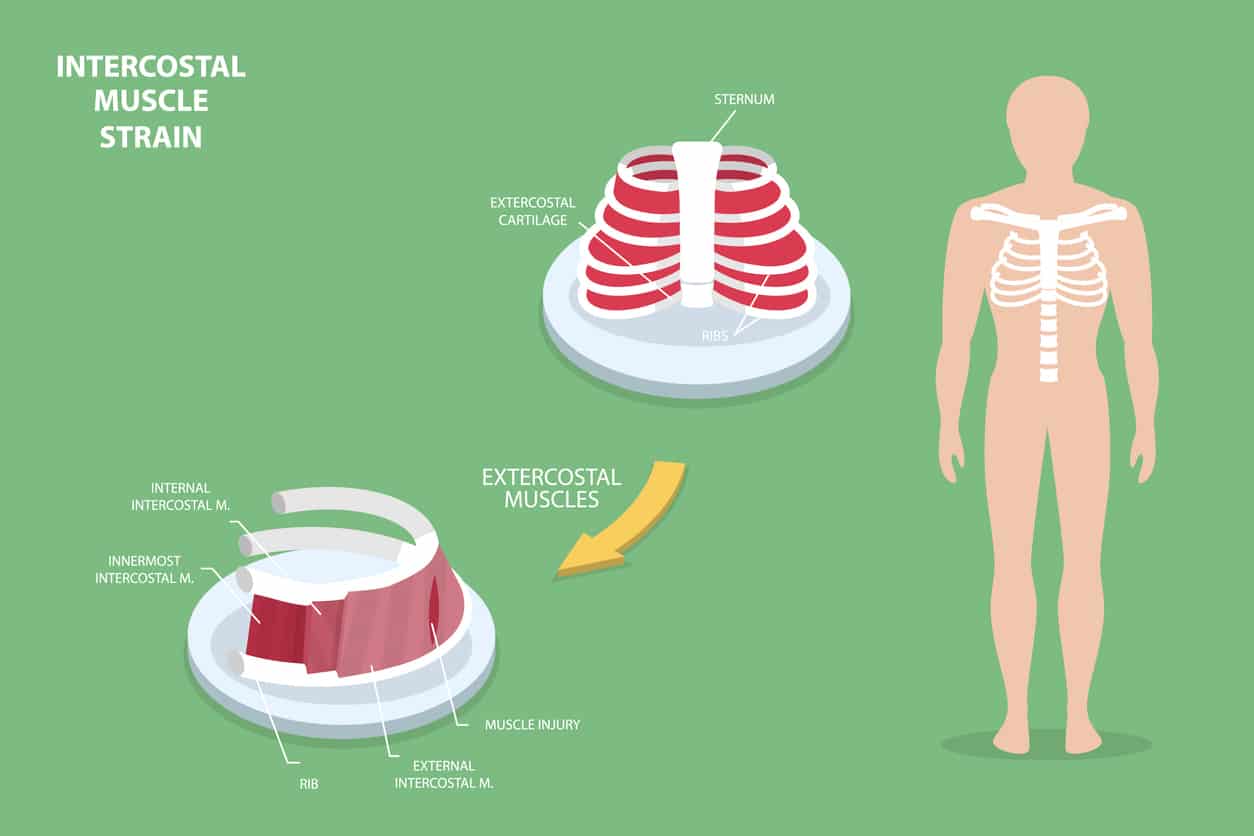
Causes of Intercostal Muscle Strains
Intercostal muscle strains can be caused by the following factors:
Sudden Movements
Rapid, forceful movements such as twisting, reaching, or lifting heavy objects can strain or tear the intercostal muscles.
Repetitive Actions
Performing repetitive actions involving the upper body, such as throwing, swinging, or rowing, can put excessive strain on the intercostal muscles, leading to strain or injury over time.
Coughing or Sneezing
Forceful coughing or sneezing episodes can strain the intercostal muscles, particularly if done repeatedly or with great intensity.
Sports Activities
Sports that involve twisting or rotational movements, such as golf, tennis, or baseball, can increase the risk of intercostal muscle strains, especially if proper technique or warm-up is not followed.
Symptoms of Intercostal Muscle Strains
The symptoms of intercostal muscle strains may vary in severity, but common signs include:
Pain
Intercostal muscle strains typically cause sharp, localized pain in the affected area between the ribs. The pain may worsen with movements, deep breathing, or coughing.
Tenderness and Swelling
The injured area may be tender to touch, and mild swelling or bruising may be present.
Muscle Spasms
In some cases, muscle spasms or cramping sensations may accompany the strain, causing additional discomfort.
Diagnosing an Intercostal Muscle Strain
To diagnose intercostal muscle strains, healthcare professionals may perform the following:
Medical History and Physical Examination
A detailed discussion of the individual's symptoms, medical history, and the circumstances surrounding the injury is crucial. A physical examination may involve palpating the affected area, assessing range of motion, and identifying any points of tenderness.
Imaging Tests
While imaging tests are not always necessary, in cases where the diagnosis is unclear or to rule out other potential injuries, an X-ray or MRI scan may be recommended. These tests can help visualize the ribs, muscles, and surrounding structures.
Diagnostic Injections
In some instances, a diagnostic injection of local anesthetic into the affected area may be performed to confirm the source of pain and validate the diagnosis.
Treatment of Intercostal Muscle Strains
The treatment approach for intercostal muscle strains aims to relieve pain, promote healing, and restore normal function. Treatment options may include:
Rest and Activity Modification
Resting the injured area and avoiding activities that exacerbate the pain is crucial for allowing the muscles to heal. Gradual resumption of activities and modification of movements to avoid strain on the intercostal muscles may be recommended.
Pain Management
Over-the-counter nonsteroidal anti-inflammatory drugs (NSAIDs) or prescribed pain medications may be used to manage pain and reduce inflammation.
Ice or Heat Therapy
Applying cold compresses or heat therapy (such as a moist heat pack) to the affected area can help reduce pain, inflammation, and promote circulation, depending on the stage of the injury.
Physical Therapy
A physical therapist can design a customized rehabilitation program to restore strength, flexibility, and proper movement patterns. This may include stretching exercises, gentle range-of-motion exercises, and gradually progressing to strengthening exercises.
Breathing Techniques
Learning proper breathing techniques, such as diaphragmatic breathing, can help reduce strain on the intercostal muscles and promote relaxation.
Taping or Bracing
In some cases, taping or bracing the affected area may provide support and relieve strain on the intercostal muscles during the healing process.
Gradual Return to Activity
As symptoms improve, a gradual return to normal activities and sports should be guided by healthcare professionals to prevent re-injury.
How To Avoid Intercostal Muscle Strains
To prevent intercostal muscle strains, individuals can consider the following measures:
Warm-up and Stretching
Engaging in a proper warm-up routine that includes stretching exercises can prepare the muscles for physical activity and reduce the risk of strains.
Core Strengthening
Strengthening the core muscles can improve overall stability and reduce strain on the intercostal muscles during movements. Resistance bands can be used for this purpose.
Proper Technique
Maintaining proper technique and form during sports or physical activities can help minimize excessive stress on the intercostal muscles.
Gradual Progression
Gradually increasing the intensity, duration, or frequency of physical activities allows the body to adapt and reduces the risk of strains.
Conclusion
Intercostal muscle strains can cause significant pain and discomfort, affecting an individual's daily activities and sports performance. Understanding the causes, recognizing the symptoms, accurate diagnosis, and implementing appropriate treatment strategies are crucial for effective management of intercostal muscle strains.
Seeking professional medical attention and guidance from healthcare providers, such as sports medicine specialists or physical therapists, is essential for a comprehensive evaluation, accurate diagnosis, and tailored treatment plan.
By addressing intercostal muscle strains promptly and following appropriate interventions, individuals can alleviate pain, facilitate healing, and safely return to their normal activities with restored intercostal muscle health.