

Elbow Braces: 5 Common Questions, Including How To Wear An Elbow Brace
Elbow braces are among the most common supports recommended by physiotherapists, athletic therapists and physicians. They can ease the pain of tennis elbow and golfer’s elbow, protect the joint after a sprain, and support a safe return to sport or work.
If you have been told to try a strap, the most common question is how to wear tennis elbow brace straps so they actually help; we answer that below, along with four other questions we hear often.
This article answers five of the most common questions about elbow braces: which injuries they help, how they work, the types available, which therapies to combine them with, and how to wear an elbow brace correctly. It ends with step-by-step instructions on how to wear tennis elbow brace straps correctly.
What Injuries Can Elbow Braces Help?

- Lateral epicondylitis (tennis elbow): pain on the outside of the elbow from overload of the wrist extensor tendons. OrthoInfo explains the condition in detail.
- Medial epicondylitis (golfer’s elbow): pain on the inside of the elbow from overload of the wrist flexors.
- Elbow sprains and hyperextension injuries: common in contact sports, gymnastics and falls.
- UCL injuries in throwing athletes: see our guide to UCL injury.
- Elbow arthritis and general aches: where warmth and compression improve comfort.
How Do Elbow Braces Work?
Different elbow braces work in different ways:
- Counterforce straps apply pressure to the forearm muscles just below the elbow, which is thought to reduce the load on the tendon attachment.
- Compression sleeves provide warmth, mild support and improved awareness of joint position.
- Sleeves with straps combine compression with targeted counterforce.
- Hinged braces limit range of motion to protect healing ligaments after more serious injuries or surgery.
What Kinds Of Elbow Braces Are Available?

- Elbow straps: the BandIT XM and Mueller Tennis Elbow Support With Gel Pad.
- Elbow sleeves: the Mueller OmniForce Elbow Support E-700 and McDavid Elbow Sleeve with Gel Buttresses.
- Sleeves with straps: the Mueller Adjustable Elbow Support and McDavid Hyperblend Elbow Sleeve with Strap.
Browse our full range of elbow braces and supports. For tennis elbow specifically, see our guide to choosing a lateral epicondylitis brace. Whichever you choose, knowing how to wear tennis elbow brace straps correctly makes a big difference to comfort.
What Other Therapies Work With Elbow Braces?
- Load management: modifying grip, technique and equipment, such as racquet size and grip thickness.
- Exercise: progressive loading of the forearm muscles, including isometric and eccentric exercises with resistance bands.
- Cold and heat: a Reusable Cold/Hot Pack for pain after activity.
- Manual therapy and taping: see our guide to manual therapy.
- Electrotherapy and shockwave: for persistent tendon pain.
How To Wear Tennis Elbow Brace Straps Correctly
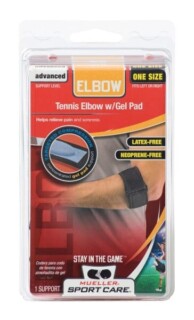
- Counterforce straps: place the strap about two finger-widths below the elbow crease, over the forearm muscles rather than the bony point, with the pad over the muscle bulk.
- Tension: snug enough to feel support when gripping, but loose enough that the hand does not tingle or change colour.
- Sleeves: choose the right size from the manufacturer’s chart and position the sleeve centred on the elbow.
- When to wear: during aggravating activities such as sport, lifting or repetitive work, and remove it at rest unless advised otherwise.
- Care: hand wash and air dry, and replace the brace when the elastic loses its support.
Frequently Asked Questions
Do elbow braces work for tennis elbow?
Counterforce straps and sleeves can reduce pain during activity for many people with tennis elbow, especially when combined with exercise and load management.
How do I wear an elbow brace?
Place a counterforce strap about two finger-widths below the elbow crease over the forearm muscles, tight enough to feel support but not so tight that the hand tingles. This placement is the key to how to wear tennis elbow brace straps for the best effect.
Should I wear an elbow brace all day?
Most people only need to wear an elbow brace during activities that aggravate their symptoms. Your clinician can show you how to wear tennis elbow brace straps for your specific activities.
Can I sleep in an elbow brace?
Straps and sleeves are usually removed at night unless a clinician advises otherwise. Hinged braces after surgery are worn as directed.
Elbow Braces From Dunbar Medical
Dunbar Medical supplies physiotherapy clinics, athletic therapists, pharmacies and sports teams across Canada with elbow straps, sleeves and supports from Mueller, McDavid and other leading brands. Please contact our team for product advice.
Conclusion
Elbow braces can ease pain and protect the elbow during sport and work. Choose the right type for the injury, fit it correctly, and combine it with exercise and load management for the best results.
Still unsure how to wear tennis elbow brace straps for your particular injury? Ask your physiotherapist or athletic therapist to check the fit and placement.

great post, thanks for the effort