Lateral Epicondylitis Brace: How To Choose And Fit An Epicondylitis Brace
Lateral epicondylitis, better known as tennis elbow, is one of the most common upper limb conditions seen in physiotherapy, chiropractic and athletic therapy clinics. Patients often ask whether they should wear a brace, and many arrive having already tried one that did not fit or was in the wrong place. A well-chosen lateral epicondylitis brace is a simple, low-risk addition to load management and exercise.
This guide is written for clinicians and clinic buyers. It covers how an epicondylitis brace works, what the research says, the main types available, and how to choose and fit the right brace for each patient.
What Is Lateral Epicondylitis?
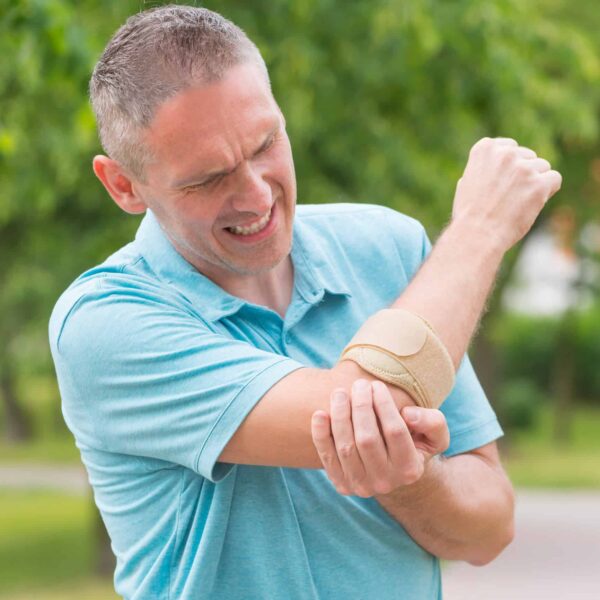
Lateral epicondylitis is a tendinopathy of the common extensor origin on the lateral epicondyle, most often involving the extensor carpi radialis brevis. It develops with repeated gripping and wrist extension, so it is seen in racquet sports players and in trades, assembly line, office and manual workers alike. Despite the name, most patients with tennis elbow do not play tennis.
Patients typically report pain over the lateral elbow that is worse with gripping, lifting with the palm facing down, shaking hands or turning a door handle, and may describe pain spreading into the forearm. Most cases improve with conservative care, but symptoms can persist for many months, which is why a lateral epicondylitis brace is often used to keep patients working and active while the tendon recovers.
How A Lateral Epicondylitis Brace Works
Most designs work on the counterforce principle. A strap or pad applies pressure over the wrist extensor muscles a short distance below the lateral epicondyle. This pressure is thought to reduce and redistribute the tensile load that reaches the painful tendon origin when the patient grips, which can make everyday tasks more comfortable.
Sleeves add compression and warmth around the whole joint, which some patients find soothing, and many combine a sleeve with a counterforce strap. Whichever design you choose, the aim is the same: to reduce pain during aggravating activities so the patient can keep working and complete their exercise program.
What Does The Evidence Say?
It is important to set realistic expectations. A Cochrane review of orthotic devices for tennis elbow found too few good-quality trials to draw firm conclusions about how effective braces are, and the research since has been mixed. Many patients do report less pain when gripping while wearing an epicondylitis brace, and the risk of harm is low.
For this reason, most clinicians use a lateral epicondylitis brace as an adjunct, not a stand-alone treatment. It works best alongside education, activity and load modification, and a progressive strengthening program for the wrist extensors.
Types Of Epicondylitis Brace

Counterforce Straps
Counterforce straps are the most widely used lateral epicondylitis brace. They are small, light and easy to wear under clothing or during sport, and most have a pad, gel insert or air cell to focus pressure over the extensor muscles. Options include the BandIT Elbow Brace, the Mueller Hg80 Premium Tennis Elbow Support, the Mueller Tennis Elbow Support with Gel Pad, the McDavid Elbow Strap with Pads and the BioSkin Tennis Elbow Band. Browse the full elbow strap range.
Sleeves With A Counterforce Strap
A sleeve with an integrated strap combines compression and warmth with targeted counterforce pressure. These suit patients with more widespread forearm aching, or those who find a strap on its own slips during activity. Examples include the BioSkin Tennis Elbow Skin, the Mueller Adjustable Elbow Support and the McDavid Hyperblend Elbow Sleeve with Strap.
Compression Sleeves
A compression elbow sleeve such as the Mueller OmniForce Elbow Support E-700 or the LP XTremus Elbow Support provides warmth and general support without a focused strap. Sleeves can suit milder or more irritable presentations, or patients who do not tolerate direct pressure.
How To Choose An Epicondylitis Brace For Each Patient
When recommending an epicondylitis brace, consider:
- The aggravating activity. Racquet sports and golf suit a low-profile strap; heavy manual work suits a durable strap with a firm pad; keyboard and mouse work may suit a strap worn only during long sessions.
- Irritability. Patients with very sensitive tissues may start with a sleeve and progress to a strap as pain settles.
- Comfort and skin. Breathable materials and soft edges make it more likely the patient will wear the brace correctly through a work shift.
- Forearm size. Check the size chart, which is usually based on forearm circumference just below the elbow, and keep a range of sizes in stock rather than relying on one size for everyone.
- Medial symptoms. Patients with pain on both sides may suit a strap that can be positioned for golfer’s elbow as well.
Fitting A Lateral Epicondylitis Brace

Correct placement makes a significant difference to how much relief a patient gets. Use these steps when fitting a lateral epicondylitis brace:
- Locate the most painful point over the lateral epicondyle.
- Place the strap about two finger widths below it, with the pad over the bulk of the wrist extensor muscles rather than over the bone.
- Tighten the strap with the forearm muscles relaxed, so it feels snug at rest and firmer when the patient makes a fist.
- Check that the patient has no numbness, tingling or swelling in the hand; if they do, loosen the strap.
- Ask the patient to grip or lift a light object and confirm the brace reduces their pain before they leave the clinic.
Advise patients to wear the brace during the activities that bring on their pain and to take it off at rest and during sleep. Review the fit at follow-up appointments, since straps often migrate up or down the forearm over time.
Using A Brace Alongside Treatment
A lateral epicondylitis brace is most effective as one part of a broader plan that may include:
- education about the condition and its expected recovery time;
- modifying the aggravating activity, such as grip size, racquet string tension, tool handles or workstation set-up;
- a progressive loading program for the wrist extensors, starting with isometric exercises and building to heavier and faster work; and
- other treatments the clinician feels are appropriate for the individual patient.
For more on elbow conditions and supports, see elbow braces: questions and answers and our overview of elbow injuries.
Frequently Asked Questions
Where should a lateral epicondylitis brace be placed?
About two finger widths below the lateral epicondyle, with the pad or strap over the wrist extensor muscles rather than directly on the bone or the painful spot.
Should patients wear an epicondylitis brace all day?
No. Most patients should wear it during gripping, lifting, sport or other aggravating tasks and remove it at rest and at night.
Is a strap or a sleeve better for tennis elbow?
A strap gives targeted counterforce pressure and is the usual first choice. A sleeve suits patients who want warmth and compression or who find direct pressure uncomfortable; some products combine both.
Can a lateral epicondylitis brace be used for golfer’s elbow?
Many counterforce straps can be rotated so the pad sits over the wrist flexor muscles below the medial epicondyle, which is the equivalent position for golfer’s elbow.
Elbow Supports For Clinics Across Canada
Dunbar Medical supplies physiotherapy, chiropractic and athletic therapy clinics, pharmacies and sports teams across Canada with elbow supports from brands including BioSkin, Mueller, McDavid, LP Support and BandIT. Browse our full elbow brace range, or contact our team for product advice.
Conclusion
A lateral epicondylitis brace will not cure tennis elbow on its own, and the evidence for braces is limited, but for many patients it reduces pain during the tasks that matter most to them. Choose a strap, a sleeve with a strap or a compression sleeve to suit the patient’s activity and irritability, fit it two finger widths below the epicondyle, and combine it with load management and progressive exercise for the best results.