

Dressing Forceps
By: Almedic
Dressing forceps are used when dressing wounds. They hold gauze and other dressings. They may also be used to remove infected or dead tissue or debris from the wound.
Dressing forceps are useful when dressing wounds. They can be used:
- For holding gauze (such as Conform stretch gauze) and other wound dressings;
- During wound debridement when you are cleaning the wound by removing infected or necrotic tissue or foreign debris;
- When suturing (stitching) the wound.
Serrated dressing forceps make it easier to get a secure grip when holding the wound dressings or other matter during wound treatment. Because less gripping force is needed to get a secure grip, the use of serrated forceps actually makes it easier to avoid damaging tissue during wound treatment.
Curved forceps allow access to wounds in small or difficult to reach areas such as the mouth. For larger areas, straight forceps can be used with satisfactory results.
Q & A
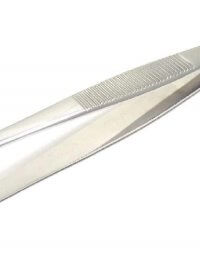
Table of Contents
Frequently Asked Questions
What are the primary uses of Dressing Forceps?
Dressing forceps are fundamental instruments in wound care and minor surgical procedures, designed to handle materials without direct hand contact to maintain sterility . Their primary function is to hold and manipulate sterile gauze, such as Conform stretch gauze, and other types of wound dressings during application or removal . This indirect handling is critical for preventing contamination of both the wound and the sterile supplies .
Beyond simply holding dressings, these forceps play a key role in active wound treatment. They are essential for wound debridement, the process of cleaning a wound by carefully removing infected or necrotic (dead) tissue, as well as any foreign debris . Furthermore, they can be used during suturing to handle the needle or manipulate the wound edges when specific needle holders are not readily accessible . In essence, dressing forceps are versatile tools for any task that requires precise manipulation of materials in a sterile field.
What is the difference between Dressing Forceps and Tissue Forceps?
While both are types of thumb forceps, dressing forceps and tissue forceps are designed for distinctly different purposes . Dressing forceps are intended for handling non-living materials like gauze, cotton balls, and bandages . Their tips are typically wider, flatter, and may be smooth or have transverse serrations to provide a secure grip on dressings without snagging or tearing them .
In contrast, tissue forceps are designed to grasp living tissue during surgical procedures . They often feature fine tips with interlocking teeth (e.g., 1×2 or 2×3 teeth) or more aggressive serrations to hold slippery or tough tissue securely without slipping . While this provides a firmer grip, the teeth can potentially damage delicate tissue. Therefore, the key distinction is their application: dressing forceps for materials, tissue forceps for biological tissue . Serrated dressing forceps offer a middle ground, providing a better grip on dressings while minimizing the risk of accidentally damaging tissue during wound treatment.


Reviews
There are no reviews yet