

Saline Solution
By: Baxter
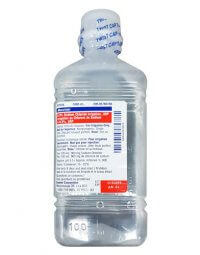
Baxter saline solution is a sterile isotonic solution ideal for wound care, treating blocked sinuses or a variety of other purposes. For irrigation only and not for injection.
Baxter Saline Solution – one bottle normal saline 0.9% sodium chloride for irrigation of wounds, tissues, body cavities or bladders. The solution is 9 grams of sodium chloride (NaCl) dissolved in water, to a total volume of 1000 ml (weight per unit volume(w/v)). This form of saline is useful for flushing wounds or cleaning skin abrasions prior to application of a wound dressing. It can also be used for clearing blocked sinuses or relieving dehydration. Must be taken topically. Do not take intravenously.
Q & A
Hello - thanks for your question. Unfortunately, we are not seeking distribution in the UAE at the moment. Best wishes.
Table of Contents
Frequently Asked Questions
Can I use this saline solution for intravenous (IV) purposes or to treat dehydration?
No, this specific formulation is strictly for topical irrigation and must never be administered intravenously.
While the chemical composition of this solution—0.9% sodium chloride—is identical to that of IV fluids, the packaging, sterility standards, and formulation intent are entirely different. This product is labeled as “for irrigation” and is designed for washing wounds, tissues, or body cavities. Intravenous fluids require pharmaceutical-grade sterility with specific additives to ensure they are isotonic for the bloodstream. Administering an irrigation solution intravenously poses a severe risk of infection, embolism, or adverse reactions due to the lack of preservatives and the absence of intravenous-specific safety protocols.
If you are seeking relief from dehydration, this solution is intended for topical use only, such as irrigating a wound or clearing a sinus passage. For dehydration, oral rehydration solutions or physician-administered IV therapy are the appropriate courses of action.
Is this saline solution safe to use for wound care and sinus irrigation?
Yes, when used as directed, this solution is an excellent choice for wound care and sinus irrigation.
For wound care, this sterile, preservative-free saline is ideal for flushing out debris, exudate, and bacteria from abrasions, surgical sites, or chronic wounds. Its isotonic nature means it will not damage delicate granulating tissue or cause the cell dehydration that can occur with stronger antiseptics. It is commonly used to prepare a wound bed prior to dressing application.
Similarly, for sinus irrigation, the sterile, preservative-free composition makes it a preferred option for rinsing nasal passages. Because it lacks additives or preservatives found in some over-the-counter sprays, it minimizes the risk of mucosal irritation. However, it is essential to use a sterile irrigation device and to avoid contaminating the bottle’s contents, as introducing bacteria into sinus cavities can lead to serious infection.
How should I store an opened bottle of this saline solution, and how long is it safe to use?
Once opened, the sterility of the solution is compromised, and it should be used immediately or discarded.
Baxter Saline Solution for irrigation is a sterile, preservative-free product. It is manufactured as a single-use or limited-use container because it does not contain bacteriostatic agents to prevent bacterial growth after the seal is broken. If the entire bottle is not used during a single irrigation session, the remaining solution should be discarded. Storing an opened bottle for later use—even under refrigeration—carries a significant risk of bacterial contamination, which could introduce pathogens into a wound, body cavity, or sensitive tissue.
For unused, sealed bottles, storage should be at room temperature, away from direct light and moisture. Always inspect the solution before use; if it appears cloudy, contains particulate matter, or if the seal is damaged, do not use it. Adhering to strict aseptic technique when handling the bottle is critical to ensuring patient safety.


Reviews
There are no reviews yet