


Balance Board
By: Cando®
This board is a combination wobble and rocker board for strengthening the lower back, improving ankle range of motion and other benefits. Several colours, heights and sizes are available.
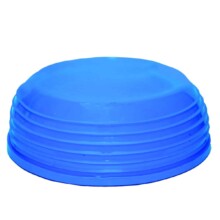
The CanDo® Balance Board is a combination wobble and rocker board.
The Cando Economy Board shares many of the same features but is more attractively priced.
Available with alternative circumferences, heights and colours.
What Is A Balance Board Used For?
These boards (also known as wobble or rocker boards) can be used to:
- Strengthen and condition the lower back;
- Improve ankle range of motion;
- Improve balance and body awareness (proprioception, which is vital for top level performance in many sports); and
- Develop joint mobility and reaction skills.
Q & A

Table of Contents
Frequently Asked Questions
Can a balance board help with ankle rehabilitation or injury prevention?
Yes, balance boards are widely used in both clinical and athletic settings for ankle rehabilitation and injury prevention. By creating an unstable surface, the board forces the muscles, tendons, and ligaments around the ankle to constantly adjust and respond to shifts in weight.
This dynamic training improves proprioception—the body’s ability to sense its position in space. Enhanced proprioception is critical for reducing the risk of recurrent ankle sprains, particularly in athletes returning from injury.
Regular use also increases the ankle’s range of motion and strengthens stabilising muscles that are often neglected during standard exercises. For those recovering from a mild ankle injury, a balance board can be introduced gradually to restore confidence and mobility.
However, it is important to consult a healthcare professional before beginning any rehabilitation programme. When used correctly, the board serves as an effective, low-impact tool for rebuilding strength and preventing future injuries.
What are the differences between a wobble board and a rocker board?
While often grouped together under the balance board category, wobble boards and rocker boards offer distinct movement patterns. A wobble board features a central dome or ball joint underneath, allowing 360-degree multi-directional tilt. This design challenges balance in all planes, making it ideal for general proprioception training, ankle rehabilitation, and core strengthening.
In contrast, a rocker board has a curved, cylinder-like base that permits movement along only one axis—typically forward and backward or side to side. This limited range is excellent for beginners or for targeting specific movements, such as improving dorsiflexion or preparing for walking and running motions.
Products like the Cando Economy Board are available in both designs, with varying circumferences and heights. Choosing between them depends on your goals: wobble boards offer comprehensive challenge, while rocker boards provide controlled, repetitive motion for focused rehabilitation.
How do I choose the right size and difficulty level for a balance board?
Selecting the appropriate balance board depends on your current ability, injury status, and training objectives. The degree of difficulty is primarily determined by the height of the fulcrum—the part of the base that contacts the floor. A taller dome or rocker creates a steeper tilt angle, requiring greater balance control and core engagement.
For beginners or those recovering from an injury, a lower board height (e.g., 4 inches or less) is recommended. As stability improves, users can progress to intermediate or advanced heights, which intensify the challenge and recruit deeper stabilising muscles in the ankles, knees, hips, and lower back.
The circumference of the board also matters: a smaller base increases instability, while a larger base offers more surface area for foot placement. The Cando Economy Board is available in multiple sizes, heights, and colours, allowing users to tailor their choice to specific rehabilitation or fitness needs. Always start conservatively and progress gradually.


Reviews
There are no reviews yet