


Dynamic Tape
By: Dynamic Tape
| Country Of Origin | China |
|---|---|
| Material Type | Lycra/Nylon |
| Latex Content | Latex Free |
Dynamic Tape is a biomechanical tape made from a nylon and Lycra blend with four-way stretch and strong recoil. It works like a spring to assist or decelerate movement and reduce load on injured tissue.
- Stretches over 200% in all directions
- Water resistant and breathable
- 5 cm x 5 m and 7.5 cm x 5 m rolls
Dynamic Tape was developed by Australian physiotherapist Ryan Kendrick to give clinicians a tape that changes how the body moves, not just how it feels. Its nylon and Lycra blend stretches in four directions to more than 200% of its length and recoils strongly, so it behaves like an external spring that stores and returns energy as the patient moves.
How It Works
Applied with the body part shortened and the tape on stretch, it resists the opposite movement and assists the movement it spans. That lets you decelerate a limb, assist a weak muscle or reduce load on a strained tendon, muscle or ligament, while still allowing the patient to move and train.
Dynamic Tape Vs. Kinesiology Tape
- Material: a nylon and Lycra blend, while most kinesiology tape is cotton.
- Stretch: four-way stretch to over 200%, compared with lengthwise stretch of about 140% to 180% for kinesiology tape.
- Recoil: much stronger, so it can produce a mechanical effect rather than a mainly sensory one.
- Technique: usually applied with the tissue shortened and the tape on stretch, the reverse of many kinesiology methods.
For sensory and lymphatic applications, a cotton tape such as DynaPro RestoreTape or Kinesio Tex Classic remains the usual choice.
Common Applications
Clinicians use it for patellofemoral pain, Achilles and patellar tendinopathy, shoulder impingement and scapular control, plantar heel pain, hamstring strains and support after ankle sprains. It is also used in sport to offload tissue during return to play.
Getting Started
Dynamic Tape gives the best results when the clinician understands the movement they want to change. Assess the task first, then decide whether you want to assist, resist or offload. Position the limb so the tissue being supported is shortened, apply the anchors without tension and stretch the tape across the joint before laying the far anchor down. Dynamic Tape offers education for practitioners who want to build confidence with its techniques.
Wear And Care
The tape is breathable and water resistant; after showering, pat it dry. Wear time is typically up to several days, depending on skin, activity and application. Remove it slowly, peeling it back on itself while supporting the skin.
Sizes
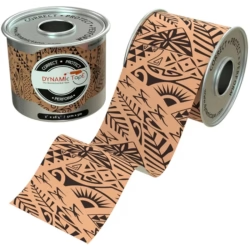
Available in 5 cm x 5 m and 7.5 cm x 5 m rolls with the black tattoo pattern, and a beige tattoo option. Priced by the roll, with case quantities of 4 or 6 rolls depending on width.
| Country Of Origin | China |
|---|---|
| Material Type | Lycra/Nylon |
| Latex Content | Latex Free |
Q & A

Table of Contents
Frequently Asked Questions
What is Dynamic Tape used for?
Dynamic Tape is used to manage load during movement. Because it stretches over 200% and recoils strongly, it can assist a weak muscle, decelerate a limb or reduce the load on a strained tendon, muscle or ligament. Common uses include patellofemoral pain, tendinopathy, shoulder impingement, plantar heel pain and support after sprains, especially when patients need to keep training.
How is it different from kinesiology tape?
Kinesiology tape is usually cotton, stretches lengthwise to about 140% to 180% and has a gentle recoil intended mainly for sensory and lymphatic effects. This tape is a nylon and Lycra blend with four-way stretch to more than 200% and a much stronger recoil, so it can produce a mechanical effect on movement. It is also usually applied with the tissue shortened and the tape on stretch.
How long can patients wear it?
Most patients can wear the tape for up to several days, depending on skin type, activity level and how well it was applied. It is breathable and water resistant, so patients can shower and simply pat it dry. Long soaks, such as hot tubs or extended swimming, can reduce adhesion. Ask patients to remove it slowly, peeling it back on itself, if any skin irritation develops.


Reviews
There are no reviews yet