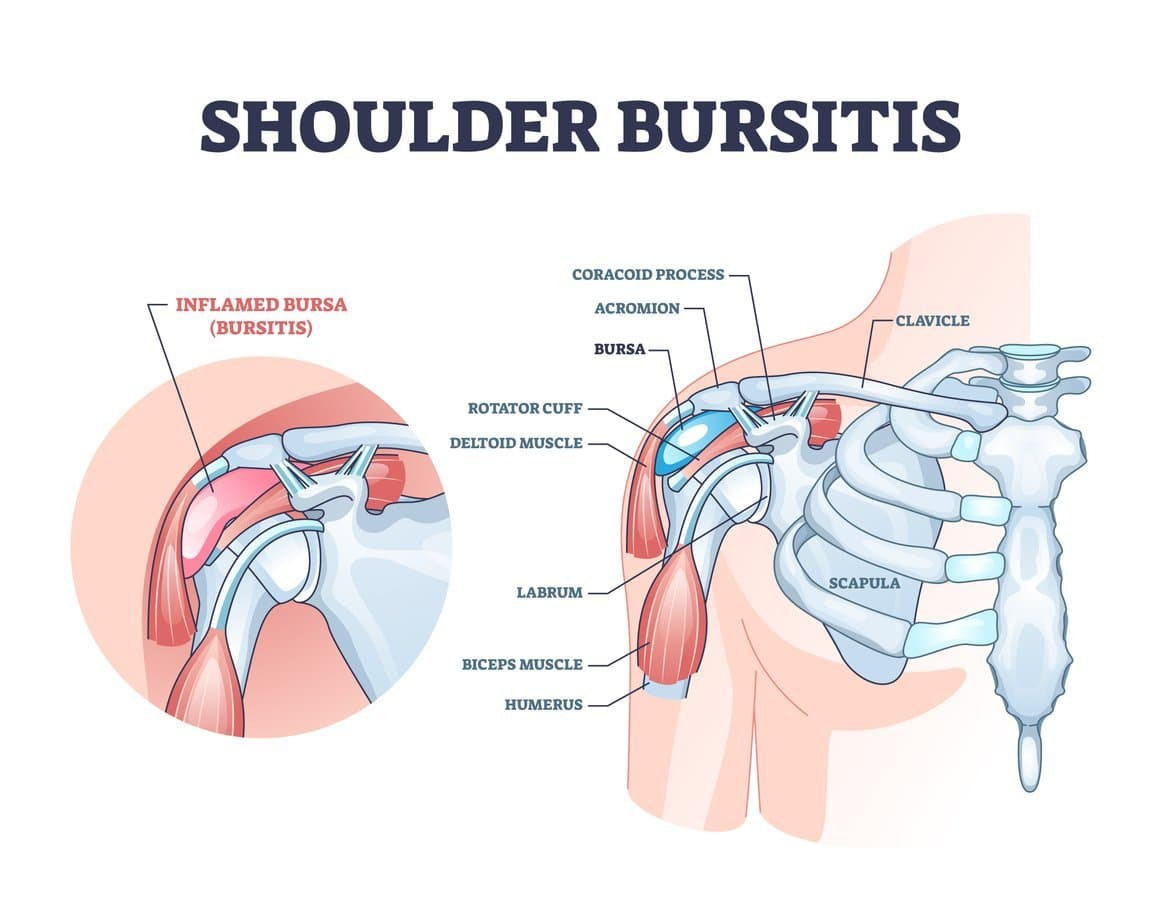
Bursitisi most commonly affects the shoulder, elbow, hip, and knee joints.
This article aims to provide an overview of the causes, symptoms, and treatment options for bursitis.
Causes of Bursitis
Bursitis can develop as a result of various factors, including:
Repetitive Motion
Repeated movements or activities that put stress on a joint can lead to bursitis. This commonly occurs in occupations or sports that involve repetitive motions, such as painting, gardening, or throwing.
Injury or Trauma
Direct trauma, such as a fall or blow to a joint, can cause bursitis. The bursae become inflamed in response to the injury.
Overuse or Excessive Pressure
Overuse of a joint or prolonged pressure on a specific area can irritate the bursae, leading to inflammation. This can happen due to activities like kneeling or leaning on elbows for extended periods.
Infection
In some cases, bursitis may result from a bacterial infection that enters the bursa. This is less common but can cause more severe symptoms and requires immediate medical attention.
Symptoms of Bursitis
The most common symptoms of bursitis include:
Joint Pain
Pain in the affected joint is the primary symptom of bursitis. The pain may be sharp or achy and typically worsens with movement or pressure on the area.
Swelling and Redness
Inflammation of the bursa can cause swelling and redness around the affected joint.
Limited Range of Motion
Bursitis can result in decreased flexibility and restricted movement of the affected joint. This can impact daily activities and range from mild discomfort to significant limitations.
Warmth and Tenderness
The skin over the inflamed bursa may feel warm to the touch, and there can be tenderness when pressure is applied.
Treatment of Bursitis
The treatment approach for bursitis aims to relieve pain, reduce inflammation, and improve joint function. Common treatment options include:
Rest and Immobilization
Resting the affected joint and avoiding activities that aggravate symptoms can promote healing. Immobilization through the use of splints or braces may be recommended for severe cases.
Pain Relief Medication
Over-the-counter nonsteroidal anti-inflammatory drugs (NSAIDs) can help reduce pain and inflammation. In some cases, corticosteroid injections may be administered by a healthcare professional for more significant pain relief.
Ice and Heat Therapy
Applying ice packs or cold compresses to the affected area can help reduce swelling and alleviate pain. Heat therapy, such as warm compresses or heating pads, can promote blood flow and relaxation of the affected area.
Physical Therapy
A physical therapist can provide exercises and stretches to strengthen the muscles around the joint, improve range of motion, and promote proper biomechanics. They may also use modalities like ultrasound or electrical stimulation to aid in pain relief.
Bursa Aspiration
In cases of severe swelling or infection, a healthcare professional may perform a bursa aspiration (by lancing it with a needle) to remove excess fluid and relieve pressure on the bursa.
Antibiotics
If the bursitis is caused by a bacterial infection, antibiotics may be prescribed to clear the infection and prevent further complications.
Prevention of Bursitis
While not all cases of bursitis can be prevented, some measures can reduce the risk:
Avoid Overuse and Repetitive Motions
Take breaks & vary your activities and body positions frequently. While doing so, maintain good ergonomics to avoid excessive stress on joints.
Use Protective Equipment
When engaging in activities that put stress on joints, use appropriate protective equipment, such as knee pads or elbow pads.
Maintain Strength and Flexibility
Regular exercise that focuses on strengthening muscles and maintaining joint flexibility can help prevent bursitis.
Practice Good Posture
Maintain good posture during activities and ensure proper body mechanics to minimize strain on joints.
Conclusion
Bursitis is a condition characterized by inflammation of the bursae, resulting in joint pain, swelling, and limited mobility. By understanding the causes, recognizing the symptoms, and seeking appropriate treatment, individuals can manage bursitis effectively.
Additionally, adopting preventive measures, such as avoiding overuse, maintaining good posture, and practising joint-friendly techniques, can help reduce the risk of developing bursitis. Consulting with a healthcare professional is advised for an accurate diagnosis and to determine the most suitable treatment plan for individual cases of bursitis.