ActivaDose II Controller Iontophoresis Device
Find out how the ActivaDose II Controller device includes everything needed to begin effective iontophoresis treatments immediately.

Iontophoresis represents a sophisticated intersection of physics and pharmacology, offering sports medicine practitioners and physical therapists a powerful tool for treating common athletic injuries.

Find out how the ActivaDose II Controller device includes everything needed to begin effective iontophoresis treatments immediately.
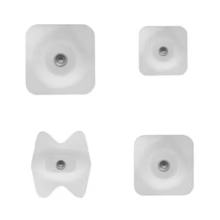
Ionto480 Iontophoresis Electrodes are the ideal solution for delivering medication through the skin using a mild electrical current. Health Canada MDALL # 78205.

Discover why the IontoPatch is the ideal solution for delivering medication through the skin for targeted pain relief
This non-invasive technique uses low-intensity electrical current to drive charged medication molecules through the skin barrier, delivering therapeutic agents directly to injured tissues without the need for needles. As sports medicine continues to evolve toward minimally invasive treatments that preserve athletic performance, iontophoresis has emerged as a valuable modality in the rehabilitation continuum.
The science behind iontophoresis relies on two primary mechanisms: electro-migration (also called electro-repulsion) and electro-osmosis. Under the principle that "like charges repel," a positively charged medication is placed under the positive electrode (anode) and is driven into the skin, while negatively charged drugs are placed under the negative electrode (cathode). This electrical field actively propels ionized drug molecules across the stratum corneum—the skin's primary barrier—allowing for targeted delivery that passive topical applications cannot achieve.
Standard treatment parameters include a maximum safe current density of 0.5 mA/cm² for the cathode and 1.0 mA/cm² for the anode, with typical dosages ranging between 40 and 80 mA×min. The amount of drug delivered is directly proportional to the quantity of charge applied, making the therapy precisely controllable by adjusting current intensity and treatment duration.
The most frequently prescribed medications for iontophoresis in sports medicine include dexamethasone sodium phosphate (0.4% solution) for inflammation, lidocaine HCl (4%) for localized pain, and acetic acid (2-5%) for conditions involving calcium deposits. These agents are particularly effective for superficial musculoskeletal pathologies where targeted drug delivery can significantly impact healing outcomes.
Plantar fasciitis represents one of the most thoroughly studied applications for iontophoresis in sports medicine. A randomized, double-blind, placebo-controlled trial by Gudeman and colleagues (1997) demonstrated that dexamethasone iontophoresis significantly reduced pain and improved foot functionality in the short term (2-3 weeks) compared to placebo. Patients receiving active treatment showed a mean improvement of 6.8 points on the Maryland Foot Score, compared to only 3.1 points in the control group (P = 0.022).
Subsequent research has expanded treatment protocols. Japour and colleagues (1999) found that acetic acid iontophoresis (5% solution) reduced pre-treatment pain scores from 7.5/10 to just 1.8/10 following three weeks of treatment. A comprehensive randomized controlled trial by Chetri (2016) demonstrated that combining iontophoresis with taping and stretching provided additional benefits beyond taping and stretching alone.
Kalra (2016) reported that combining dexamethasone with lidocaine hydrochloride in iontophoresis protocols was significantly more effective than placebo, with treated patients improving from 7 points to 3.17 points on the Visual Analogue Scale. The study concluded that while iontophoresis alone is effective for plantar fasciitis, the combination with dexamethasone and lidocaine produces superior outcomes.
Research has also examined iontophoresis for carpal tunnel syndrome (CTS). A 2005 randomized controlled trial by Aygül and colleagues compared local corticosteroid injection, phonophoresis, and iontophoresis for treating mild to moderate CTS. While corticosteroid injection proved most effective, iontophoresis still demonstrated meaningful improvements in specific electrophysiological parameters. The difference between median and ulnar distal latency to the fourth digit improved by 33% in the iontophoresis group, compared to 60% in the injection group.
Longer-term follow-up studies have confirmed that symptom improvements from iontophoresis for CTS persist at 24 months, though with slight decreases from 3-month outcomes. These findings suggest iontophoresis offers durable benefits for selected patients.
Sports medicine practitioners utilize several standardized medication protocols for iontophoresis:
- Dexamethasone 0.4%: The cornerstone anti-inflammatory agent for conditions like tendonitis, bursitis, and plantar fasciitis. Treatment typically involves 6 sessions over 2 weeks, with each session lasting 20 minutes at 40 mA of current.
- Lidocaine HCl 4%: Used for localized anesthesia and pain control, often combined with dexamethasone for enhanced analgesic and anti-inflammatory effects.
- Acetic Acid 2-5%: Particularly effective for calcium deposits and heel pain syndrome, with protocols involving 2-3 sessions per week over 3 weeks.
- Ketoprofen (2-10%): A nonsteroidal anti-inflammatory drug commonly compounded for iontophoresis to treat superficial inflammatory conditions.
For optimal results, iontophoresis requires specifically formulated medications. Compounding pharmacists must prepare solutions with appropriate pH, ionic strength, and drug concentration to ensure efficient electrotransport. The active electrode should contain the therapeutic agent, while the dispersive electrode completes the circuit.
Iontophoresis occupies a specific place in the sports medicine treatment continuum. It is most appropriately deployed when therapeutic exercise and manual therapy yield suboptimal results but before progressing to more invasive interventions like corticosteroid injections or surgery. This positioning makes iontophoresis a valuable "middle ground" option that respects the athlete's desire to avoid needles and lengthy recovery periods.
Typical Treatment Parameters:
One of the most compelling arguments for iontophoresis in sports medicine is its ability to deliver high concentrations of medication to injured tissues while minimizing systemic side effects. Orally administered nonsteroidal anti-inflammatory drugs and analgesics frequently produce adverse effects such as drowsiness, gastrointestinal disturbances, and potential impacts on athletic performance. By contrast, iontophoresis provides targeted relief at the site of application with minimal systemic absorption.
This localized delivery approach is particularly valuable for athletes who cannot afford the performance-impairing side effects of systemic medications. A professional tennis player with lateral epicondylitis, for example, can receive targeted dexamethasone iontophoresis directly to the affected elbow extensor tendons without experiencing systemic corticosteroid effects that might impair recovery or violate anti-doping regulations.
Furthermore, iontophoresis eliminates the risks associated with corticosteroid injections, including tendon weakening, skin atrophy, and post-injection flare reactions. For superficial tendons like the Achilles or patellar tendon, where injection carries particular risks, iontophoresis offers a safer alternative for delivering anti-inflammatory medication.
Physical therapists integrating iontophoresis into clinical practice must consider several practical factors. Proper skin preparation—cleaning the area and removing excess hair—enhances conductivity and medication delivery. Electrode selection should ensure the active electrode is appropriately sized for the treatment area, with the dispersive electrode placed on a large, low-hair area to complete the circuit.
Patient education is equally important. Mild redness and erythema at the electrode site are common and generally well-tolerated, though severe reactions have not been reported with proper technique. Patients should be instructed to report any unusual sensations or signs of skin irritation. Regular assessment of treatment response, using validated outcome measures like the Visual Analogue Scale for pain or condition-specific functional scales, helps determine when to continue, modify, or discontinue therapy.
Ongoing research continues to expand the potential applications of iontophoresis. Experimental protocols are investigating delivery of novel agents including Nav1.8 sodium channel blockers for neuropathic pain and proteolytic enzymes for multi-target anti-inflammatory effects. The combination of iontophoresis with other physical modalities, such as microneedle-mediated delivery, shows promise for systemic delivery of larger therapeutic molecules.
As sports medicine increasingly embraces personalized, evidence-based approaches, iontophoresis stands poised to play an expanding role. Its ability to deliver targeted therapy with minimal systemic effects aligns perfectly with the goals of modern athletic care: rapid recovery, preserved performance, and reduced reliance on potentially problematic systemic medications.
Iontophoresis represents a sophisticated, evidence-based tool in the sports medicine and physical therapy armamentarium. By using low-intensity electrical current to drive ionized medications through the skin, this non-invasive technique delivers targeted therapeutic agents directly to injured tissues. Strong evidence supports its use for conditions like plantar fasciitis, carpal tunnel syndrome, and localized inflammatory disorders, with randomized controlled trials demonstrating meaningful pain reduction and functional improvement. When integrated appropriately into the treatment continuum—after conservative measures but before invasive interventions—iontophoresis offers athletes and active individuals an effective, minimally invasive pathway to recovery that preserves performance and minimizes systemic side effects. As research continues to expand its applications, iontophoresis will likely assume an increasingly prominent role in evidence-based sports medicine practice.