
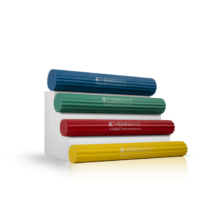


FlexBar
By: TheraBand
The Theraband Flexbar comes in 4 color coded resistance levels & is widely used in eccentric exercise programs for tennis elbow, an approach that has been studied in clinical research.
The Theraband FlexBar is made from durable rubber with a ridged texture for easy grip and motor control
Pain Relief
The TheraBand FlexBar is specifically designed to stretch the upper extremities, helping reduce muscle soreness and joint pain. It’s an ideal tool for those recovering from elbow injuries or surgery, offering a practical alternative to splints, bands, braces, and straps. Backed by clinical research, the FlexBar provides a reliable and effective solution for rehabilitation.
Muscle Strengthening
Perfect for forearm and grip strengthening exercises, the Theraband FlexBar tones and builds muscles while improving tendon health. Clinical studies show it increases tendon strength by 72% in patients with tennis elbow, making it an essential tool for recovering from epicondylitis and restoring full strength.
There’s a TheraBand FlexBar for EveryOne
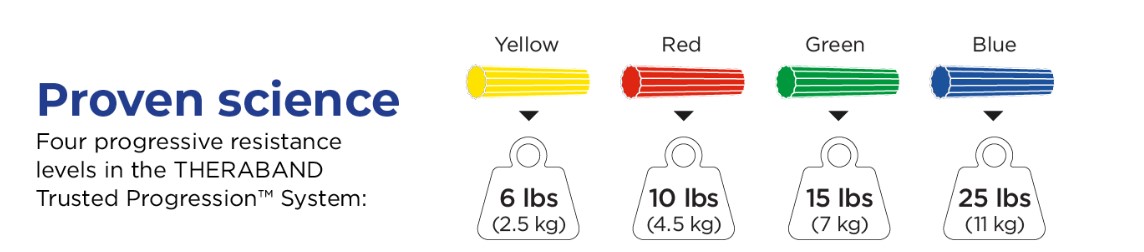
Available in four resistance levels, the Theraband FlexBar caters to a wide range of workout and rehabilitation needs.
- Lower resistance levels are excellent for hand grip training and wrist injury rehab.
- Higher resistance levels are ideal for tennis elbow or golfer’s elbow pain relief and advanced strengthening exercises.
- Yellow: 1-3/8″ diameter, requires 6 lbs. of force to bend in a U-shape
- Red: 1-1/2″ diameter, requires 10 lbs. of force to bend in a U-shape
- Green: 1-3/4″ diameter, requires 15 lbs. of force to bend in a U-shape
- Blue: 2″ diameter, requires 25 lbs. of force to bend in a U-shape
Whether for pain relief or building strength, there’s a FlexBar to support your recovery journey.
Q & A
Table of Contents
Frequently Asked Questions
What is the TheraBand FlexBar best used for?
The TheraBand FlexBar is primarily used for two key purposes: rehabilitation and strengthening. It is a clinically-proven tool specifically designed to alleviate pain and aid recovery from common tendon injuries, most notably tennis elbow (lateral epicondylitis) and golfer’s elbow. Its unique twisting methodology provides a targeted eccentric load to the forearm tendons, which research indicates can significantly reduce pain and promote healing. Beyond rehabilitation, the FlexBar is an excellent tool for building forearm strength, enhancing grip endurance, and improving overall wrist stability. This makes it valuable not only for those recovering from injury but also for athletes, musicians, and anyone seeking to improve functional hand and arm strength for daily tasks or sports performance.
How do I choose the correct resistance level?
Selecting the appropriate resistance is crucial for both safety and effectiveness. The Theraband FlexBar comes in four color-coded levels, ranging from extra-light (Yellow) to extra-heavy (Blue). For rehabilitation from acute injury or post-surgery, it is generally recommended to start with the lightest resistance (Yellow) to avoid strain, focusing on gentle, controlled movements. Those managing chronic tendon pain or in intermediate strengthening phases often find the Red or Green levels suitable. The heaviest Blue bar is typically reserved for advanced strengthening in individuals with already robust forearm strength. A good rule of thumb is that you should be able to perform the prescribed exercises with proper form without experiencing sharp pain; muscle fatigue is expected, but joint pain is not. When in doubt, consulting a physical therapist for personalized guidance is always advisable.
How is the FlexBar different from traditional resistance bands?
The TheraBand FlexBar is fundamentally different in both design and application. While traditional flat resistance bands are excellent for larger muscle groups and dynamic stretching, the FlexBar is a solid, cylindrical rubber tool with a ridged texture for secure gripping. Its primary function is to generate resistance through a twisting motion, which uniquely loads the tendons and muscles of the forearm and wrist in a controlled, rotational manner. This specific action is what makes it so effective for elbow tendon rehabilitation—a use case that flat bands cannot replicate. Furthermore, its durable, solid construction allows for consistent, measurable resistance levels (quantified by the force required to bend it into a U-shape), enabling precise progression in a rehabilitation or strength program, which is more challenging to achieve with elastic bands.


Reviews
There are no reviews yet