

Dual Headed Stethoscope
By: Almedic
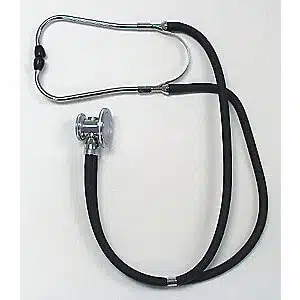
A dual head stethoscope allows you to listen to both high and low frequency sounds, using the bell for low frequencies and the diaphragm higher ones.
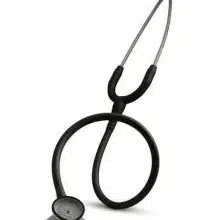
A dual head stethoscope allows you to listen to both high and low frequency sounds. The bell is used for low frequencies while the diaphragm is used for higher frequencies. This allows listening to a wider range of sounds than would be available from a traditional single headed stethoscope like the Littman Lightweight II.
It will pick up not just sounds from the heart and lungs but also from the carotid arteries and abdomen.
You can buy this double headed stethoscope in two form – “Econo” and “Nova”. The Nova has a sensitive aluminium chestpiece that provides clearer acoustics and superior fidelity at higher frequencies.
Q & A

Table of Contents
Frequently Asked Questions
What is the practical advantage of a dual head stethoscope over a single-head model?
The primary advantage is diagnostic versatility. A traditional single-head stethoscope, while excellent for general auscultation, is optimized for a specific frequency range. In contrast, a dual-head design provides two dedicated tools in one device. The diaphragm (larger, flat side) is tightly stretched to pick up higher-frequency sounds, such as breath sounds, normal heart sounds, and certain heart murmurs. The bell (smaller, cup-shaped side) acts as an acoustic funnel for lower-frequency sounds, crucial for detecting subtle heart murmurs, bruits in the carotid arteries, or vascular sounds in the abdomen.
This dedicated separation means you do not have to rely on varying pressure on a single head to filter frequencies, which can be imprecise. By simply rotating the chestpiece, you actively select the best acoustic chamber for the task, allowing for a more thorough and efficient physical exam. It expands your auditory palette, ensuring you are less likely to miss subtle, clinically significant sounds that fall outside the optimal range of a single diaphragm.
How do I choose between the "Econo" and "Nova" dual head stethoscope models mentioned?
The choice hinges on your clinical needs and professional frequency of use. The “Econo” model is an outstanding entry-level or backup instrument. It provides the essential dual-head functionality, allowing you to listen effectively across frequency ranges. It is a cost-effective way to gain versatile diagnostic capability, ideal for students, occasional use, or environments where the stethoscope may be subject to wear.
The “Nova” model, with its sensitive aluminium chestpiece, is engineered for superior acoustic performance. Aluminum is a lighter, more acoustically inert metal than traditional stainless steel or alloy, meaning it transmits vibrations from the body with less internal dampening and resonance. This results in clearer acoustics and higher fidelity, particularly for the nuanced high-frequency sounds captured by the diaphragm. For practitioners in cardiology, respiratory care, or for any professional who relies heavily on precise auscultation daily, the enhanced clarity of the Nova model justifies the investment for its diagnostic confidence.
Is a dual head stethoscope significantly more difficult to use than a simple one?
There is a slight learning curve, but it is quickly mastered. The main technique involves consistently using the correct head and ensuring proper skin contact. The diaphragm requires firm pressure to create the necessary seal and tension for high-frequency sounds. The bell, however, requires only light, even contact; excessive pressure will stretch the underlying skin and inadvertently turn the bell into a diaphragm, filtering out the very low-frequency sounds you seek.
The process becomes intuitive with practice: rotate the chestpiece to the desired head, place it on the exam area, and adjust pressure accordingly. Furthermore, the dual-head’s versatility in listening to heart, lungs, abdomen, and arteries means you develop a single, consistent technique for all systems. While it may feel unfamiliar initially compared to a simple one-head design, the enhanced diagnostic information quickly makes the minor adjustment in technique well worth the effort.

Reviews
There are no reviews yet