

Sprague Rappaport Stethoscope
By: Almedic
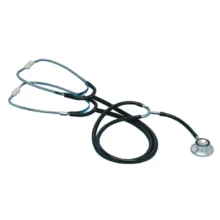
The Sprague Rappaport Stethoscope is a dual head stethoscope used to listen to internal sounds on the body, both human and animal.
The Sprague Rappaport Stethoscope can be used for listening to sounds internal to either animal or human bodies.
Q & A

Table of Contents
Frequently Asked Questions
What are the interchangeable chestpieces used for?
The Sprague Rappaport stethoscope is highly valued for its versatility, which is achieved through a set of interchangeable chestpieces designed to accommodate patients of different sizes. This is one of the most common points of inquiry for new users. The instrument typically includes two diaphragms (adult and pediatric) and three interchangeable bell attachments. The large diaphragm is intended for detecting low-frequency heart sounds and high-pitched murmurs in adults, while the small diaphragm is designed for use on pediatric patients to hear higher-frequency sounds.
The three bell attachments come in varying diameters, such as adult, medium, and infant sizes, and are used to pinpoint low and medium-pitched sounds, including heart murmurs. The infant-sized bell is specifically suited for examining small children. To change the functionality, the user rotates the dual-head chestpiece 180 degrees until it clicks into place, selecting either the diaphragm or bell side as needed.
How do I adjust the headset for a proper fit?
Achieving a comfortable and acoustically sealed fit is crucial for effective use, making headset adjustment a frequent topic. The Sprague Rappaport stethoscope is designed with a malleable headset, typically made from chrome-plated brass, which allows for a customized fit. To adjust the tension, if the eartips feel too loose, you can gently squeeze the eartubes together to increase the spring tension. Conversely, if the fit is too tight, you can carefully pull the eartubes outward to reduce the pressure.
It is also important to ensure the eartips are positioned correctly for optimal sound transmission. The eartubes should be angled forward, pointing toward the bridge of your nose when placed in your ears. The kit often comes with different sizes of eartips; you can screw off the existing tips and attach a size that provides a better seal and comfort in your ear canal.
How should I clean and maintain the Sprague Rappaport stethoscope?
Proper cleaning and maintenance are essential for the stethoscope’s longevity and hygiene, which is why it is a common concern for owners. The general recommendation is to clean the eartips and tubing by wiping them down with a soft cloth dampened with either mild soapy water or isopropyl alcohol. It is crucial to avoid using any harsh, abrasive cleaning agents, solvents, or oils, as these can damage the tubing and other components.
Furthermore, users are strongly advised against attempting to sterilize the stethoscope using heat or liquid submersion. The device should never be brought into contact with liquid in a way that allows it to penetrate the housing or chestpiece, as this can cause internal damage. If sterilization is absolutely necessary, only gas sterilization methods are considered safe for this type of instrument. When not in use, storing the stethoscope in its protective pouch helps prevent dust accumulation and physical damage.


Reviews
There are no reviews yet