

Walking Crutches (Pair)
By: MedLine
These walking crutches are made of lightweight aluminum with a comfortable and durable underarm pad as well as a hand grip. Available in different sizes based on height.
These Walking Crutches (Pair) are made of lightweight aluminium and provide stability and durability. They have a comfortable and durable underarm pad as well as a hand grip.
The crutches are sold in pairs.
Four crutch sizes are available – three for adults and one for pediatrics. The crutches are sized based on the height of the patient.
Q & A
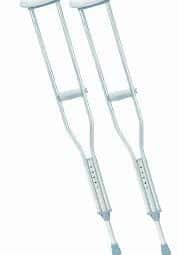
Table of Contents
Frequently Asked Questions
How do I choose the correct size of walking crutches?
Selecting the proper crutch size is essential for both safety and comfort. These crutches are offered in four distinct sizes—three for adults and one for pediatric use. Sizing is determined by the patient’s height, not by weight or shoe size.
To find your fit, stand upright with your shoes on and place the crutch beside you. The underarm pad should sit approximately two to three finger widths below your armpit, never pressing directly into it. Meanwhile, the hand grip should align with your wrist crease when your arm hangs naturally at your side.
Using the correct size helps prevent nerve damage under the arms and reduces fatigue in your hands and shoulders. If you are between sizes, it is generally safer to choose the taller size and adjust the hand grip downward. Always refer to the manufacturer’s height chart for precise guidance.
Are these walking crutches comfortable for extended daily use?
Yes, these crutches are designed with patient comfort in mind, even during prolonged use. They feature a comfortable and durable underarm pad that cushions the upper body and reduces pressure points. The hand grip is also ergonomically shaped to minimize hand fatigue and prevent slipping.
The lightweight aluminium construction makes the crutches easy to manoeuvre, which reduces the overall energy expenditure required to walk. This is particularly beneficial for individuals who need to use crutches for several weeks or months following surgery or injury.
However, to maintain comfort over long periods, it is important to position the hand grips correctly and avoid leaning heavily on the underarm pads. Proper technique—using your arms and hands to bear weight rather than your armpits—will further enhance comfort and prevent soreness.
Will these walking crutches fit through narrow doorways or in small spaces?
Standard walking crutches can sometimes be challenging to use in confined spaces, but the lightweight aluminium design of this pair helps improve manoeuvrability. While the crutches are sold as a pair and require coordinated movement, most users can navigate standard doorways with practice.
To move through a narrow doorway safely, you should advance both crutches together slightly ahead of you while hopping forward on your strong leg. Alternatively, you may move one crutch through at a time, followed by the injured leg. This technique is easier with lightweight crutches, as it reduces strain on your upper body.
If you live in a home with very narrow hallways or door frames under 22 inches wide, consider using a single crutch for short distances or consulting an occupational therapist. In most standard residential settings, however, these crutches offer sufficient stability and control for safe passage.
Reviews
There are no reviews yet