

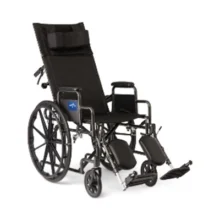


Guardian K1 Wheelchair
By: MedLine
| Colour | Black |
|---|
Medline Guardian K1 wheelchairs feature swing back desk length or full length armrests, swing away or elevating footrests, 16″, 18″ or 20″ wide seats and your choice of vinyl or nylon upholstery.
Medline Guardian K1 wheelchairs feature swing back desk length or full length armrests, swing away or elevating footrests, 16″, 18″ or 20″ wide seats and your choice of vinyl or nylon upholstery.
| Colour | Black |
|---|
Q & A

Table of Contents
Frequently Asked Questions
What are the main differences between the desk-length and full-length armrest Guardian K1 Wheelchair options, and which should I choose?
Your choice between desk-length and full-length swing-back armrests significantly impacts daily function and comfort. Desk-length armrests are shorter in the front, allowing the user to roll directly up to tables, desks, or work surfaces without obstruction. This promotes independence in dining, writing, and other close-up activities. Full-length armrests provide continuous support for the entire arm, which can enhance overall posture and comfort, especially during longer periods of sitting.
The decision hinges on the user’s primary activities and transfer needs. If the user is frequently at a table or needs close access to surfaces for hobbies or work, the desk-length option is typically superior. Both styles feature a swing-away design for easier lateral transfers out of the chair. For users who prioritize maximum arm support and do not require constant close proximity to desks, the full-length model may be preferable. Consider the daily environment and tasks to determine the best fit for promoting both independence and comfort.
Should I select the Guardian K1 Wheelchair swing-away or elevating footrests for my needs?
This critical choice depends on the user’s medical requirements and daily mobility patterns. Swing-away footrests are designed for convenience and active transfers. They can be swung to the side, eliminating obstacles when standing up or sitting down, and they make the chair more compact for storage or transport. They are an excellent choice for users with good lower-body mobility who frequently transfer in and out of the chair independently.
Conversely, elevating footrests serve a important therapeutic function. They allow the leg to be raised and supported, which is essential for managing swelling (edema), improving circulation, and immobilizing the leg following injury or surgery. They also provide enhanced comfort and pressure redistribution for users who must sit for prolonged periods. However, they add length to the chair and can complicate transfers. Ultimately, if medical leg elevation is not prescribed, the swing-away option offers greater daily practicality for most active users.
How do I determine the correct seat width between the 16", 18", and 20" options?
Selecting the proper seat width is paramount for safety, comfort, and effective propulsion. A seat that is too narrow can create pressure points and skin breakdown, while one that is too wide can compromise posture and make it difficult to reach the wheels for self-propulsion, potentially leading to shoulder strain. The correct width should allow for about one inch of space on each side of the user’s hips when wearing typical clothing.
To accurately measure, have the user sit in a firm, straight-backed chair. Measure the distance across the widest part of their hips or thighs. This measurement, in inches, is your key guide. The 16″ is standard for many adults, 18″ offers a comfortable bariatric or spacious fit, and 20″ accommodates larger body frames or the use of substantial positioning cushions. It is always advisable to consult with a medical equipment provider for a professional assessment to ensure optimal fit, posture support, and long-term usability.
Reviews
There are no reviews yet