


AntiMicrobial Foam Roller – Beige PE Foam
By: Cando®
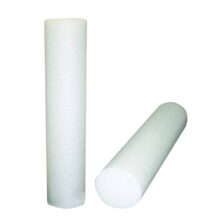
These antimicrobial foam rollers are polyethylene (PE) foam rollers available with standard formula in white and blue or with an anti-microbial additive, in beige. Available in two shapes – round and half round (semi hemispherical cross section). Can be purchased in lengths of 48″, 36″, 30″, 24″, 18″ and 12″ and with diameters of 3″, 4″, 6″ or 8″. Both round and half round shapes are offered.
The CanDo® AntiMicrobial Foam Roller – Beige PE Foam is an ideal choice for exercises to improve:
- Positioning;
- Bbalance;
- postural and muscle re-education;
- spinal stabilization;
- body awareness (prprioception) and coordination; and
- ranging and strengthening activities.
These Polyethylene (PE) foam rollers are available with standard formula in white and blue. They can also be purchased with an anti-microbial additive, in beige.
These antimicrobial foam rollers come in two shapes – round and half round (semi hemispherical cross section)
The round rollers support progressive exercise sequences. The user can graduate from using a easier (smaller diameter) to more challenging routines using a larger diameter roller.
Half round rollers are great for ankle stretching and knee rehabilitation.
The foam of which these rollers are made is strong enough to be used by large adults and active children.
They are available in lengths of 48″, 36″, 30″, 24″, 18″ and 12″ and with diameters of 3″, 4″, 6″ or 8″.
6″ x 36″ and 6″ x 12″ half rollers can be purchased sliced or fully extruded so that the bottom has an integral skin. Choose the roller that is perfect for you!
Q & A

Table of Contents
Frequently Asked Questions
What makes the antimicrobial foam rollers different from the standard version?
Standard foam rollers, typically available in white or blue, are made from standard polyethylene (PE) foam. The CanDo® beige roller, however, contains an antimicrobial additive integrated into the foam itself. This additive actively inhibits the growth of bacteria, mold, and mildew on the roller’s surface.
This is especially beneficial for clinical settings, shared gym environments, or home users who sweat heavily. By reducing microbial buildup, the roller remains more hygienic between cleanings, minimizes unpleasant odors, and extends the product’s lifespan. It offers the same durability and support as standard rollers, with the added advantage of built-in protection against common contaminants.
Are antimicrobial foam rollers safe for patients with skin sensitivities or latex allergies?
Yes, the CanDo® antimicrobial foam rollers are generally considered safe for individuals with common sensitivities. The roller is made from polyethylene (PE) foam, which is latex-free and does not contain natural rubber latex, making it suitable for patients with latex allergies.
The antimicrobial additive is formulated to be non-toxic and non-irritating under normal use conditions. However, for patients with extreme chemical sensitivities or reactive skin conditions, a patch test on a small area of skin is always prudent before full use. Additionally, because the roller’s texture is smooth and non-abrasive—covered or finished in a way that minimizes friction—it reduces the risk of skin irritation during exercises like balance training, postural re-education, or stretching. As with any rehabilitation equipment, clinicians should assess individual patient histories and recommend appropriate barriers (such as clothing or towels) when needed.
Does the antimicrobial additive wear off over time or with cleaning?
No, the antimicrobial protection in CanDo® beige foam rollers is integrated into the polyethylene (PE) foam material itself, not merely coated on the surface. This means the additive is present throughout the foam’s structure, not just as a topical treatment that can be scrubbed away.
As the roller experiences normal use, surface wear, or repeated cleaning, the antimicrobial properties remain active because new foam layers continue to contain the additive. This provides long-lasting protection against bacterial and fungal growth over the roller’s entire lifespan. However, standard hygiene practices—such as wiping the roller with appropriate disinfectants between users—should still be followed in clinical or shared settings to remove dirt, sweat, and debris that could otherwise accumulate on the surface.


Reviews
There are no reviews yet