


Exercise Bungee Cord with Attachments
By: Cando®
This exercise bungee cord is useful for either upper or lower body exercises and has a snap-hook on one end and a door jamb nub and a loop anchor on the other end.
The Cando Exercise Bungee Cord is designed with versatility in mind, featuring a snap-hook on one end and a door jamb nub and loop anchor on the other.
Here’s how to effectively utilize it:
1. Attachment Options:
– Connect the snap-hook end to D-ring handles, straps, or anchors securely.
– On the opposite end of the bungee cord, select from various options:
– Grip the loop for hand exercises.
– Utilize the loop as a foot stirrup for lower body workouts.
– Position the nub anchor within a door jamb for added stability.
2. Versatile Usage:
– Perform a wide range of upper and lower body exercises with ease and convenience.
– Enhance strength, flexibility, and coordination using this adaptable exercise tool.
This comprehensive design of this exercise bungee cord ensures efficient and safe utilization for both upper and lower body workouts, providing flexibility and stability for varied exercise routines.
Q & A
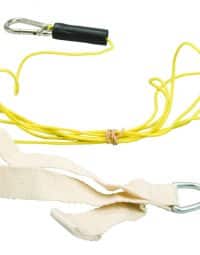
Table of Contents
Frequently Asked Questions
How do I safely attach the Cando Exercise Bungee Cord to a door for upper or lower body exercises?
Attaching the Cando Exercise Bungee Cord to a door is straightforward, but proper technique is essential for both safety and effectiveness. Begin by identifying the end of the cord that features the door jamb nub and loop anchor. This component is specifically designed to fit securely between a closed door and its frame.
To attach, place the nub on the side of the door opposite the direction you will be pulling. Close the door firmly, ensuring the nub is pressed against the door jamb and the loop anchor remains accessible on your side. Before beginning your workout, test the anchor by applying gradual tension to confirm it holds without slipping.
Once secured, connect the snap-hook end to handles, straps, or directly to your limb as needed. This setup provides exceptional stability for rows, presses, bicep curls, and lower body movements such as leg extensions or kickbacks. Always inspect the cord and anchor points before use, and avoid using on hollow or damaged doors.
Can the bungee cord help with rehabilitation and improving flexibility, or is it only for strength training?
The Cando Exercise Bungee Cord is an excellent tool for rehabilitation and flexibility work, not just strength training. Its variable resistance profile—light tension at the start that increases as the cord stretches—makes it ideal for controlled, low-impact movements often prescribed in physical therapy.
For rehabilitation, you can perform gentle, pain-free range-of-motion exercises for the shoulders, elbows, hips, and knees. The soft, progressive resistance reduces joint stress while still activating stabilizing muscles. Using the loop as a foot stirrup, for example, allows for smooth hamstring curls or ankle dorsiflexion stretches.
To enhance flexibility, anchor the cord low on a door and use the loop or handle to perform guided stretching. The elastic pull encourages muscles to lengthen gradually without bouncing. Over time, this improves both active and passive flexibility, coordination, and neuromuscular control. Always consult a healthcare provider before starting any rehabilitation program.
Which attachment method should I use for seated rows and chest presses?
For seated rows, attach the door jamb nub at mid-height and close the door securely. Sit facing the door with legs extended or knees slightly bent. Hold the D-ring handle (connected to the snap-hook end) with both hands, keeping your back straight. Pull the handles toward your lower ribs, squeezing your shoulder blades together. The bungee’s increasing resistance provides a smooth, joint-friendly rowing motion.
For chest presses, anchor the door jamb nub at chest height. Stand facing away from the door, holding the handles at shoulder level with palms down. Step forward slightly to create initial tension, then press both arms forward until fully extended without locking your elbows. Slowly return to start.
Alternatively, if no handle is available, you can grip the loop directly or wrap the cord around your hands. Both exercises benefit from the cord’s snap-hook and loop system, which allows quick changes between movements. Always maintain controlled tempos and avoid jerky motions to maximize muscle engagement and safety.


Reviews
There are no reviews yet