

Incline Mat
By: Cando®
The Incline Mat has a wedge shape that allows the user to exercise on an incline.
The CanDo® Incline Mat has a wedge shaped mat that can creates an incline for accommodating gross motor activities like rolling, crawling and tumbling.
The mat has a soft surface to encourage user participation.
Available in several sizes and colours.
An incline mat serves various purposes in fitness, gymnastics, physical therapy, and recreational activities. Here are some of its key purposes:
- Assisted Stretching: The mats provide a supportive surface for assisted stretching routines, helping to increase flexibility and range of motion.
- Core Strengthening: They can be used for exercises targeting the core muscles, such as incline sit-ups, leg raises, and planks, adding intensity to the workout.
- Balance and Stability Training: These mats challenge balance and stability, making them valuable for exercises like handstands, headstands, and balance drills.
- Rehabilitation: In physical therapy, these mats assist in rehabilitating injuries by offering a gradual incline for exercises that target specific muscle groups while reducing strain.
- Skill Development: Gymnasts and acrobats utilize the mats to practice skills such as back handsprings, cartwheels, and back tucks with reduced impact.
- Plyometric Training: Incline mats are used for plyometric exercises, such as uphill sprints or jumps, to enhance explosive power and speed.
- Comfortable Seating: They can serve as comfortable seating or resting spots during workouts or relaxation periods.
- Kids’ Play: The mats are often used in children’s play areas or classrooms for activities that involve rolling, climbing, or tumbling, promoting gross motor skill development.
- Yoga and Pilates: In yoga and Pilates practices, incline mats provide support and assistance for various poses and exercises, aiding in alignment and progression.
- Massage and Bodywork: The mats can be used for self-massage techniques, such as back rolling or pressure point release, facilitating muscle relaxation and recovery.
Overall, incline mats offer versatility and functionality across a range of fitness and therapeutic applications, making them a valuable tool in various settings.
Q & A
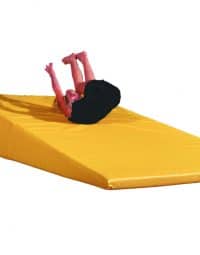
Table of Contents
Frequently Asked Questions
What is the primary purpose of the CanDo® Incline Mat, and who can benefit from using it?
The CanDo® Incline Mat serves a remarkably versatile purpose: it creates a gently sloping, soft surface designed to support gross motor activities such as rolling, crawling, tumbling, and therapeutic exercise. Its wedge-shaped design allows users to perform movements with reduced strain while increasing intensity or range of motion as needed.
A wide range of individuals can benefit from this mat. In physical therapy and rehabilitation settings, it aids in gradual muscle strengthening and injury recovery by offering a controlled incline for targeted exercises. Gymnasts and acrobats use it to practice skills like back handsprings or cartwheels with reduced impact. Fitness enthusiasts incorporate it into core workouts—such as incline sit-ups and planks—to add challenge. Additionally, the mat is highly effective for balance training, yoga, Pilates, and even children’s play, where it encourages safe development of coordination and motor skills.
Ultimately, whether you are a clinician, coach, parent, or fitness practitioner, the CanDo® Incline Mat provides a supportive, low-risk environment for building strength, flexibility, and confidence.
How does the soft surface of the CanDo® Incline Mat enhance user participation and safety?
The soft surface of the CanDo® Incline Mat is a key feature that directly encourages user participation by making activities more comfortable and less intimidating. For individuals recovering from injury or those with mobility limitations, a firm or unforgiving surface can deter movement. In contrast, the mat’s gentle cushioning reduces discomfort during exercises like rolling, crawling, or kneeling, promoting longer and more engaged sessions.
From a safety perspective, the soft yet supportive material helps absorb impact during tumbling, plyometric jumps, or balance drills, thereby lowering the risk of bruising or joint strain. This is especially important in pediatric settings, where children are learning gross motor skills, or in geriatric rehabilitation, where fall prevention and joint protection are priorities. Moreover, the mat’s non-slip properties (when used on appropriate flooring) help maintain stability during incline exercises, giving users the confidence to challenge their balance without fear of sudden slips.
By blending comfort with functionality, the soft surface transforms the incline mat from a simple tool into an inviting platform for progressive movement and therapy.
What should I consider when choosing the size and colour of the CanDo® Incline Mat?
Selecting the appropriate size of the CanDo® Incline Mat depends largely on the intended user and activity. For individual therapeutic exercises, pediatric tumbling, or yoga, a smaller mat (e.g., 30″ x 24″) is often sufficient. However, for gymnastic skill development, such as back handsprings or cartwheels, or for use in classroom or group settings, a larger mat (e.g., 72″ x 30″) provides ample rolling and landing space. Always consider the user’s height, the type of movement (crawling vs. tumbling), and the available floor area in your facility or home.
Colour choice, while seemingly aesthetic, can influence behaviour and engagement. Bright, vibrant colours like blue, red, or yellow are particularly effective in paediatric therapy or school environments, as they attract children’s attention and make exercise feel like play. In contrast, neutral or muted tones (e.g., grey or black) are often preferred in professional clinics, gyms, or adult rehabilitation centres, where a calm, clinical appearance supports focus. Ultimately, choose a colour that aligns with your setting’s atmosphere and user demographics to maximise participation and comfort.


Reviews
There are no reviews yet