
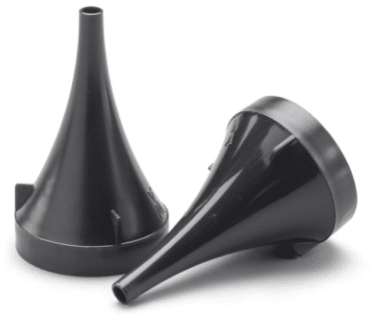
Replacement Otoscope Speculum
By: Baxter
| Priced Per | Bag of 500 |
|---|---|
| Material Type | Plastic |
| Product Dimensions | 3mm |
An otoscope speculum has the role of safely guiding light into the ear canal for a clear view of the eardrum while protecting the patient and ensuring hygiene.
An otoscope speculum is the disposable, cone-shaped tip placed on an otoscope. Its role is to safely guide light into the ear canal for a clear view of the eardrum while protecting the patient and ensuring hygiene.
This device has two main jobs:
- To Guide the View: It funnels the light from the otoscope into the ear canal, allowing the doctor to see a clear, illuminated view of the ear canal and the eardrum.
- To Protect and Comfort: It creates a safe barrier. It prevents the metal or plastic body of the otoscope from touching (and potentially injuring) the sensitive skin of the ear canal. It also makes the examination more comfortable for the patient.
Otoscope specula are almost always disposable and made from:
- Plastic: This is the most common material. They are cheap, hygienic, and for single-use, which prevents the spread of germs between patients.
- Metal: Reusable metal specula exist but are much less common today. They are made of stainless steel and must be sterilized in an autoclave after each use.
This is a replacement set of 3mm Otoscope plastic specula.
| Priced Per | Bag of 500 |
|---|---|
| Material Type | Plastic |
| Product Dimensions | 3mm |
Q & A

Table of Contents
Frequently Asked Questions
Why must the speculum be disposed of after a single use?
The single-use, disposable nature of the plastic speculum is a fundamental pillar of modern medical hygiene and patient safety. Its primary purpose is to act as a physical barrier, preventing cross-contamination between patients. Reusing a speculum, even on the same patient at a later time, risks transferring microbes, earwax, or debris, which can lead to infections like otitis externa. Furthermore, disposable plastic specula eliminate the logistical burden, potential human error, and high cost associated with the rigorous sterilization required for reusable metal versions. By guaranteeing a sterile, pristine tip for every examination, disposable specula uphold the highest standard of care, protect both patient and practitioner, and streamline clinical workflow.
How do I select the correct size for an examination?
Choosing the correct speculum size is crucial for both a successful visualization and patient comfort. Specula come in various diameters (e.g., 3mm, 4mm, 5mm) to accommodate different patient ages and ear canal sizes. A general rule is to use the largest speculum that fits comfortably into the patient’s ear canal without causing pain or undue pressure. A 3mm one, like those in this set, is often ideal for pediatric patients or adults with narrower canals. The correct size should allow the practitioner to gently seal the entrance of the canal to block ambient light, providing a clear, well-illuminated view of the eardrum. An overly small speculum may not adequately channel light or stabilize the otoscope, while one that is too large can cause discomfort and obscure the view by pressing against the canal wall.
What is the proper technique for attaching and removing this device?
Proper handling ensures the speculum functions correctly and remains hygienic. To attach, align the base of the cone-shaped speculum with the nose of the otoscope and press it on firmly with a slight twisting motion until it is secure; a loose fit can cause it to detach in the ear canal. During examination, it should be inserted gently, only into the outer third of the ear canal, never forcing it. To remove, withdraw the otoscope straight back, taking care not to angle the tip. It should then be immediately discarded in an appropriate medical waste container after a single use. This protocol minimizes the risk of injury, prevents the speculum from becoming a retained object in the ear, and completes the safe, hygienic cycle mandated for this disposable device.
Reviews
There are no reviews yet