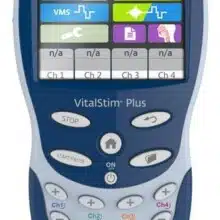
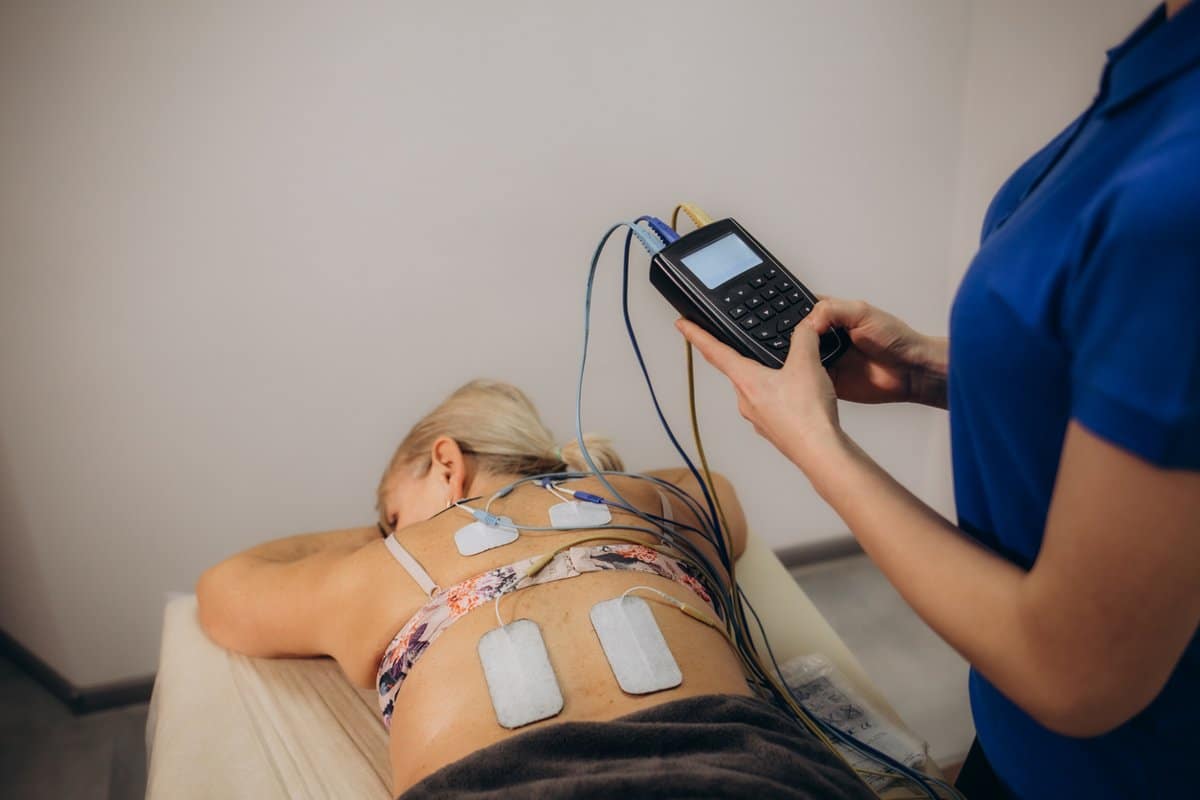
Many of the portable TENS units commonly sold in medical supply stores have this as their main goal. The electrical signals used for this purpose are known technically as transcutaneous signals. Some of the advantages of TENS are that it is non-invasive, inexpensive and self-administered.
EMS, on the other hand, is mainly used to improve muscle function during the rehabilitation process. Its use in rehabilitation focuses on prevention of muscle atrophy and/or building muscle fibers. This is useful in reversing muscle atrophy that can occur during prolonged disuse of muscles after experiencing an injury.
EMS is also commonly known as Neuromuscular Electrical Stimulation (NMES). It differs from transcutaneous electrical nerve stimulation (TENS), which instead focuses on the use of electrical signals for pain reduction.
In NMES, high-intensity electrical impulses are used to stimulate peripheral nerves. This, in turn, leads to a muscle contraction. NMES is widely used in sports medicine for muscle toning purposes. It can help injured athletes return to their normal level of fitness as soon as possible. Examples of scenarios where EMS is used to stimulate a muscle or maintain muscle tone are after a stroke, to contract the pelvic floor muscles as a treatment for urinary incontinence and to stimulate the thigh muscles to increase strength after surgery.
Within the broad category of electrical muscle stimulation, there are several subtypes. These include, but are not limited to, the following:
- Russian stimulation employs high frequency sinusoidal waveforms. It is used to build muscle strength and endurance.
- General Electrical Muscle Stimulation uses lower frequency rectangular waveforms. It has similar objectives to Russian stimulation but doctors may also use it to induce stronger muscle contractions.
Below, we will attempt to answer some of the more common questions about this form of rehabilitation and muscle toning therapy.
Where Can I Get Advice On Whether EMS May Help My Condition?
We would suggest making an appointment with a physical therapist for this purpose. They are trained in many types of pain management & rehabilitation therapies. They can evaluate your injury and advise on whether EMS can be a successful part of your physical therapy.
What Is The Main Difference Between The Electrical Signals Produced By TENS and EMS Units?
The transcutaneous signals produced by TENS units are usually strong enough to penetrate the skin and relieve your pain. However, they are usually not sufficient to produce muscle contractions. The intention is to stimulate the nerves for pain relief purposes.
EMS signals, on the other hand, aim to stimulate the muscles instead of the nerves. they use pulse settings and intensities chosen to make the muscle contract.
What Are Some Of The Medical Conditions Treatable With EMS or NMES Therapy?
NMES works by exploiting the tendency of a healthy central nervous system to produce a muscle contraction in response to an electrical signal. It has been used to treat a wide range of medical problems, including:
- Musculoskeletal injuries to joints, bones and soft tissues such as muscles, ligaments and tendons. These types of injuries are commonly treated in sports medicine and this is how NMES is usually applied in that field;
- Certain chronic diseases such as obstructive pulmonary disease and cancer. These illnesses can sometimes make it inadvisable for the patient to engage in full body exercise. An EMS unit can be used to target specific areas of the body to improve blood flow and muscle tone;
- Neurological conditions such as stroke, multiple sclerosis and cerebral palsy - to decrease spasticity and help maintain muscle strength for as long as possible.
Can Already Healthy Individuals Benefit From NMES?
According to a study published in the Journal of Strength and Conditioning Research, EMS devices can improve fitness levels of healthy athletes. Some studies have found benefits even in well-trained athletes, usually when EMS is combined with regular training.
Strength training normally works by using voluntary muscle contractions to build muscle tissue. The contractions produced by an EMS unit are involuntary. However, the body will still react in the same way as to a voluntary contraction.
In addition to improving strength and fitness among healthy individuals, there may be benefits to overweight individuals.
A study was published in 2015 on the impact of high frequency current on female abdominal obesity. This study concluded that it caused significant reductions in several metrics of obesity. These included waist circumference, subcutaneous fat mass and body fat percentage.
However, we should point out that these conclusions are not universally accepted. For example, the US FDA has not cleared any EMS device for weight loss.
How Are EMS and NMES Units Regulated?
EMS & NMES devices are closely regulated in the US. In general, they are divided into two categories for regulatory purposes - over the counter (OTC) and prescription.
Generally speaking, OTC devices may only be marketed as offering muscle toning benefits.
Prescription devices are only obtainable with a prescription from a qualified medical practitioner (e.g. a physical therapist). In addition, they must be used under the supervision of such a practitioner.
When used under this supervision, EMS therapy can be aimed at providing a wider range of benefits, including (but not limited to):
- Muscle spasm prevention;
- Rehabilitation of muscles atrophied through disuse;
- Increasing localized blood circulation in order to speed healing of soft tissue injuries;
- Increasing range of motion of injured joints.
Can EMS & NMES Devices Be Dangerous To Certain Individuals?
In general, we recommend you consult with your medical advisor before embarking on any form of EMS therapy.
However, the following individuals should be particularly wary about using NMES or EMS devices for any purpose:
- Those wearing heart pacemakers, implanted defibrillator or pain pumps (because of electrical interference);
- Pregnant women (avoid stimulation over the abdomen, low back and pelvis);
- People with epilepsy should only use EMS with medical advice, and never over the head or neck.