Compressionette
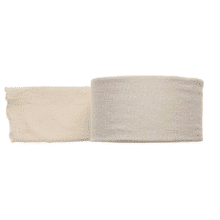
Cramer Compressionette – an elastic tubular bandage offers mild support & helps minimize swelling. The bulk rolls come in a dispenser box.

Dunbar Medical supplies tubular compression bandages to physiotherapy clinics, athletic therapists and care facilities across Canada. We carry Molnlycke Tubigrip, Cramer Compressionette and Surgitube tubular gauze, with wholesale pricing for approved business accounts.

Cramer Compressionette – an elastic tubular bandage offers mild support & helps minimize swelling. The bulk rolls come in a dispenser box.

Surgitube tubular gauze is a seamless knitted tubular cotton gauze for securing primary bandages on the hands, wrists or feet.
Discover how Tubigrip Tubular Bandages deliver the perfect balance of comfort, breathability, and adaptive compression.
A compression bandage is a specialized elastic bandage designed to apply controlled pressure to a specific area of the body, typically a limb.
Its primary purposes are to:
- Reduce swelling (edema) by preventing fluid from accumulating in tissues.
- Improve blood flow in veins (especially in the legs) by helping blood travel back to the heart.
- Provide support to muscles and joints.
- Minimize bleeding and bruising after an injury or surgery.
- Treating venous leg ulcers (part of compression therapy).
- Managing lymphedema (chronic swelling).
- Supporting sprains and strains (e.g., ankle sprain).
- Post-surgery recovery (e.g., after vein stripping or knee surgery).
Unlike a regular elastic wrap, a compression bandage is applied with "gradated pressure"—firmest at the far end of the limb (e.g., ankle) and gradually looser toward the body (e.g., thigh). This gradient helps "push" fluids upward.
- It should be snug but not painfully tight. Signs of over-tightening include numbness, tingling, increased pain, blue toes/fingers, or cold skin.
- A doctor or nurse typically demonstrates proper application, as incorrect wrapping can cause damage or ineffective treatment.
- Some are short-stretch (high working pressure, low resting pressure, safer for walking) and others long-stretch (often used for sprains and post-injury compression).
Do not use a compression bandage without medical advice if you have suspected arterial disease (e.g., peripheral artery disease), as it can dangerously reduce blood flow.
Compression bandages play a vital role in sports medicine for several reasons.
Some of these reasons are:
1. Injury Prevention: Compression bandages give light support to muscles and joints, which some athletes find reassuring during activity.
2. Reduced Swelling: During intense physical activity, muscles can experience micro-tears and inflammation. Compression bandages help to minimize swelling by applying pressure to the affected area, which improves blood flow and reduces the accumulation of fluid in the tissues.
3. Comfort During Recovery: By limiting swelling, compression bandages can make an injury more comfortable while it heals.
4. Pain Relief: Compression bandages can alleviate pain associated with injuries or overuse by providing support to the affected area and reducing inflammation. This allows athletes to continue training or competing with less discomfort.
5. Enhanced Performance: Some athletes like the snug feel of a compression bandage during training, which may improve their awareness of the injured area.
6. Protection: Compression bandages can also act as a protective barrier, shielding vulnerable areas from further injury or trauma during sports activities.
Overall, compression bandages are an essential tool in sports medicine, helping athletes of all levels manage swelling and support injured areas.
Tubular bandages slide on over a limb, so they're quicker to apply than a wrapped bandage and give an even, light compression. Tubigrip comes in sizes for different limb circumferences; check the sizing guide when ordering. Surgitube is a tubular gauze for holding dressings in place rather than for compression. See also tensor bandages and wound dressings.