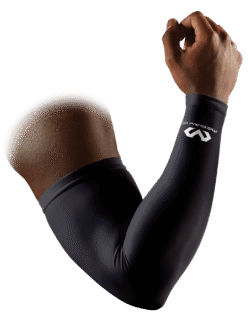
Compression Arm Sleeve / Single
Find out how the McDavid Compression Arm Sleeve / Single uses hDc Moisture Management Technology, a 6-thread flat-lock technology and 50+ UV skin protection for ultimate performance and comfort.

Dunbar Medical supplies arm compression sleeves to athletic therapists, sports teams and clinics across Canada. We carry the Mueller graduated compression arm sleeve, the McDavid compression arm sleeve and the LP EmbioZ Power arm sleeve with silicone grip.

Find out how the McDavid Compression Arm Sleeve / Single uses hDc Moisture Management Technology, a 6-thread flat-lock technology and 50+ UV skin protection for ultimate performance and comfort.

The Mueller Graduated Compression Arm Sleeve offers 20-30 mmHg medical grade compression of the entire arm (shoulder to wrist) together with the following features

The LP EmbioZ Power Arm Sleeve with Silicone incorporates a Power System along the elbow and upper arm muscles that increases the stability and proprioception of the elbow-wrist continuous movement. It will improve the accuracy of movements of your upper extremity and bring you enhanced performance with a reduced risk of injury. Try it and prepare to be amazed.
Arm sleeves belong to a large family of compression garments all of which offer similar benefits. This family includes elbow compression sleeves, compression gloves, knee compression sleeves and compression shorts.
Sleeves compress a particular limb or joint. However, there are also garments that apply compression to larger areas of the body. For example, compression tights apply compression to the entire lower body. Compression tops do the same for the upper body.
These sleeves offer a range of benefits in the areas of injury treatment, injury prevention and enhancing athletic performance. The conditions that can be helped by compression sleeves include delayed onset muscle soreness and soft tissue injuries. (Lymphedema needs a medical compression sleeve fitted by a professional.) These soft tissue injuries include muscle or tendon strains and ligament sprains.
One of the principal benefits of wearing these sleeves is the boost they provide to the blood supply to specific areas. Enhancing the blood supply ensures a flow of oxygen and nutrients. Many athletes find this helps with recovery from minor sprains, strains.
Arm compression sleeves can also help to reduce muscle vibrations in areas such as the biceps and triceps. Many athletes find this makes the arm feel more supported.
The enhanced blood circulation also provides a fresh supply of oxygen to sore and tired muscles.
Another benefit of this supply of oxygen is in helping to reduce the symptoms of delayed onset muscle soreness (DOMS). This is a condition of muscle pain and soreness that appears one to two days after exercise or sports activity. There is no known way to completely eliminate DOMS. However, studies suggest compression may modestly reduce it.
This refers to the body’s innate ability to sense when the relative positions of limbs pose an injury risk. It also refers to its ability to correct the situation and reduce the risk of injury. Compression garments such as arm sleeves are believed to enhance proprioceptive ability.
Proprioception is also believed to help the body arrange limb positions in the most effective way to accomplish a given result. It helps athletes attempting to execute a complicated movement or stroke to do so instinctively, effectively and efficiently. Some athletes find a sleeve helps with this.
The sports most likely to be helped by improved arm proprioception are those involving throwing or bowling actions. More generally, any sport that makes extensive use of the arm or shoulder can be potentially helped.
Probably the most well known sports in this category would be baseball, tennis, basketball and cricket. Other less known sports that use extensive bowling or throwing motions, such as javelin throwing, could also benefit.
In choosing a compression sleeve, there are a number of factors to remember if the best results are to be achieved.
This is often overlooked. However, it is essential if you are to be able to wear your sleeve without distraction due to lack of comfort. If possible, you should make an effort to try on your sleeve before making a purchase. If you cannot do so, make sure that you closely follow the manufacturer’s sizing chart and/or instructions.
It is first important to be sure that it is not too tight in important areas like the wrist or elbow.
Check whether the sleeve offers uniform compression over the area of your arm. Make sure also that it covers any area that you feel may be vulnerable to injury
Many sleeves these days are made from latex free and even hypoallergenic materials. If you have sensitive skin or a history of allergic sensitivities, you should try to choose one of these if possible.
You may be using an arm compression sleeve to avoid a sports injury or for improved performance. If so, you should try to wear it whenever you are practising or competing.
To help with DOMS, try wearing your sleeve for a few hours after exercise.
However, if you are wearing the sleeve for a work related reason, it is probably best to wear it during all waking hours.
In most cases, there is little benefit to be gained from wearing the sleeve to bed. In fact, if it has a high compression level, this may actually interfere with your sleep and so be counter productive.
The arm sleeves here are sports compression sleeves for throwing and racquet athletes, basketball players and anyone who wants light compression and warmth for the arm and elbow. Sleeves for lymphedema are different: they are medical garments with a measured compression level, fitted by a trained professional. Size sports sleeves by upper arm and forearm circumference and check each chart; a sleeve that leaves marks or causes tingling is too tight. See also elbow compression sleeves, compression gloves and all compression sleeves.
Buying for personal use? Shop arm compression sleeves at Remain in the Game, our store for individual customers.