

Pocket Vision Screener
By: AMG Medical
This pocket size eye chart features black type on white vinyl. Test distance is 14 inches.
This is a pocket sized near vision screening chart with black type on white vinyl. The test distance measured is 14″. Other specifications:
- Composition: Vinyl;
- Length: 6.5″
- Width: 3.5″
Q & A
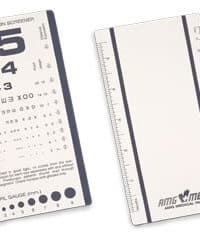
Table of Contents
Frequently Asked Questions
What is the purpose of a near vision chart, and how does it differ from a standard eye chart?
A near vision screening chart is specifically designed to assess clear sight at reading and arm’s-length distances, which is critical for daily tasks like using a computer, reading, or crafting. Unlike the standard Snellen chart used for distance vision, which is positioned 20 feet away, near charts are used at a standardized near distance, typically 16 inches. They evaluate a different functional aspect of your eyesight, primarily how well your eyes focus on close objects—a function that naturally changes with age (presbyopia). Screening near vision helps identify the need for reading glasses, bifocals, or corrective adjustments for computer work, ensuring comfort and preventing eyestrain in your daily up-close activities.
How accurate are near vision screenings, and can they replace a comprehensive eye exam?
Near vision screenings are an excellent tool for detecting functional vision changes and monitoring vision between professional exams. They provide valuable, immediate feedback on your current near visual acuity, often measured in units like Jaeger (J) or point (pt) size. However, they are not a substitute for a comprehensive eye examination performed by an optometrist or ophthalmologist. A full exam assesses overall eye health, checks for diseases like glaucoma or macular degeneration, evaluates the eye’s internal structures, and precisely measures refractive error for an accurate prescription. Think of a near vision screening chart as a helpful monitoring tool, while a comprehensive exam is the essential diagnostic medical evaluation.
Can the near vision screening chart be customized for specific patient needs or screening environments?
Yes, customization is a key advantage of many modern near vision charts. They are available in various formats, including printed booklets, handheld cards, and digital applications. You can select charts with different languages, specific paragraph text for more realistic reading tasks, or varying contrast levels (like black-on-white or white-on-black) to test under different conditions. For clinical or occupational settings, charts can be tailored to include specific reference materials, such as technical diagrams or medication labels, to assess job-specific visual demands. This flexibility allows for more relevant and personalized vision assessment, whether for a routine check, occupational screening, or monitoring a particular visual condition.
Reviews
There are no reviews yet