

Aneroid Sphygmomanometer
By: Almedic
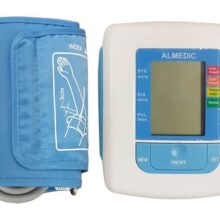
This aneroid sphygmomanometer is equipped with a manual inflatable cuff and a dial that displays the measured blood pressure.
This aneroid sphygmomanometer is equipped with a manual inflatable cuff and a dial that displays the measured blood pressure. You wrap the cuff around the upper arm for blood pressure measurement.
The sphygmomanometer has a standard air release valve to adjust the applied pressure. When the valve is opened, the pressure gradually decreases. The healthcare professional can then use a stethoscope to listen to the sound of the arterial blood flow. This instrument can be used to measure both systolic and diastolic blood pressure.
The compact size of this unit makes it ideal for both home and clinical use. You can easily take it to work or on vacation with you. Comes with a zippered carrying case and fits easily in a briefcase or large handbag.
Available in two versions – Econo and Regular. The regular version comes with a 300 mm aneroid gauge, velcro cuff, inflation bulb and bladder and air release valve.
Using The Aneroid Sphygmomanometer
To use this sphygmomanometer, follow these steps:
- Inflate the cuff well above expected systolic pressure;
- Release the air valve and let the cuff pressure fall;
- Use the stethoscope to listen for blood flow. When the pressure of the cuff equals systolic pressure, blood will begin to flow past the cuff. It will be audible through the stethoscope;
- When cuff pressure equals diastolic blood pressure, the blood flow will stop. There will be no more blood flow sound audible in the stethoscope.
Q & A

Table of Contents
Frequently Asked Questions
How do I properly use an Aneroid Sphygmomanometer to get an accurate reading?
Obtaining an accurate blood pressure measurement with an aneroid unit requires a specific, methodical technique.
- First, ensure you are resting comfortably with your arm supported at heart level. Wrap the cuff snugly around your bare upper arm, positioning it directly against the skin.
- To begin the measurement, you must inflate the cuff by squeezing the bulb. Inflate it to a pressure well above the patient’s expected systolic pressure—typically around 30-40 mmHg higher—to temporarily stop blood flow.
- Once inflated, you will slowly open the standard air release valve. This is a critical step; the valve should be opened just enough to let the pressure fall at a steady, moderate rate of about 2-3 mmHg per second.
- As the pressure drops, use a stethoscope placed over the brachial artery (just below the cuff) to listen carefully. The moment you hear the first faint, repetitive tapping sounds, note the pressure indicated on the dial. This is the systolic pressure.
- Continue to listen as the sounds change in quality and eventually become muffled and then disappear entirely. The point at which the sounds permanently stop is recorded as the diastolic pressure.
- After noting both readings, open the valve fully to release any remaining air and remove the cuff.
What are the main advantages of using an Aneroid Sphygmomanometer?
The aneroid sphygmomanometer offers several distinct advantages that make it a preferred choice for both healthcare professionals and home users. Its most celebrated feature is its reliability and accuracy when used correctly. Unlike digital monitors that can be affected by movement or irregular heartbeats, the manual aneroid device provides a direct, mechanical measurement of pressure. The absence of complex electronics means there are fewer components that can fail or require batteries, making it exceptionally durable and dependable for long-term use.
Furthermore, the compact and lightweight design of this aneroid unit makes it highly portable. As the product description notes, it comes with a zippered carrying case that fits easily into a briefcase or large handbag, making it ideal for professionals who need to travel between clinics or for individuals who want to monitor their blood pressure while on vacation.
The device’s simplicity also contributes to its cost-effectiveness, particularly with options like the “Econo” version. This combination of clinical-grade accuracy, mechanical dependability, and portability ensures that the aneroid sphygmomanometer remains a staple in medical settings and a valuable tool for personal health management.
How does this specific aneroid model support a healthcare professional in finding both systolic and diastolic pressure?
This particular aneroid sphygmomanometer is designed with features that directly facilitate the accurate auscultatory method for determining both systolic and diastolic pressures. The process relies on the principle of auscultation, where a healthcare professional listens for specific sounds—known as Korotkoff sounds—that indicate blood flow characteristics. The instrument’s high-quality aneroid gauge, which in the “Regular” version is 300 mm in size, provides a clear and precise dial face. This allows the user to read the pressure values accurately as the needle descends, which is essential for pinpointing the exact moments when the blood flow sounds appear and disappear.
The function of the standard air release valve is paramount to this process. It gives the user precise control over the deflation rate. By expertly adjusting this valve, the professional can ensure the cuff pressure decreases slowly and steadily. This controlled release is vital because it provides a clear window to distinguish the onset of blood flow (systolic pressure) and the cessation of that sound (diastolic pressure). The adjustable velcro cuff ensures a secure and comfortable fit around a variety of arm sizes, which is necessary for consistent compression and accurate sound transmission through the stethoscope, enabling the clinician to make a confident and reliable diagnosis.


Reviews
There are no reviews yet