


Multi Axial Platform System – Home
By: Cando®
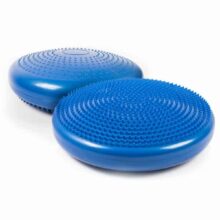
The CanDo® Multi Axial Platform System – Home features an elliptical board with off-centered pivoting system.
The CanDo® Multi Axial Platform System – Home comprises an elliptical balance board with off-centered pivot. These balance boards are a vital part of recovery from foot and ankle injuries such as a sprained ankle.
For best results, be careful to select the board for your specific intended foot use (right or left) and the correct weight class (120 pound or 250 pound capacity).
A multi-axial platform system is a sophisticated piece of equipment used in various fields such as biomechanics, rehabilitation, sports performance, and research. Here are some of its key uses and benefits:
Uses
- Biomechanical Analysis: Multi axial platform systems are used to assess human movement patterns in multiple dimensions, providing valuable data on factors such as balance, stability, gait analysis, and joint kinetics.
- Rehabilitation: In physical therapy and rehabilitation settings, these systems are used to design customized exercise programs tailored to individual needs, focusing on improving balance, coordination, proprioception, and functional movement patterns.
- Sports Performance Training: Athletes and coaches use multi-axial platform systems to assess and enhance athletic performance, focusing on areas such as agility, reaction time, coordination, and dynamic balance.
- Fall Prevention: These systems are utilized in fall prevention programs for older adults or individuals with balance disorders to identify risk factors and implement targeted interventions to improve stability and reduce the risk of falls.
- Research and Development: Researchers use multi-axial platform systems to conduct studies on human movement, biomechanics, injury prevention, and performance optimization, contributing to advancements in fields such as sports science, ergonomics, and rehabilitation.
- Neurological Assessment: In neurorehabilitation, these systems are used to evaluate and monitor motor function, balance, and coordination in individuals with neurological conditions such as stroke, Parkinson’s disease, or traumatic brain injury.
- Virtual Reality and Gaming: Multi-axial platform systems are integrated into virtual reality and gaming applications to create immersive experiences that simulate real-world environments and movements, enhancing engagement and motor learning.
Benefits
- Comprehensive Analysis: Multi axial platform systems provide a comprehensive assessment of movement patterns by capturing data in multiple dimensions, offering insights into factors such as force, pressure, acceleration, and center of mass displacement.
- Objective Measurements: These systems offer objective and quantitative measurements, eliminating subjective biases and providing reliable data for evaluation and monitoring purposes.
- Customizable Protocols: Users can customize assessment protocols and training programs based on specific goals, individual needs, and performance metrics, allowing for personalized interventions and progress tracking.
- Real-Time Feedback: Many multi-axial platform systems provide real-time feedback during assessments and training sessions, enabling immediate adjustments and corrections to optimize performance and outcomes.
- Data Integration: Data collected from multi-axial platform systems can be integrated with other technologies such as motion capture systems, electromyography (EMG), and force plates, providing a comprehensive analysis of movement biomechanics.
- Non-Invasive Assessment: These systems offer non-invasive methods for evaluating movement patterns and functional abilities, minimizing the risk of injury or discomfort to the user during assessments and training sessions.
- Evidence-Based Practice: The use of multi axial platform systems is supported by evidence-based research and clinical guidelines, ensuring that interventions and protocols are grounded in scientific principles and best practices.
In summary, multi-axial platform systems are valuable tools for assessing movement patterns, enhancing performance, and optimizing rehabilitation outcomes across a range of applications, offering objective measurements, customizable protocols, and real-time feedback to support evidence-based practice and personalized interventions.
Q & A

Table of Contents
Frequently Asked Questions
What specific injuries or conditions does the CanDo® Multi Axial Platform System help treat?
The Multi Axial Platform System is primarily designed to support recovery from foot and ankle injuries, with particular effectiveness for sprained ankles. By incorporating an off-centered pivot on an elliptical balance board, it challenges the body’s proprioceptive system—your innate ability to sense joint position and movement.
In a rehabilitation context, the platform helps restore balance, coordination, and dynamic stability following ligament damage. It is also widely used for chronic ankle instability, post-fracture recovery, and following orthopedic surgery where mobility has been compromised. Beyond the ankle, the system benefits individuals recovering from knee injuries, as well as those with neurological conditions such as stroke or Parkinson’s disease, where balance retraining is essential.
Crucially, the system is not limited to rehabilitation. It also serves as a preventive tool, particularly in fall prevention programs for older adults or individuals with balance disorders. By providing controlled, multi-directional instability, it retrains the lower limb’s neuromuscular response, reducing the likelihood of re-injury. For best therapeutic outcomes, users must select the board according to their intended foot (right or left) and weight class (120 lb or 250 lb capacity).
How does this system differ from a standard balance board or wobble board?
While a traditional balance board offers single-plane or limited multi-directional movement, the CanDo® Multi Axial Platform System distinguishes itself through its off-centered pivot and true multi-axial design. Standard wobble boards typically pivot from a central point, providing predictable, uniform instability. In contrast, this system’s elliptical shape and offset pivot create variable resistance and asymmetrical loading patterns that more closely mimic real-world functional movements.
This design forces the user to adapt continuously, engaging a broader range of stabilizer muscles in the foot, ankle, and lower leg. As a result, it delivers superior training for proprioception, reaction time, and dynamic balance—elements often neglected by simpler devices. Furthermore, the system is engineered for specific foot use (right or left), allowing targeted rehabilitation of a single limb, whereas most standard boards are ambidextrous and less precise.
In research and sports performance settings, the multi-axial platform captures objective biomechanical data across multiple dimensions, including force, acceleration, and center-of-mass displacement. Standard boards rarely offer this level of analytical insight, making the CanDo® system a preferred choice for clinicians, athletes, and researchers seeking evidence-based, customizable intervention.
Can this system be used at home, and what safety considerations should I keep in mind?
Yes, the CanDo® Multi Axial Platform System – Home is explicitly designed for domestic use. However, because it challenges balance more intensely than standard boards, several safety precautions are essential. First, always begin use near a stable surface such as a wall or countertop, or with a spotter present, especially during initial sessions. Second, proper selection is critical: ensure you have chosen the correct foot-specific board (right or left) and the appropriate weight capacity (120 lb or 250 lb). Using an incorrect weight class can compromise stability and increase injury risk.
Third, the Multi Axial Platform System is most effective when introduced progressively. Begin with short, supported sessions focusing on subtle weight shifts before advancing to unsupported balancing or dynamic movements. Individuals with acute ankle swelling, unresolved fractures, or severe neurological impairment should consult a physical therapist before use. Additionally, the board should be placed on a non-slip, level surface free of obstacles.
Finally, while the system promotes healing and prevents stiffness, it is a therapeutic device, not a toy. Home users should follow a structured protocol—ideally guided by a rehabilitation professional—to avoid overloading healing tissues. When used correctly, it offers clinic-grade balance training in the convenience of your home.


Reviews
There are no reviews yet