

Iron Disc Weight Plates – Stationary Cart
By: Cando®
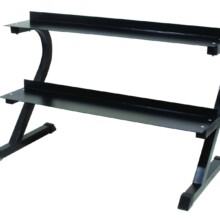
The Iron Disc Weight Plates – Stationary Cart is designed to hold any 1″ or 2″ weight plate and has an attractive black frame finish.
The CanDo® Iron Disc Weight Plates – Stationary Cart that (like the Mobile Cart) is designed for storage of Iron Disc Weight Plates. It is a versatile “A-frame” rack that can accommodate any 1″ or 2″ plate for efficient and convenient storage. weight capacity of the Cart is 350 lbs and it has a stylish black frame colour.
Q & A

Table of Contents
Frequently Asked Questions
What is the weight capacity of the CanDo® Iron Disc Weight Plates Stationary Cart, and can it safely hold both 1" and 2" plates?
The CanDo® Iron Disc Weight Plates Stationary Cart is engineered with a maximum weight capacity of 350 lbs, making it a robust and reliable storage solution for home gyms, rehabilitation centers, or commercial fitness facilities. This capacity refers to the total combined weight of all plates stored on the cart at any given time. Exceeding this limit could compromise the cart’s structural integrity or tip hazard, so users are strongly advised to distribute weight evenly across the A-frame design.
Yes, the cart is designed to accommodate both 1″ and 2″ center-hole plates simultaneously. This versatility is one of its most valued features. The A-frame rack features dual-sized pegs or posts that securely hold standard (1-inch) and Olympic (2-inch) plates without the need for adapters. This means you can consolidate your entire plate collection—regardless of brand or hole size—into a single, organized unit.
However, it is important to note that while the cart holds both types, the stationary design means it does not include wheels for mobility. Users should position the cart in a dedicated, accessible spot within the gym. Regularly inspecting the frame and welds for signs of wear will also help maintain safe operation over time.
How is the stationary cart different from the mobile cart, and which one should I choose?
The primary difference between the CanDo® Iron Disc Weight Plates Stationary Cart and the Mobile Cart lies in its mobility—or lack thereof. The stationary cart is designed to remain in a fixed location, resting directly on the floor without casters or wheels. This makes it an excellent choice for gyms with limited floor space where movement is unnecessary, or for users who prefer a more permanent, stable storage solution that will not shift during plate removal or replacement.
In contrast, the mobile cart includes heavy-duty locking casters, allowing users to roll heavy plate loads from one area to another—ideal for multi-station training environments or facilities where plates are shared among several racks and machines. The stationary cart, however, offers two distinct advantages: it is typically more affordable and provides greater inherent stability since there are no wheels that could unexpectedly roll.
Which should you choose? If your training space is fixed and plates are always used in the same zone, the stationary cart is perfectly sufficient and often preferred for its simplicity and lower cost. However, if you frequently rearrange equipment, train in multiple zones, or need to store plates away from the main lifting area after use, the mobile cart is worth the upgrade. Both share the same 350 lb capacity and A-frame design.
What types of gym environments are best suited for this stationary cart?
The CanDo® Iron Disc Weight Plates Stationary Cart is best suited for small to medium-sized home gyms, physical therapy clinics, and commercial fitness centers with designated plate storage zones. Because it lacks wheels, the cart thrives in environments where equipment remains in a consistent location. For example, a garage gym with a dedicated lifting platform benefits greatly from having a stationary cart placed immediately adjacent to the barbell rack, allowing for quick access to plates without clutter.
In physical therapy or rehabilitation settings, the stationary cart is an excellent choice for storing lighter iron plates used for progressive loading exercises. The A-frame design keeps plates organized by size, and the absence of movement reduces noise and distraction during therapeutic sessions. Therapists often prefer stationary storage to prevent accidental rolling into patients or equipment.
Commercial gyms may use stationary carts in circuit training areas or as supplemental storage near squat racks. However, for high-traffic environments where multiple users move plates across the facility, the mobile version would be more practical. Ultimately, the stationary cart excels in any setting where stability, simplicity, and space efficiency are more important than mobility. Its stylish black frame also blends well with most gym aesthetics.


Reviews
There are no reviews yet