Clavic Brace For Posture Improvement
The LP Clavic Brace will help you correct and maintain your posture by targeting and strengthening those neck and upper back muscles that help you keep pressure off your lower back and avoid pain in that area.

Most cases of back pain involve the lower back. This, after all, is the part of the back that bears most of the weight of the upper body.

The LP Clavic Brace will help you correct and maintain your posture by targeting and strengthening those neck and upper back muscles that help you keep pressure off your lower back and avoid pain in that area.

The DynaPro Reusable Hot/Cold Pack is a versatile non-toxic compress that you can use for both hot and cold therapies and for treatment of both acute and chronic injuries.

The Relief Pak® HotSpot® Moist Heat Pack provides the same moist heat therapy advantages as the Hydrocollator® HotPacs at a more economical price.

Find out how Hydrocollator HotPacs provide moist heat therapy to treat chronic injuries suffered by athletes or other individuals and offer deeper tissue penetration than dry heat therapies at comparable temperatures.
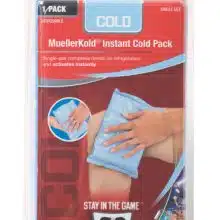
The Mueller Kold Instant Cold Pack is ready for use whenever you need it. It needs no refrigeration and activates instantly. This fast-acting cold compress is ideal for acute sports injuries or other situations requiring first aid.

The soft gel of the Mueller Reusable Hot/Cold Pack refrigerates for cold therapy and microwaves for heat therapy. Recommended for treatment of both acute and chronic injuries as well as minor muscle aches and pains.

The DynaPro Single Use Instant Cold Pack will help reduce pain, swelling and bleeding in the immediate aftermath of suffering an acute injury.

Find out how the Digital TheraTherm Heating Pad provides moist heat for temporary relief of arthritic and back pain.
It is also the area of the back that you are most likely to injure when lifting heavy weights without paying attention to correct lifting technique. However, this does not mean that upper back pain is a rare event, nor should anyone assume that it doesn't need to be taken seriously.
The upper back runs from the base of the neck to the bottom of the rib cage and pain in this area can be the result of several possible causes. We set out to describe some of these causes below.
To understand the possible causes of pain in the upper or middle back, it is important to be aware of the structure of this part of the body.
The upper spine comprises of 12 vertebrae, each of which is an irregularly shaped bone surrounded by some cartilage (known as hyaline cartilage). Doctors refer to these vertebrae as thoracic vertebrae and they have names T1 through T12.
Between each vertebra, there are spongy discs that help to cushion the vertebrae and prevent them coming into direct contact with each other. The spine itself is held together by a network of ligaments and muscles.
We now briefly discuss some of the various possible causes of upper back pain and suggest solutions for each possible cause.
The situations discussed below represent only some of the more common cause of upper back pain. If you are experiencing pain in the upper back, please don't assume that one of these situations applies to you. Instead, you should consult with a medical professional for help in determining the cause.
This is one of the most common causes of upper back pain. It is usually the result of sitting for long periods with the upper back curved forward and the shoulders "hunched". This places much of the strain of the weight of the head on the upper back, instead of allowing it to be distributed through the rest of the spine.
To correct this problem, an individual should try to sit or stand holding the shoulders back and keeping the spine straight. In addition, having a small curve (but not excessive) in the lower back area will improve posture and reduce the potential for both lower and upper back pain. Using a posture brace or upper back brace can help to remind the individual to maintain proper posture while walking or sitting and so relieve the problem.
This is the result of compression of a nerve. This in turn can be the result of either repetitive movements or of keeping your body in one position for a prolonged period.
Upper back pain from a pinched nerve normally radiates outward from a specific area and may be accompanied by numbness or tingling. Alternatively, the pain can be similar to a "pins and needles" sensation or simply a "burning" feeling. Turning the head or stretching the neck can sometimes exacerbate the pain.
In some cases, rest is all that the patient need to do to resolve this type of problem. However, in other cases, doctors may need to use surgery to remove the scar tissue or other material that may be pinching the nerve.
This refers to damage to the cushioning or shock absorbing intervertebral discs that causes them to slip out of their proper place (slipped disc) or to rupture. Although this problem most often occurs in the lower back, it can also appear in the upper back and lead to pain in that region.
This type of pain usually worsens during periods of physical activity and recedes when the individual is sedentary.
To treat this problem, doctors may recommend rest for a few days together with use of a cold compress, ice pack or moist heat pack. If additional information, please consult our article on 4 things to know about moist heat therapy. Pain relief medications and physical therapy can also be helpful.
If the conservative approaches don't work, doctors can opt for surgery to treat this problem and ease the patient's upper back pain. They will explain the various options to the patient and recommend one which is likely to produce the best outcome.
Upper back pain can also be the result of spinal osteoarthritis. This occurs when the cartilage between the spinal vertebrae wears down and the vertebrae start to come into direct contact with each other.
This type of upper back pain will usually be worse when the individual first awakens in the morning. It will also be severe when he or she is active, but recede during periods of rest. It may also increase when the patient resumes activity after sitting or lying down in a stationary position for a while.
In some cases, upper back pain can be the result of gallstone trouble. If this condition causes back pain, it will tend to occur between the shoulder blades or, in some cases, near the right shoulder. However, in other cases, gallstone pain can occur in the belly, just under the ribs.
There are many possible treatments for this condition. A doctor and advise on the alternatives and on which is best for his or her patient.