Hydraulic Hand Dynamometer
The Baseline Hydraulic Hand Dynamometer is designed to measure hand strength without the patient being able to “feel” the handle move.

Dunbar Medical supplies hand dynamometers and pinch gauges to physiotherapy, occupational therapy, hand therapy and sports medicine clinics across Canada. We carry the Baseline hydraulic hand dynamometer for grip strength testing and the Baseline hydraulic pinch gauge, which measures pinch force up to 50 lb (23 kg).
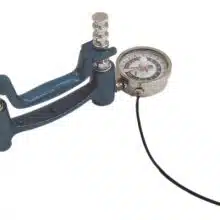
The Baseline Hydraulic Hand Dynamometer is designed to measure hand strength without the patient being able to “feel” the handle move.

The Baseline Hydraulic Pinch Gauge is designed to reliably and accurately measure up to 50 lbs (23 kg) of pinch force.
Dynamometers are essential tools in sports medicine that allow healthcare professionals to objectively measure and assess muscle strength and performance. These devices provide valuable information that helps in injury rehabilitation, performance enhancement, and overall athlete management.
In this article, we explore the importance of dynamometers in sports medicine and how they contribute to assessing strength, tracking progress, and optimizing athletic performance.
Dynamometers play a critical role in objectively assessing muscle strength. They measure the force exerted by muscles during specific movements or isometric contractions, providing accurate quantitative data. This information allows healthcare professionals to evaluate the strength of specific muscle groups, identify any imbalances or weaknesses, and compare an athlete's strength to established norms or benchmarks.
Objective strength assessment using dynamometers enables the development of targeted strength training programs and aids in identifying potential areas of concern or injury risk.
Dynamometers are valuable tools in the rehabilitation process of sports-related injuries.
By objectively measuring strength, healthcare professionals can assess the progress of an athlete's recovery and determine the effectiveness of rehabilitation protocols. Comparing pre-injury and post-injury strength measurements helps healthcare professionals track an athlete's progress and make informed decisions regarding the timing and intensity of return-to-play protocols.
Dynamometers also assist in identifying any remaining weaknesses or muscle imbalances that may contribute to reinjury or hinder performance.
Dynamometers are instrumental in optimizing athletic performance by providing precise data on strength gains and progress over time.
By regularly assessing muscle strength and monitoring changes, sports medicine professionals can tailor strength training programs to address specific weaknesses and enhance performance.
Dynamometer measurements help establish baselines and set realistic goals for athletes, enabling them to track their progress and make adjustments to their training regimens accordingly. This objective feedback empowers athletes to focus on areas that need improvement and design targeted training strategies to maximize their athletic potential.
Dynamometers allow for individualized training programs based on an athlete's specific strength capabilities and goals. By identifying muscle imbalances or weaknesses through strength assessments, sports medicine professionals can design personalized training protocols to address these areas. This individualized approach can help address imbalances and improve functional strength.
Dynamometers can also help identify areas of weakness that may need attention.
Dynamometers provide valuable data for research and data analysis in sports medicine. Large-scale studies utilizing dynamometers help establish normative data for different age groups, genders, and sports disciplines. This information serves as a reference point for healthcare professionals in the assessment and management of athletes.
Additionally, dynamometer data can be analyzed to study strength profiles across various populations, investigate performance differences, and evaluate the effectiveness of different training interventions. Such research contributes to evidence-based practice in sports medicine and guides the development of effective strength training protocols.
Dynamometers are integral tools in sports medicine that assist healthcare professionals in assessing strength, monitoring progress, and optimizing athletic performance. These devices provide objective data that help identify muscle imbalances, track rehabilitation progress, and design individualized training programs.
By utilizing dynamometers, sports medicine professionals can make informed decisions, tailor interventions, and enhance athlete performance while reducing the risk of injuries. The use of dynamometers facilitates evidence-based practice, research advancements, and overall excellence in sports medicine care.
A hydraulic hand dynamometer measures grip strength with an adjustable handle and a sealed hydraulic system, so the handle hardly moves as the patient squeezes. For repeatable results, use the same handle position and the same patient position each time (commonly seated, elbow bent to 90 degrees), take the average of three trials and compare both hands. Pinch gauges measure tip, key (lateral) and palmar pinch for hand therapy. Check calibration periodically. See also goniometers, measuring tapes, all diagnosis and testing equipment, and hand exercisers for the rehab that follows.
Buying for personal use? Shop dynamometers at Remain in the Game, our store for individual customers.