

ColPac Cold Therapy
By: Chattanooga
| Size | 3″ x 11″, Eye, Half Size, Neck Contour, Oversize, Quarter Size, Standard Size |
|---|
ColPac® Cold Therapy packs come in seven different sizes of blue vinyl and four black sizes of black polyurethane and are filled with a non toxic silica gel that maintains it pliability during treatment.
ColPac Cold Therapy packs are the ideal medium for administering cold therapy to your patients, especially in a busy clinic setting. They come in seven different sizes of blue vinyl and four black sizes of black polyurethane.
The packs are filled with a non toxic silica gel that maintains its pliability during treatment and will not freeze solid. As a result, they will conform to all body areas, including angled areas like knees or elbows, for maximum treatment effectiveness.
Use these latex free cold therapy packs to treat acute injuries. They will reduce metabolism and decrease blood circulation to the injured area. Apply 20-30 minutes of treatment every 2-3 hours over a period of 2-3 days or until bleeding has ceased. At that point, your patient will be ready for the next stage of therapy.
We recommend that you avoid use of the ColPac® Cold Therapy packs in the presence of open wounds or near areas with poor circulation. Exercise caution in applying it near to areas where your patient is experiencing a loss of feeling.
Always use a hand towel between your patient’s bare skin and the ColPac®. This will reduce the initial shock of the cold therapy.
Instruct your patient not to sit, sleep or lie on the ColPac®. Do not apply it for periods of more than 30 minutes.
The packs come with a one year warranty.
ColPac Cold Therapy – Application Instructions
- For initial chilling of the cold therapy pack, place it flat in the chilling unit or freezer for two hours. Do not chill the ColPac® below 0 ºF.
- Remove the pack from the freezer or chilling unit and apply it to the area being treated. Take care to place a hand towel between your patient’s skin and the ColPac®.
- Treatments should not go beyond 30 minutes at a time.
| Size | 3″ x 11″, Eye, Half Size, Neck Contour, Oversize, Quarter Size, Standard Size |
|---|
Q & A
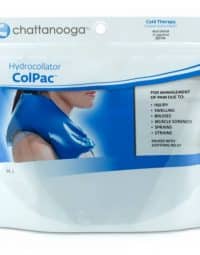
Table of Contents
Frequently Asked Questions
How long should a ColPac cold therapy session last, and how often can it be applied?
For optimal therapeutic benefit, each treatment session should last between 20 and 30 minutes. Extended application beyond 30 minutes is not recommended, as it may increase the risk of skin or tissue damage.
Patients should apply the pack every 2 to 3 hours over a period of 2 to 3 days following an acute injury, or until bleeding has ceased. This interval allows the tissue to return to a normal temperature before the next session.
Adhering to this schedule helps reduce metabolism and decrease blood circulation to the injured area—key mechanisms for controlling inflammation and promoting recovery.
Is it safe to apply the ColPac directly to the skin?
No. A hand towel should always be placed between the patient’s bare skin and the ColPac®. This simple barrier significantly reduces the initial shock of cold therapy while still allowing effective cooling.
Direct skin contact is discouraged, as it can lead to discomfort, skin irritation, or even cold-related injury, particularly in patients with sensitive skin or reduced sensation.
Additionally, do not allow patients to sit, sleep, or lie on the pack. These practices can trap cold against the skin for excessive periods, increasing the likelihood of adverse effects.
When should cold therapy be avoided with ColPac?
Cold therapy with ColPac® should not be used over open wounds or in areas with poor circulation. Doing so may impair healing or exacerbate existing vascular issues.
Caution is also required when treating patients who have loss of feeling in the affected area, as they may not perceive warning signs of tissue stress. In such cases, more frequent skin checks are essential.
Finally, while ColPac® is excellent for acute injuries, it is not intended for use once bleeding has fully ceased. At that point, patients are typically ready to transition to the next phase of therapy, such as heat or rehabilitation exercises.


Reviews
There are no reviews yet