

Shoulder Wheel
By: Cando®
The Shoulder Wheel is a device which allows patients to perform resistance exercises to improve range of motion and relieve pain. The level of resistance can be adjusted by turning the knob on the wheel. Can be used in a standing or seated position.
The CanDo® Shoulder Wheel range-of-motion arc can be varied from 10″ to 39″ by moving handle. The resistance can be varied by turning the resistance knob. The height of the unit is adjustable up to 26″ to accommodate seated and standing therapy.
Shoulder Wheel – Key Applications
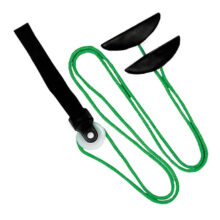
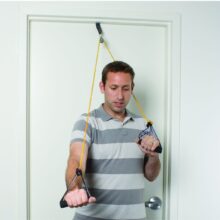
A shoulder wheel, also known as a shoulder exerciser, is a piece of rehabilitation equipment commonly used to improve range of motion, strength, and flexibility in the shoulder joint. It typically consists of a wheel or pulley system attached to a wall, door, or overhead fixture, with a rope or cord and handles for grasping. Here are the primary uses of a shoulder wheel:
Range of Motion Exercises
- One of the main uses of a shoulder wheel is to facilitate passive and active range of motion exercises for the shoulder joint.
- Passive range of motion exercises involve using the unaffected arm or an external force, such as the opposite hand or a therapist’s assistance, to move the affected arm through a controlled range of motion.
- Active range of motion exercises involve the patient actively moving the affected arm to the best of their ability, gradually increasing mobility and flexibility in the shoulder joint.
Flexibility Training
- The wheel allows for dynamic stretching of the muscles and soft tissues surrounding the shoulder joint.
- By performing controlled movements with the shoulder wheel, individuals can stretch and lengthen tight or restricted muscles, improving flexibility and reducing stiffness in the shoulder.
Strength Building
- In addition to improving flexibility, the shoulder wheel can also be used for strengthening exercises.
- By adjusting the resistance level or the angle of the wheel, individuals can engage the muscles of the shoulder, including the rotator cuff muscles and deltoids, to build strength and endurance over time.
Rehabilitation Following Injury or Surgery
- These wheels are commonly used in rehabilitation programs for individuals recovering from shoulder injuries, surgeries, or conditions such as rotator cuff tears, shoulder impingement, or frozen shoulder.
- Rehabilitation exercises with the shoulder wheel help restore normal shoulder function, reduce pain and inflammation, and prevent the development of scar tissue or stiffness.
Preventive Maintenance
- Athletes and individuals at risk of shoulder injuries can use the shoulder wheel as part of a preventive maintenance program to maintain optimal shoulder health and function.
- Regular use of the shoulder can help improve shoulder stability, mobility, and strength, reducing the risk of overuse injuries or shoulder instability.
Home Exercise Program
- Shoulder wheels are often prescribed as part of a home exercise program by physical therapists or healthcare providers.
- They provide a convenient and accessible way for individuals to continue their shoulder rehabilitation exercises outside of formal therapy sessions, promoting consistent progress and recovery.
Posture Improvement
- Strengthening and mobilizing the muscles around the shoulder joint with the wheel can contribute to improved posture.
- By correcting muscular imbalances and promoting better shoulder alignment, individuals can reduce the risk of shoulder-related postural issues and associated discomfort.
In summary, the shoulder wheel is a valuable rehabilitation tool that can be used to improve range of motion, flexibility, strength, and shoulder function following injury, surgery, or as part of a preventive maintenance program. Its versatility and accessibility make it an effective option for individuals seeking to optimize shoulder health and performance.
Q & A

Table of Contents
Frequently Asked Questions
How does the CanDo® Shoulder Wheel improve range of motion in the shoulder?
The CanDo® Shoulder Wheel is specifically designed to restore and enhance shoulder mobility through both passive and active range-of-motion exercises. In passive motion, the patient’s unaffected arm or a therapist guides the affected arm using the wheel’s handle, allowing the joint to move without muscular effort from the injured side. This is especially beneficial in early rehabilitation when active movement may be painful or restricted.
In active range-of-motion exercises, the patient independently rotates the wheel using the affected arm, gradually increasing the arc of movement as tolerance improves. The wheel’s arc is adjustable from 10 to 39 inches by simply repositioning the handle, enabling clinicians and patients to customize the range based on current ability and recovery goals.
By performing controlled, repetitive rotations, the shoulder joint experiences gentle stretching of tight capsules, ligaments, and muscles. This process helps break down adhesions, reduce stiffness, and restore functional movement patterns. Over time, consistent use leads to meaningful gains in shoulder flexion, abduction, and rotation, making the CanDo® Shoulder Wheel a cornerstone tool for conditions like frozen shoulder, rotator cuff repair, and post-surgical stiffness.
Can the resistance be adjusted for strengthening, and how does that work?
Yes, the CanDo® Shoulder Wheel features an adjustable resistance mechanism that allows users to progress from mobility exercises to strength building. A clearly marked resistance knob can be turned to increase or decrease the effort required to rotate the wheel. This design enables smooth, incremental loading of the shoulder musculature without the need for free weights or elastic bands.
When the resistance is set lower, the wheel provides minimal opposition, making it ideal for early rehabilitation focused on range of motion and neuromuscular re-education. As the patient regains strength and confidence, the resistance can be increased to engage key muscle groups, including the rotator cuff (supraspinatus, infraspinatus, teres minor, subscapularis) and the larger deltoid muscles.
This adjustability ensures that the same device can be used across multiple phases of recovery—from gentle passive motion to active strengthening. Unlike fixed-resistance machines, the CanDo® Shoulder Wheel offers smooth, continuous resistance through the entire arc of motion, promoting eccentric and concentric contractions that are critical for functional shoulder stability and endurance.
Is the CanDo® Shoulder Wheel suitable for home use, and what height adjustments are available?
The CanDo® Shoulder Wheel is widely prescribed for home exercise programs due to its user-friendly design and compact footprint. Its height is adjustable up to 26 inches, allowing the unit to accommodate both seated and standing therapy positions. This versatility is essential for patients who may need to begin rehabilitation while seated for stability or balance reasons, then progress to standing as function improves.
Adjusting the height is straightforward and does not require specialized tools, making it easy for patients or caregivers to modify the setup as recovery advances. A proper height setting ensures that the shoulder moves through a pain-free, biomechanically efficient arc, reducing compensatory movements from the neck or trunk.
For home use, the shoulder wheel provides a consistent, measurable way to perform prescribed exercises without frequent clinic visits. Patients can follow a structured program—starting with passive motion, then active assisted, and finally resistance training—while tracking improvements in arc length and strength. When combined with guidance from a physical therapist, the CanDo® Shoulder Wheel becomes a safe, effective, and durable solution for long-term shoulder rehabilitation at home.

Reviews
There are no reviews yet