Causes
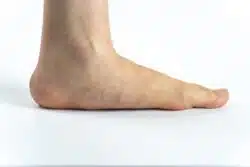
The posterior tibial tendon plays a key role in attaching the calf muscle to the bones on the inside of the foot, thus holding up the arch of the foot and supporting the foot during the act of walking. When this tendon is inflamed or torn as a result of PTTD, it loses its ability to provide stability for the arch of the foot, which can then result in flat feet.
This injury can be the result of trauma e.g. due to a fall, or it can result from overuse. Overuse cases occur mainly among athletes in impact sports such as basketball,or soccer, in which extensive running and jumping can cause damage to the posterior tibial tendon over time.
Flat Feet - Risk Factors
The primary risk factors for flat feet are:
- Gender - it occurs more often in women than men;
- Age - it tends to occurs mainly over the age of 40.
There is also a correlation between the occurrence of flat feet and that of conditions such as obesity, hypertension and diabetes.
Symptoms Of Flat Feet
The key symptoms of PTTD are:
- Pain along the inner (medial) side of the foot and ankle. The patient may also experience swelling in this same area. The pain will usually worsen when the patient is performing athletic activities like running. In extreme cases, the pain can be so severe that patient may not be able to walk or even stand for a prolonged period.
- In the advanced stages of flat feet (once the arches have collapsed) the pain may also occur on the outer ankle. This is the result of the heel bone shifting in response to the collapse of the arch.
Treatment Of Flat Feet
In the majority of cases, a conservative (non surgical) treatment approach will be sufficient to relieve PTTD. However, the pain of flat feet can persist well after the start of treatment that ultimately proves successful. In fact, the pain can continue for as long as 3-6 months after the onset of treatment, so patience on the part of the patient is important.
Conservative Treatment Options
The primary non surgical options for treatment of flat feet are:
- Rest - a suspension of the high impact activities that have led to the condition will usually help to heal it. Patients can consider switching to lower impact activities for exercise, such as swimming or cycling.
- Icing - The patient can also try applying cold compresses to the posterior tibial tendon for 20-30 minutes at a time and repeating 3-4 times daily. This can be especially effective in reducing pain after the completion of exercise activity that may have inflamed the PTTD.
- Pain relieving medication - the patient can consider taking pain and inflammation relief medication such as ibuprofen shortly before performing a high impact activity like running.
- Foot Immobilization - Another conservative treatment option is the use of a walking boot. This will immobilize the foot/ankle and allow healing to progress without interruption. However, this option should be used with care. If the patient wears the boot for too long, it may cause the muscles of the foot to atrophy (weaken) through lack of use. This can then lead to other problems in the future.
- Shoe orthotics or ankle braces such as those below can be used to provide support to the tendon and allow it to heal. In mild cases, a simple shoe insert bought over the counter can be enough to solve the problem. In more advanced cases, a podiatrist can design a custom insert to support the arch and relieve the pain of flat feet.
- Cortisone injections - doctors may also consider such an injection near (but not into) the posterior tendon.
Surgery
In the most severe cases, surgery may be required to repair the damage and/or to remove the inflamed tissue. Surgical treatment options for flat feet include the following:
- Gastrocnemius recession, or surgical lengthening of the muscles of the calf. This flat feet treatment option has relatively few complications and is useful if the patient has limited ability to move the ankle up. However, the patient can then experience some weakness of the calf when "pushing off" the foot;
- Cleaning the tendon, also known as tenosynovectomy. This involves removing the inflamed tissue surrounding the posterior tendon. This can be an effective treatment in cases of mild disease and when the shape of the foot remains unaltered. However, because it does not address the root causes of the PTTD, the tendon may continue deteriorating, leading to recurrence of the pain in the future;
- Tendon transfer, involving the replacement of the damaged tendon with another foot tendon. Alternatively, the transferred tendon may simply be attached to the posterior tendon if the latter has not deteriorated too much.
- Osteotomy, in which the surgeon reshapes the foot to create a more natural arch shape. This is a more aggressive treatment option than those mentioned above, as it involves cutting into one or more foot bones.
- Fusion, probably the most aggressive surgical treatment option for flat feet. This involves fusing the joints at the back of the foot to restore the shape of the foot and restore a more "natural" shape.