

Back Brace For Work: Choosing Back Supports For Workplace Lifting
Lower back injuries are among the most common workplace injuries, and employers, health and safety managers and occupational health clinics are often asked the same question: should workers wear a back brace for work? Back support belts are inexpensive and easy to hand out, but they are not a simple fix.
In this guide we look at what the evidence says about back supports at work, where they genuinely help, the main types of industrial back support belts and braces, and how to choose, fit and introduce them so they support, rather than replace, a good manual handling program.
Do Back Braces Prevent Injuries At Work?
This is the most important point for any employer considering a back brace for work. After reviewing the research, the U.S. National Institute for Occupational Safety and Health (NIOSH) concluded that there is not enough evidence that back belts prevent back injuries in workers who have not been injured, and it does not recommend them as an injury prevention measure on their own. Belts may also give workers a false sense of security that leads them to lift heavier loads.
The most effective way to reduce lifting injuries is still to reduce the hazard: redesign tasks so loads are lighter and kept close to the body between knee and shoulder height, provide mechanical aids such as carts and hoists, avoid twisting while lifting, and train workers in safe lifting. NIOSH also recommends that back belts be voluntary rather than a condition of the job.
Where A Back Brace For Work Does Help

Where back supports earn their place is with workers who already have lower back pain. In a French trial of 197 people with lower back pain, those who wore an elastic lumbar belt had better function, less pain and used less medication after three months than those who did not. For this reason, physiotherapists, chiropractors and occupational health providers commonly recommend a back support for workers who are:
- returning to work after a lower back strain or sprain, as part of a graduated return-to-work plan;
- managing recurring or ongoing lower back pain while staying on the job;
- doing occasional heavy or awkward lifting, where the belt acts as a reminder to brace the core and lift with good technique; or
- looking for warmth and compression to ease stiff, tight back muscles during a long shift.
In these cases, a back brace for work is one part of a plan that also includes exercise, task modification and follow-up with a health professional.
Types Of Back Supports For The Workplace

Industrial Back Support Belts With Suspenders
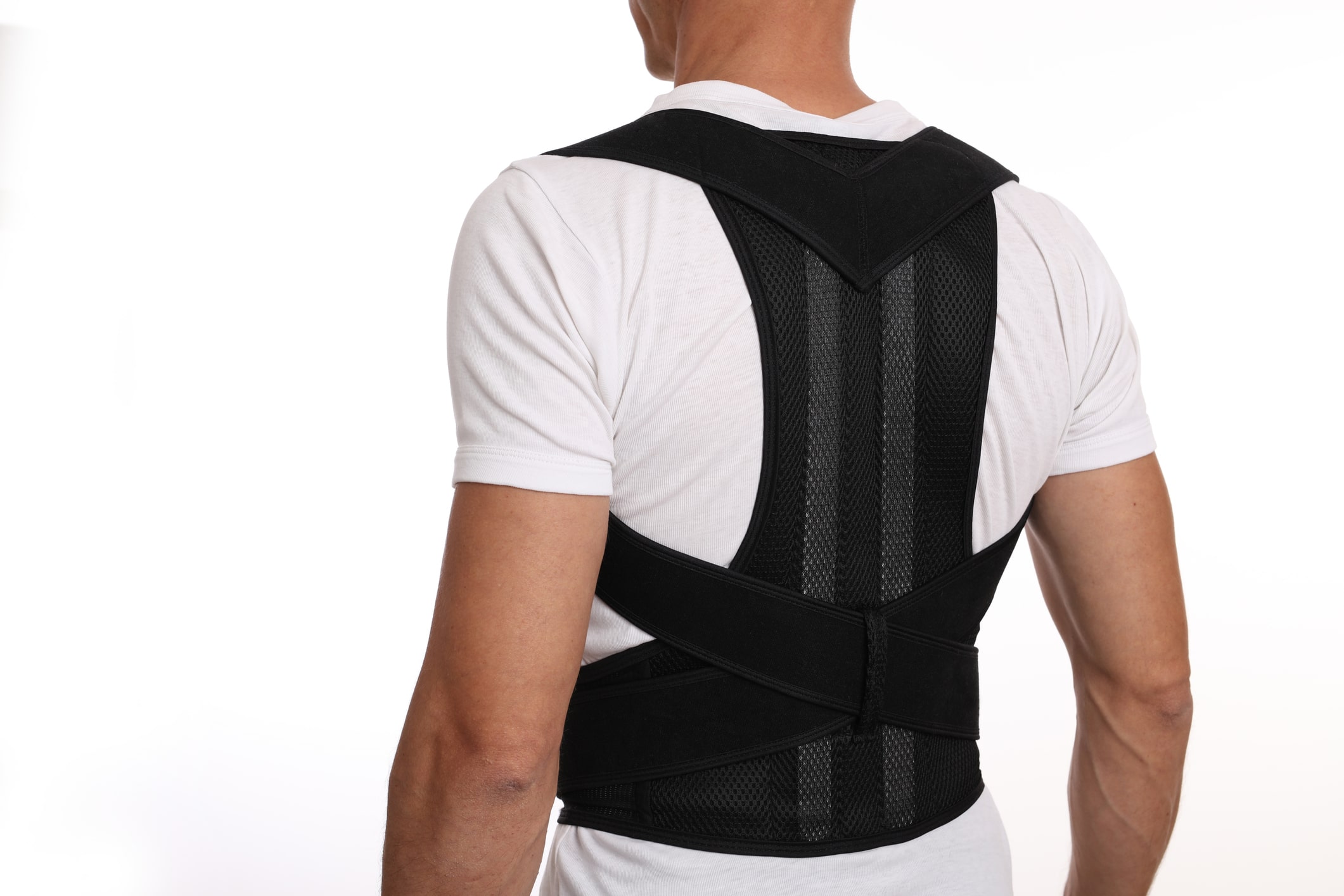
The classic back support belt for work is a wide elastic belt with side pulls and adjustable suspenders. The suspenders hold the belt in place when it is loosened between lifts, so workers can tighten it quickly when they need support. The LP Industrial Back Support has four-inch side pulls, flexible stays and criss-cross shoulder straps, and the Mueller Back Support with Suspenders pairs a supportive back belt with suspenders for all-day wear. Browse the full back belt range.
Back Braces With Stays And Lumbar Pads
For workers with existing lower back pain, a brace with flexible stays and a lumbar pad gives more targeted support. The Mueller Adjustable Back Brace with Removable Lumbar Support adds a removable lumbar pad, the McDavid Back Stabilizer uses six steel stays with a neoprene wrap, and the LP X-Tremus Back Support combines a contoured lumbar structure with an outer power band. The low-profile BioSkin Back Skin suits workers who need support under a uniform.
Rigid And Semi-Rigid Lower Back Braces
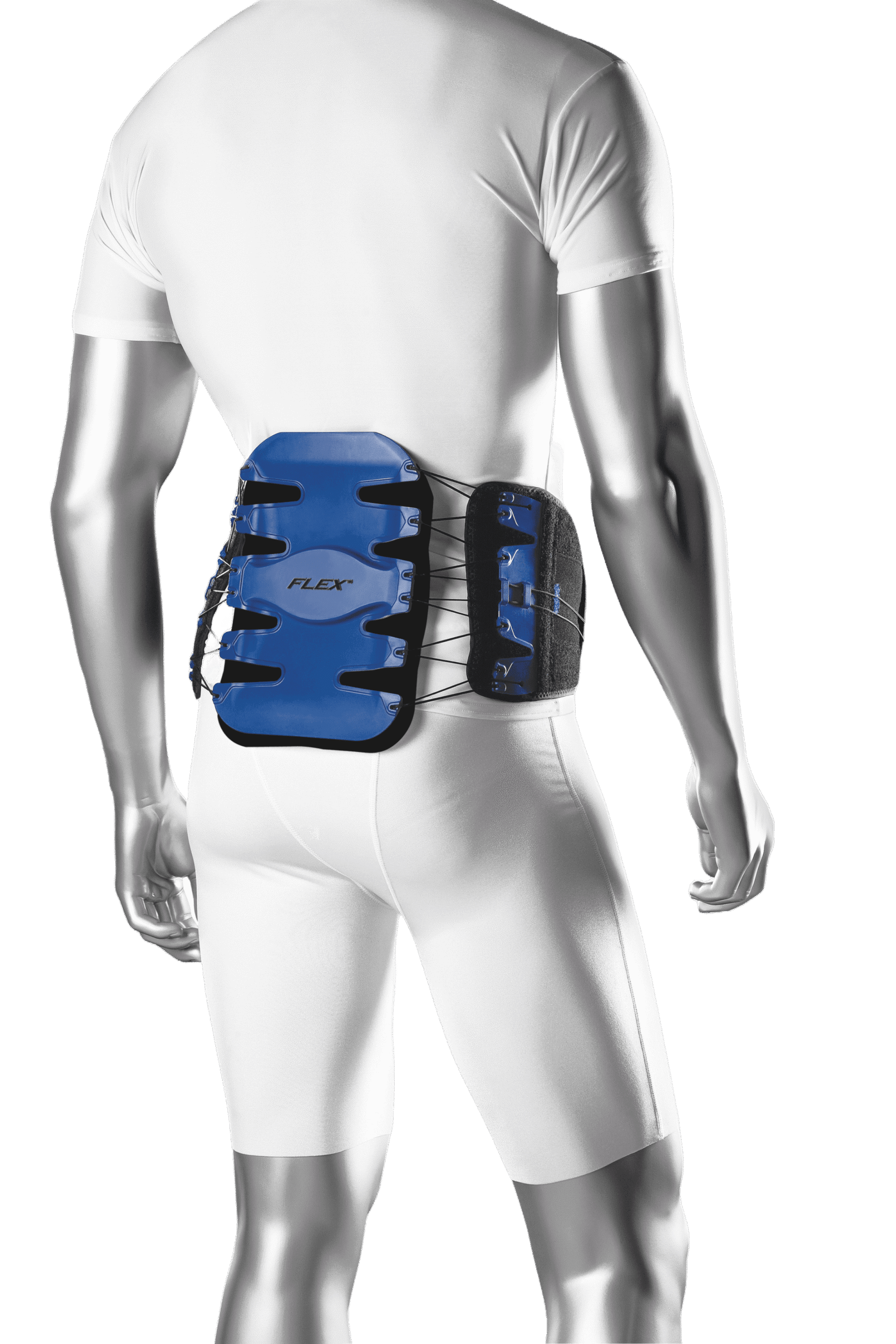
After a disc injury or when a clinician recommends firmer stabilization, a rigid or semi-rigid lower back brace such as the BioSkin Back Plus, the BioSkin Back Flex or the BioSkin Baja 627 provides more support than a work belt. These braces should be recommended and fitted by a health professional as part of the worker’s treatment plan.
How To Choose A Back Brace For Work
When choosing back supports for your workplace or your patients, consider:
- The job. Repeated lifting and bending suit a belt with suspenders; prolonged sitting or driving suits a lower-profile brace with a lumbar pad.
- The level of support needed. A flexible belt for general support, a brace with stays and a lumbar pad for workers with lower back pain, and a rigid brace only on clinical advice.
- Fit and sizing. Measure around the waist as each size chart directs, and stock a range of sizes rather than one size for everyone.
- Comfort over a full shift. Breathable, vented materials and easy adjustment make it more likely workers will actually wear the brace correctly.
- Easy loosening. Side pulls and hook-and-loop closures let workers loosen the belt between lifting tasks and retighten it in seconds.
Fitting And Training Tips

A back brace for lifting at work only helps if it is worn correctly. Whether you are an employer or a clinic supplying workers, keep these points in mind:
- Have the brace fitted by a physiotherapist, athletic therapist or other health professional where possible.
- Wear the belt snug during lifting tasks and loosen it between lifts and during breaks.
- Never use a belt to lift more weight than is safe: keep loads close, bend the knees, keep the back straight and avoid twisting.
- Workers with heart or blood pressure conditions should check with their doctor before wearing a tight back support during heavy work.
- Combine the brace with core strengthening and stretching exercises so back muscles stay strong.
For more on how braces can be used to reduce strain during sport and activity, see 6 ways to use a back brace to prevent injury and 4 everyday situations where a back support belt can help.
Back Supports For Clinics And Employers Across Canada
Dunbar Medical supplies physiotherapy, chiropractic and occupational health clinics, athletic therapists and employers across Canada with back supports from trusted brands including Mueller, McDavid, LP Support and BioSkin. Browse our full back brace range, or contact our team for product advice or a quote on larger orders.
Conclusion
A back brace for work is not a substitute for safer lifting tasks and training, and the evidence does not support belts alone for preventing injuries in healthy workers. Where back supports do help is with workers who have lower back pain or are returning from a back injury. Choose the right type for the job, fit it properly, encourage workers to loosen it between lifts, and pair it with exercise and good manual handling to get the most benefit.


Thanks for the advice about how you need a back brace tailored to you. It would be good to consider this because it would help ensure that they are qualified. I’m looking for a back brace, so I’ll have to consider if it will be personally tailored.